
RetrievAir Shark Tank Update: Where Is the Pet-Friendly Airline Today?
RetrievAir turned pet travel into a Shark Tank test of loyalty, pricing, and aviation math.
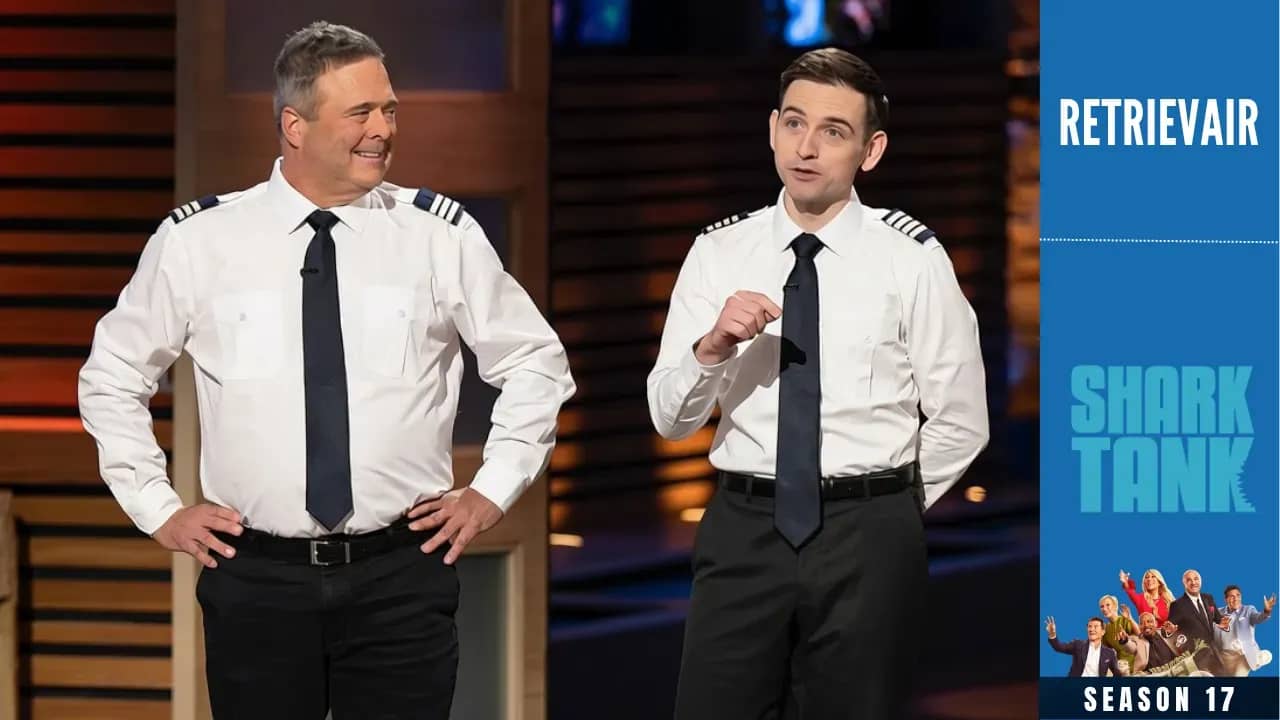
RetrievAir is one of the more interesting businesses from Shark Tank Season 17 because it tests a simple but expensive belief: many pet owners no longer see their animals as cargo.
The company is trying to build a middle ground between commercial airlines, which often limit pet travel, and ultra-premium private pet charters that can cost thousands of dollars. That makes RetrievAir more than a cute pitch. It is a live business case about demand, route density, fixed costs, and whether emotional customer pain can support a high-operating-cost travel model.
On Shark Tank, founders Benton Miller and Mark Williams won a deal from Alexis Ohanian. The bigger question is what happened after the pitch, and whether the business still has evidence of real activity today.
| Company | RetrievAir |
| Founders | Benton Miller and Mark Williams |
| Product | Pet-friendly public charter flights |
| Industry | Pet travel / aviation |
| Shark Tank Episode | Season 17, Episode 4 |
| Original Ask | $500,000 for 5% |
| Final Deal | $776,000 for 15% with Alexis Ohanian |
| Current Status | Active |
| Website | RetrievAir.com |
Latest Update: September 2026
- - RetrievAir’s website remains active with flight search and booking tools.
- - The company says it serves major U.S. cities through pet-friendly public charter flights.
- - New York flights now depart from Long Island MacArthur Airport in Islip.
- - RetrievAir uses dynamic fares, so prices can rise as flights fill.
- - Public social updates show rescue transport activity and continued brand promotion.
What Is RetrievAir?
RetrievAir is a pet-first air travel service that lets dogs and cats fly in the cabin with their owners. The idea is aimed at pet parents who do not want to place animals in cargo, cannot use standard airline pet-carrier rules, or have large dogs that commercial airlines rarely accommodate comfortably.
The company positions itself as a public charter operator rather than a traditional airline. According to the RetrievAir how-it-works page, travelers fly from private terminals, arrive about 45 minutes before departure, and bring pets into the cabin instead of checking them as cargo.
The current rules are built around pet size. Pets under 40 pounds may sit on a passenger’s lap. Pets over 75 pounds require their own seat. Cats are accepted, but the company says cats must remain in carriers for safety.
That solves a real customer problem. Many pet owners can drive across the country, leave pets behind, or pay for premium animal transport. RetrievAir offers another option: pay more than a normal commercial ticket, but far less than some private pet-charter alternatives.
Who Founded RetrievAir?
RetrievAir was founded by Benton Miller and Mark Williams. Miller is the founder and CEO, and the company’s origin story is tied to his own frustration with traveling with his Labradors. The official RetrievAir about page frames the mission around making travel easier for pets and their humans.

Mark Williams brought the aviation background. During the pitch, he said he had spent 30 years in aviation and had built Sunwing Airlines in Canada. That experience mattered because RetrievAir is not a simple consumer product. It depends on aircraft operations, scheduling, safety rules, partner relationships, and route economics.
| Founder Asset | Why It Matters |
|---|---|
| Benton Miller | Customer pain, sales background, founder energy, pet-owner insight |
| Mark Williams | Aviation operating experience, airline-building credibility, industry knowledge |
| Combined strength | A consumer-facing pet brand with serious aviation execution behind it |
What Happened on Shark Tank?
Benton and Mark entered the Tank asking for $500,000 for 5% equity. That valued RetrievAir at $10 million. Their pitch focused on a clear emotional hook: pets should not be treated like luggage.
"Your furry friend does not belong in the cargo hold like a suitcase."
- Benton Miller, Shark Tank pitch
The Sharks quickly moved from emotion to economics. Kevin O’Leary asked why the business deserved a $10 million valuation. The founders said ticket sales had reached more than $550,000 and that month-over-month growth was about 133%. They also said the average ticket price was $775 per sector, with average ticket margins of about 44%.
Those numbers got attention. The problem was burn. The founders said RetrievAir was losing about $70,000 to $80,000 per week because flights were still below profitable load factors. That changed the tone of the negotiation.
| Deal Point | Details |
|---|---|
| Original ask | $500,000 for 5% |
| Implied valuation | $10 million |
| Kevin O’Leary offer | $500,000 for 20% |
| Daymond John offer | $500,000 for 25%, later withdrawn |
| Alexis Ohanian offer | $500,000 for 15%, then $776,000 for 15% |
| Final deal | $776,000 for 15% with Alexis Ohanian |
Alexis Ohanian saw the customer-demand story differently. He argued that younger consumers treat pets as a major part of family life and that the brand could spread through strong storytelling. That made him the best strategic fit in the room.
How Does RetrievAir Make Money?
RetrievAir makes money by selling seats on scheduled public charter flights. The company does not own or operate its aircraft. Its website says all flights are operated by RVR Aviation. That asset-light structure helps the company avoid owning planes, but it does not remove the core challenge: seats still need to be filled.
The business depends on load factor. In simple terms, RetrievAir needs enough humans and pets on each flight to cover the cost of chartering the aircraft and running the experience. On Shark Tank, the founders said break-even came around 50% capacity. That is why the Sharks cared so much about the burn rate.
| Business Model Area | RetrievAir Analysis |
|---|---|
| Customer segment | Pet owners, large-dog owners, relocating families, anxious-pet owners |
| Value proposition | Pets fly in cabin with humans instead of cargo |
| Revenue model | Human seats, pet seats, fare-class pricing |
| Sales channel | Official website booking flow |
| Competitive advantage | Lower-cost alternative to ultra-premium pet charters |
| Main risk | High flight costs if seats are not filled |
The clearest competitor is BARK Air. Current BARK Air listings show many dog-and-human flights priced in the thousands. RetrievAir’s pitch positioned its service as more accessible, although still premium compared with a standard airline ticket.
What Happened After Shark Tank?
RetrievAir had already launched before its Shark Tank episode aired. A March 2025 PR Newswire release said reservations were available for flights beginning May 21, 2025, initially serving nine U.S. cities.
After the episode, the deal also gained public support signals. RetrievAir’s LinkedIn page includes a Seven Seven Six post saying Alexis Ohanian’s firm was proud to back the company. That does not disclose every due-diligence detail, but it is stronger evidence than a recap-only claim.
The company also continued building its social-impact angle. Public LinkedIn updates said RetrievAir transported rescue dogs through partnerships with animal-rescue organizations. That matters because it gives the brand more than a premium-travel identity. It also helps the company tell a mission-led story, which was exactly the point Alexis emphasized in the Tank.
| Current Status Evidence | What It Shows |
|---|---|
| Active website | RetrievAir is still operating a public-facing booking platform |
| Destinations page | The company lists pet-friendly routes across major U.S. cities |
| How-it-works page | Fare rules, pet-size rules, baggage rules, and seating rules remain published |
| LinkedIn updates | Recent public activity and rescue transport work |
| Seven Seven Six post | Public investor-support signal after Shark Tank |
| Before Shark Tank | After Shark Tank |
|---|---|
| Early public-charter pet travel concept | National TV exposure and Alexis Ohanian deal |
| Nine-city launch announcement | Expanded route messaging on official website |
| Low awareness and early load-factor risk | Stronger brand awareness through Shark Tank and social proof |
| High burn discussed in pitch | Profitability still not publicly verified |
Where Can You Book RetrievAir?
Readers can book through the official RetrievAir destinations page. The company’s current website says fares are dynamic, so the best price may depend on route, timing, and seat availability.
RetrievAir is not sold through retail stores or Amazon because it is a travel service, not a packaged product. The official website is the best source for routes, pet rules, fare options, and flight availability.
Lessons From RetrievAir’s Journey
The first lesson is that emotional pain can create real demand. Pet owners understood the pitch instantly because the problem was easy to feel. That gave RetrievAir a strong brand hook.
The second lesson is that demand is not the same as unit economics. The Sharks were not questioning whether people loved their pets. They were questioning whether enough people would pay enough money on enough routes to make the aircraft economics work.
The third lesson is that founder-market fit matters. Benton brought the customer story. Mark brought aviation credibility. For a business with safety, scheduling, and operating complexity, that combination likely helped the Sharks take the idea seriously.
The final lesson is that storytelling can reduce customer-acquisition friction, but it cannot replace operational discipline. RetrievAir still has to fill flights, manage routes, control service quality, and keep fares within reach for the audience it wants to serve.
Final Take
RetrievAir is still active, and its post-Shark Tank evidence is stronger than many early-stage companies from the show. The website is live, the booking flow remains available, routes are published, and Seven Seven Six publicly supported the company after the episode.
Still, the business should be judged with caution. The most important unanswered question is profitability. RetrievAir’s idea is emotionally powerful, but its future depends on whether it can turn pet-owner love into consistently full flights.
FAQs
Is RetrievAir still in business?
Yes. As of September 2026, RetrievAir appears active, with a live website, booking tools, and published route information.
Did RetrievAir get a deal on Shark Tank?
Yes. Benton Miller and Mark Williams accepted $776,000 for 15% equity from Alexis Ohanian.
Did the RetrievAir Shark Tank deal close?
Public posts from Seven Seven Six and funding database references support investor involvement, but the company has not publicly disclosed full closing documents.
Who founded RetrievAir?
RetrievAir was founded by Benton Miller and Mark Williams.
How much does RetrievAir cost?
During the pitch, the founders said the average ticket was $775 per sector. Today, RetrievAir says fares are dynamic and may rise as flights fill.
Can large dogs fly on RetrievAir?
Yes. RetrievAir says dogs of all sizes can fly. Pets over 75 pounds require a separate seat.
Does RetrievAir own its planes?
No. RetrievAir says it does not own or operate aircraft. Its flights are operated by RVR Aviation.
What other companies appeared in the same episode?
RetrievAir appeared alongside Alchemize Fightwear, The Sprouting Company, and Orka Bar.
The weekly question
From obsession to clarity — one original question every week.
We answer one noisy topic at a time, in full. No daily roundup, no thread bait — just the question, the principles, and the system.
More from Shark Tank USA Season 17
All season pitches
Shark Tank USA
The Christmas Carolers After Shark Tank: Barbara’s 60% Deal, Expansion and Current Status
Shark Tank USA
Bauble Stockings After Shark Tank: Barbara’s Deal, Current Status and the Premium-Brand Risk

Shark Tank USA