Hang Hero After Shark Tank: The Picture Tool That Had to Win Its Customers Twice
Michael and Ana Van Horst left a licensing arrangement and rebuilt under their own name. Daymond John agreed to $150,000 for 25% of Hang Hero.
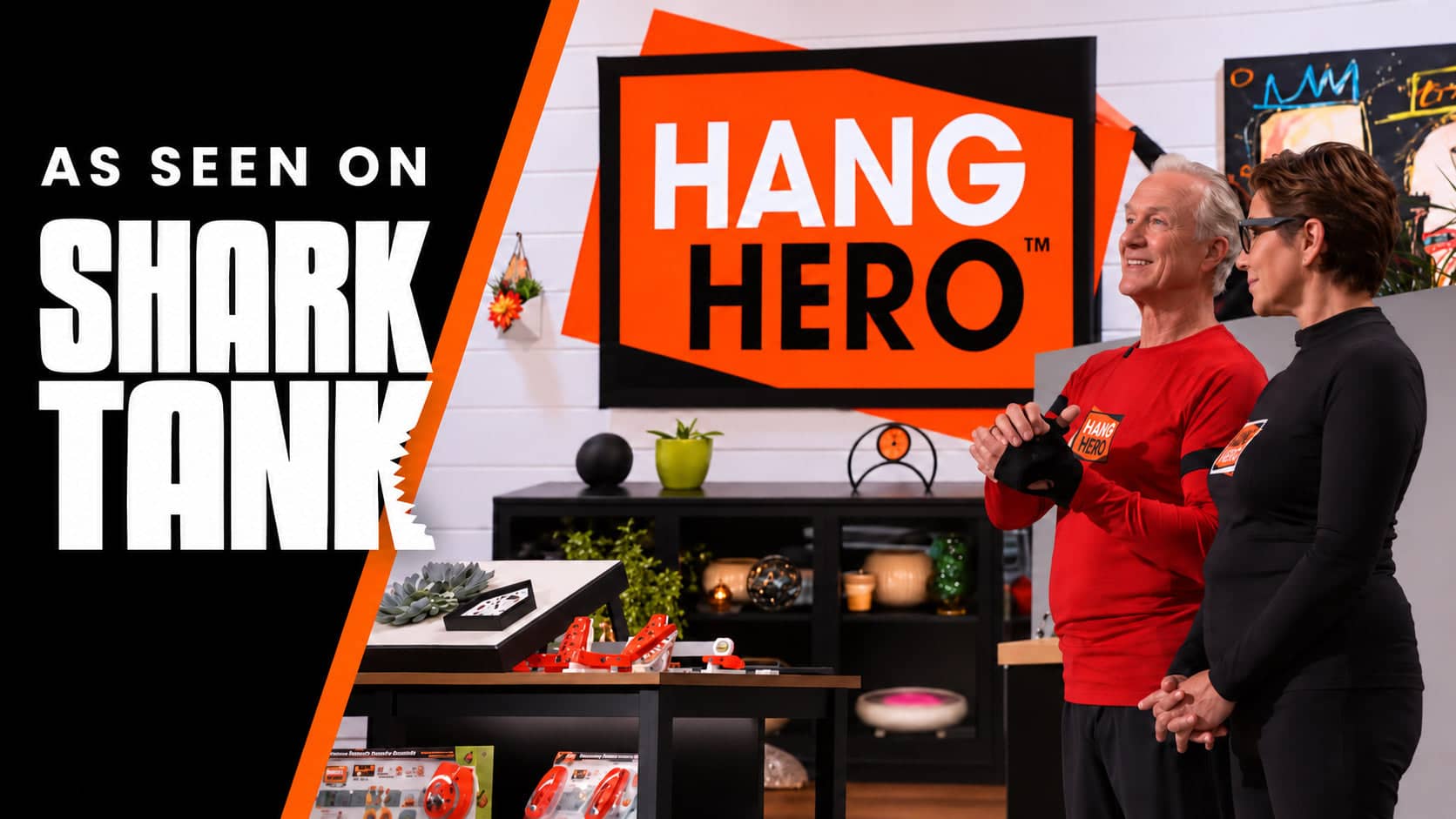
Hanging a frame with two anchor points can go wrong by a fraction of an inch. Measure the holes, transfer the spacing to the wall, check the level and drive the nails: each handoff is a chance to introduce an error. Hang Hero combines those steps into one tool. What looked like a straightforward hardware pitch, however, came with a more complicated business history.
Michael and Ana Van Horst had already seen their invention sell through a licensing arrangement. When they decided to bring it to market under their own brand, the earlier sales did not follow them automatically. That was the real question facing Daymond John: how much was the evidence of demand worth when the founders were rebuilding the route to the customer?
On-air deal
Pitch outcome
$150,000 for 25% with Daymond John.
$150,000 for 10%
Opening ask
Terms sought on Shark Tank.
$0.40
Product detail
Reported earlier per-unit licensing royalty.
Product snapshot
| Field | Details |
|---|---|
| Company | Hang Hero |
| Founder or founding team | Michael and Ana Van Horst |
| Product | Picture-hanging tool that spaces, levels and installs nails |
| Industry | Home improvement |
| Shark Tank episode | Season 17, Episode 15 • March 25, 2026 |
| Current status | Hang Hero and Pop & Hang are listed by the company. |
How does Hang Hero work?
Hang Hero takes the spacing from the frame, helps the user level the positions on the wall and sets the nails. The manufacturer’s FAQ separates it from Pop & Hang, a related product aimed at quickly installing nails for smaller decorations. A shopper hanging a series of matching frames has a different job from someone putting up a single lightweight ornament.
The tool helps with placement. The wall and mounting hardware still need to be appropriate for the object being hung. A perfectly level nail is not a substitute for the right fastener or load support.
Who built Hang Hero?
The Fresno-area couple told ABC30 about presenting their invention. They had previously worked with a licensing partner and later retook control of the brand. That background explains why historical sales and current sales appeared to tell conflicting stories. The product had an audience, but the people who owned the invention were now responsible for reaching that audience themselves.
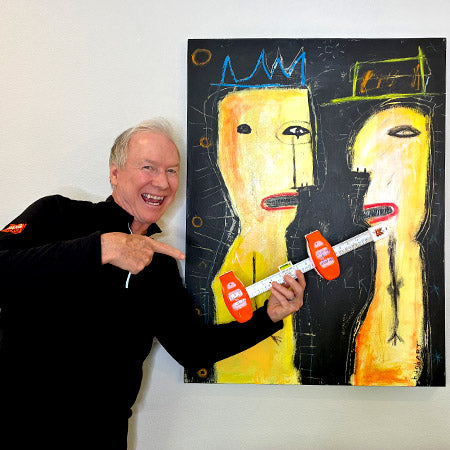
From Hang Hero’s inventor feature.
“The All-in-One Picture Hanging Tool” — Hang Hero’s description of its original product.
What happened to Hang Hero on Shark Tank?
The founders asked for $150,000 for 10%. Episode reporting describes a sharp drop in sales after the licensing change. Other accounts put sales under the prior arrangement at $851,000 in 2024 versus roughly $40,000 in 2025 during the restart. Those are figures discussed for different business arrangements, not a clean comparison of consumer demand for identical offers.
Daymond John offered the requested cash for 25%, and the founders accepted. At the agreed terms the implied post-money value was $600,000, compared with $1.5 million at the ask. The difference reflects the price agreed on television, not a measured loss of that amount from the company. Episode reporting.
Deal snapshot
| Negotiation point | What the evidence supports |
|---|---|
| Asked | $150,000 for 10% |
| On-air outcome | $150,000 for 25% with Daymond John. |
| Key negotiating point | The sales record came partly from a former licensing arrangement. |
What changes when an inventor takes back the brand?
A license can pay an inventor a small amount per unit while another business handles marketing and distribution. Selling directly gives the inventor more of each purchase price, but it also brings the bills for inventory, customer acquisition, fulfillment, service and returns. Comparing a licensing royalty with a retail price overstates the gain from going independent.
For Hang Hero, the useful evidence would be how many shoppers convert after seeing a demonstration and how much it costs to put that demonstration in front of them. The tool is durable, so a household that buys one may not need another soon. Additional products, gift purchases and retailer distribution matter more than a subscription-style repeat rate.
Business model snapshot
| Business question | Answer |
|---|---|
| Product | Picture-hanging tool that spaces, levels and installs nails |
| Sales channel | Direct product sales under the Hang Hero brand. |
| Buyer decision | Match the tool to the frame, wall and hanging hardware. |
| Business question | Can the founders rebuild distribution profitably under their own name? |
What happened after Shark Tank?
Latest update — November 12, 2026. The official store distinguishes its original tool from Pop & Hang and provides instructions and product information.
The store and local founder interview support continuing commercial activity. They do not disclose the final private closing documents or how much of the earlier licensed sales volume the founders have regained.
Current status evidence
| Evidence | What it establishes |
|---|---|
| Official offering | Hang Hero and Pop & Hang are listed by the company. |
| Pitch evidence | $150,000 for 25% with Daymond John. |
| What is still unknown | Private deal completion and current direct-sales profitability. |
Company timeline
| Date | Milestone |
|---|---|
| 2024 | Sales under the previous arrangement reportedly reached $851,000. |
| 2025 | The move toward independent distribution reset the sales base. |
| March 25, 2026 | The couple accepted John’s offer. |
| November 2026 | The brand lists both the original tool and Pop & Hang. |
What should a buyer check?
Look at the back of the frame first. Determine whether there is a single hanger, a wire or two points that must be spaced accurately. Then compare the product instructions with the wall type and the object’s weight. The strongest case for a spacing tool is a job where a second misplaced hole would be especially inconvenient.
What can founders learn from Hang Hero?
An inventor considering the end of a license should build two forecasts: one for the royalty stream being given up and one for the cash required to acquire customers independently. Higher gross revenue per unit is attractive, but the decision turns on what is left after replacing everything the licensee used to do.
The Season 17 episode guide lists the other pitches. Readers following the other investment decisions in this part of Season 17 can also find R1SE, BoxBlayde, The Chair Blanket.
Frequently asked questions
Who presented Hang Hero on Shark Tank? Michael and Ana Van Horst
What did the founders ask for? $150,000 for 10%.
What happened in the negotiation? $150,000 for 25% with Daymond John.
Is Hang Hero still operating? Hang Hero and Pop & Hang are listed by the company.
Is the final check $150,000 or $200,000? The corroborated on-air offer was $150,000 for 25%.
The weekly question
From obsession to clarity — one original question every week.
We answer one noisy topic at a time, in full. No daily roundup, no thread bait — just the question, the principles, and the system.