Good Grief Celebrations Shark Tank Update: What Happened Next?
What happened to Good Grief Celebrations after Shark Tank? Review Rikki Farrar's pitch, the no-deal outcome and the limits of its closure record.
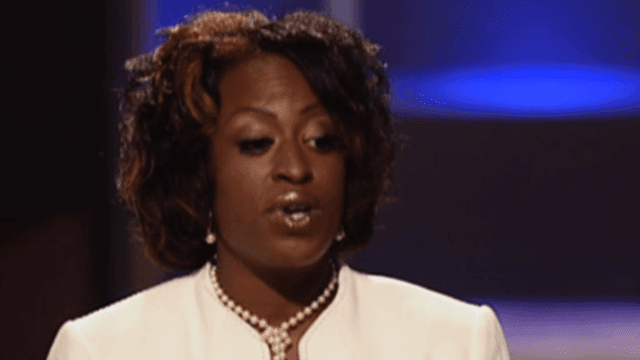
Planning a farewell can require dozens of decisions when a family has little time or energy to make them. Rikki Farrar brought Good Grief Celebrations to Shark Tank with a service built around that problem: helping people arrange a personal celebration of someone's life.
Her pitch focused on coordination and care rather than a physical invention. A family could need help with the words spoken at a service, the gathering afterward or the overall shape of an event. Farrar believed those details deserved the attention of a dedicated planner.
The Sharks did not invest. The more difficult part of this update is what followed: public information about the business is sparse, and later accounts often turn the absence of an active website into a precise closure story.
Here is what the available evidence supports about Good Grief Celebrations, without assigning an unsupported closing date or treating an old asking valuation as the founder's wealth. The business also appears in our complete Shark Tank USA Season 1 guide.
Quick answer: Rikki Farrar pitched Good Grief Celebrations in Shark Tank Season 1, asking for $50,000 for 25% of her funeral concierge business. She left without a deal. The service was designed to help families organize personalized celebrations of life, including eulogies and gatherings. Later specialist coverage describes the business as closed or inactive, but a primary closure announcement and dependable closing date have not been found. The pitch implied a $200,000 valuation; it did not establish the company's eventual value or Farrar's personal wealth. Current status: reported inactive, with no verified current booking service.
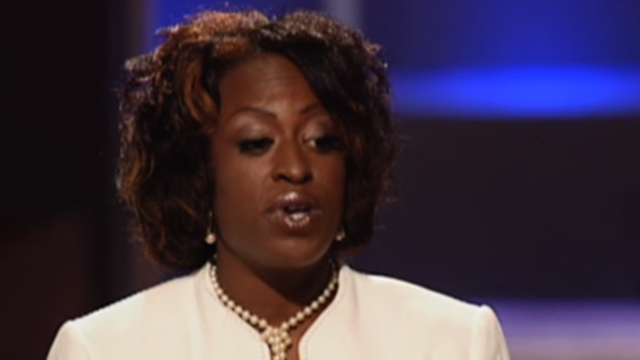
Rikki Farrar during her Good Grief Celebrations pitch. Image: Shark Tank, via Shark Tank Recap.
What did Good Grief Celebrations offer?
Good Grief Celebrations was a funeral concierge and event-planning service. Its purpose was to help families create a farewell that reflected the person being remembered.
According to the historical company profile, Farrar developed the idea after arranging a celebration for her mother. The services described included eulogy writing, help with the service itself and a gathering afterward.
That makes the business different from a grief-support organization or an online gift shop. Its central offering was practical planning and coordination.
| Service described | What it meant for a family |
|---|---|
| Eulogy assistance | Help preparing words about the person being remembered |
| Ceremony coordination | Organizing the structure and details of the farewell |
| Gathering arrangements | Planning an event for relatives and friends |
| Personalization | Shaping the occasion around an individual's life |
The table summarizes the historical proposal. It is not a current list of services available to book.
What happened on Shark Tank?
Farrar appeared in Season 1, Episode 5 and requested $50,000 for 25% equity. The pitch recap records questions about the company's limited sales and its approach to finding clients.
The discussion did not produce an investment. No Shark became an on-air partner in Good Grief Celebrations.
| Pitch detail | Outcome |
|---|---|
| Founder | Rikki Farrar |
| Business | Funeral concierge service |
| Season and episode | Season 1, Episode 5 |
| Investment requested | $50,000 |
| Equity offered | 25% |
| Implied asking valuation | $200,000 |
| Final result | No deal |
An asking valuation is a proposed price for ownership. Dividing $50,000 by 25% gives $200,000, but that calculation does not establish what a buyer would have paid for the entire business.
It also does not support assigning a later value of zero. Without financial records, neither a current company valuation nor Farrar's personal net worth can be responsibly calculated.
How was the service supposed to make money?
The proposed model was based on paid planning work. Customers would be paying for time, organization and assistance with a specific occasion.
That creates a different expansion question from a packaged product. A manufacturer can potentially supply more units to stores; a planning service must also maintain the quality of the work delivered to each family.
For a business like this, the important commercial questions would include the fee for each engagement, the hours involved and how clients find the service. Public sources do not establish a dependable price list, customer count or operating margin for Good Grief Celebrations.
These are questions about the model, not proven reasons the business became inactive. A Shark's concern during a pitch cannot, by itself, explain every later business outcome.
What happened after Shark Tank?
Latest update — November 2026: Good Grief Celebrations is reported inactive. A current booking service could not be verified, and no primary source establishing the exact closure date or cause was located.
The available follow-up record is limited. Shark Tank Blog describes the company as closed. The historical directory profile also notes the absence of a visible service website.
Shark Tank Recap's later update points to social-media inactivity in late 2011 when discussing its apparent end. That is a clue about its public presence, but it does not prove that operations stopped in that year.
The distinction matters because service businesses can operate without frequently posting online. Conversely, an old professional profile can continue to display a company long after day-to-day work has stopped.
| Question | What can be said |
|---|---|
| Did a Shark invest on the show? | No |
| Is there evidence of a current booking service? | None verified in this update |
| Is the business reported closed? | Yes, in specialist follow-up coverage |
| Is a specific closure year confirmed? | No |
| Is the reason for closure documented? | No reliable primary explanation was found |
There is also insufficient evidence to say the appearance generated no inquiries, no customers or no outside interest. A lack of published figures is not a verified count of zero.
The same caution applies to Farrar's later career. Older articles mention other employment, but those references do not establish her current role. This update does not turn an undated career detail into a present-day biography.
Other businesses from this episode have different evidence trails. Granola Gourmet has contemporary trade coverage documenting a post-show expansion, while Face Blok has a surviving founder portfolio describing the original project. Neither pattern can be assumed for Good Grief.
Can you book Good Grief Celebrations today?
A current booking route for Farrar's Shark Tank business was not verified.
Search results for “Good Grief” include unrelated organizations and businesses. A shared name is not evidence of a relaunch, acquisition or continuation of Good Grief Celebrations.
Readers looking specifically for the company from the show should check both the full business name and its connection to Rikki Farrar. This article does not direct families to an unrelated service as though it were the original business.
What does the pitch teach about service businesses?
Good Grief Celebrations illustrates the gap between identifying a meaningful customer need and demonstrating an investable operating model.
A founder can explain why a service matters while still facing questions about customer acquisition, delivery capacity and profitability. Those questions are especially relevant when the work depends heavily on personal attention.
The public record supports discussing those challenges as business considerations. It does not support declaring that the market rejected personalized funerals or that the idea was inherently unworkable.
Good Grief Celebrations FAQs
Who founded Good Grief Celebrations?
Rikki Farrar pitched the business on Shark Tank.
Did Good Grief Celebrations get a deal?
No. The Season 1 appearance ended without a Shark investment agreement.
How much did Farrar request?
She asked for $50,000 for 25% of the company.
What did the company do?
It offered planning help for personalized celebrations of life, including eulogies, ceremonies and gatherings.
Is Good Grief Celebrations still operating?
Specialist coverage reports it inactive or closed. A current service or booking route could not be verified.
Did it close in 2011?
That year is sometimes inferred from social-media inactivity. A reliable primary closure notice confirming it was not found.
What is the company's net worth?
There is no verified current valuation. The $200,000 figure associated with the pitch was the implied value of the proposed investment terms.
The weekly question
From obsession to clarity — one original question every week.
We answer one noisy topic at a time, in full. No daily roundup, no thread bait — just the question, the principles, and the system.