
Clean Green Golf Balls After Shark Tank: What the $1 Royalty Bought
Sami and Rami Mubasher turned lost golf balls into graded inventory. Their Shark Tank deal combined equity with a capped royalty on packages.
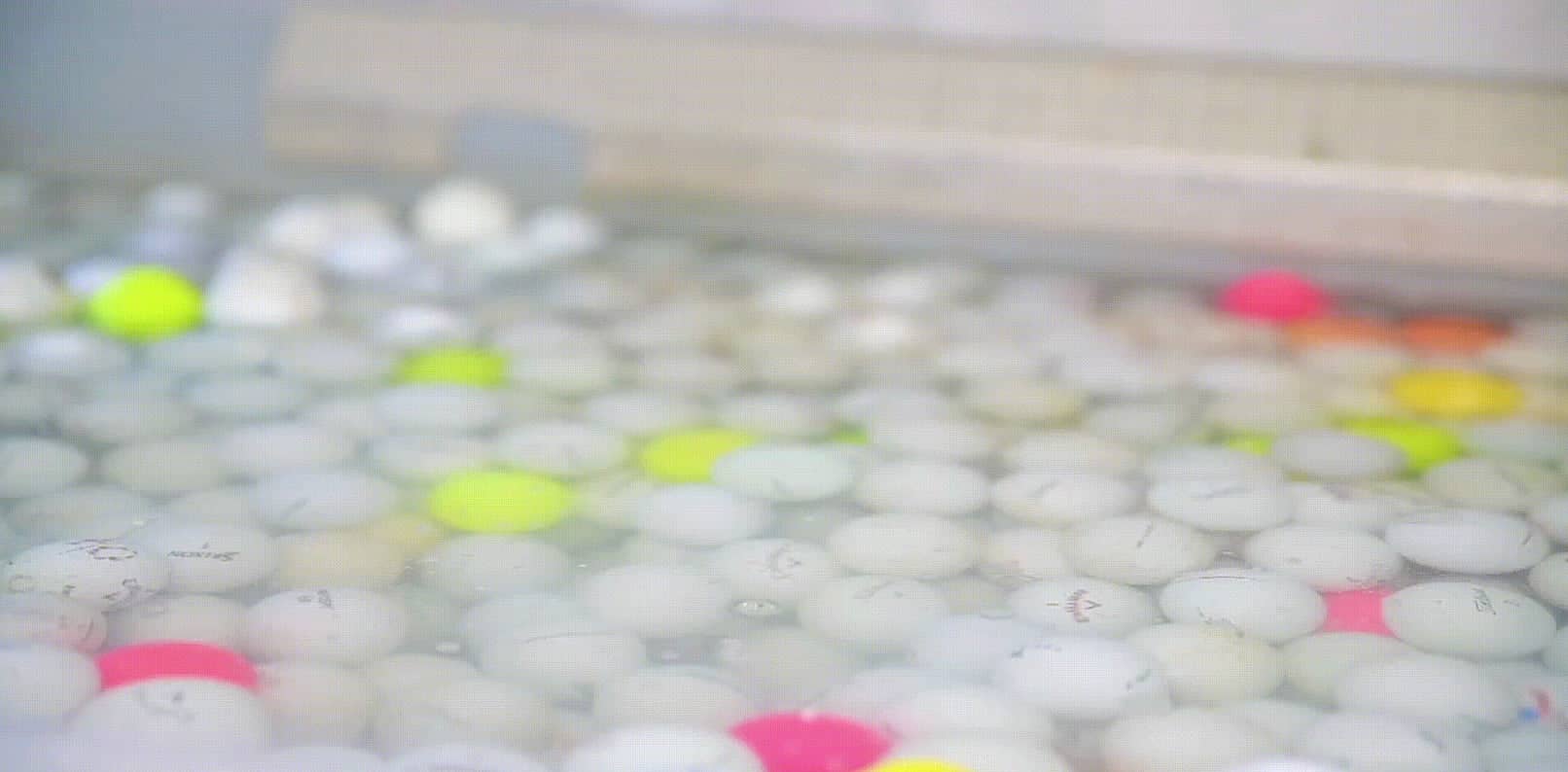
A golfer who slices a premium ball into a pond usually writes off its entire purchase price. Clean Green Golf Balls starts its calculation at the same moment. Someone else may still want that exact model, provided they know its condition and can buy it for less than a new one. The company’s job is to turn a pond full of unknowns into bags a shopper can order with confidence.
Sami and Rami Mubasher took that proposition onto Shark Tank and accepted a joint offer from Kevin O’Leary and Robert Herjavec. The headline number was $350,000. The more revealing detail was a royalty attached to the packages sold: the investors would participate when the inventory moved, as well as through their ownership stake.
On-air deal
Pitch outcome
$350,000 for 15% plus a capped royalty, with Kevin O’Leary and Robert Herjavec.
$350,000 for 5%
Opening ask
Terms sought on Shark Tank.
$1 per package
Product detail
Reported royalty runs until $1.05 million is paid.
Product snapshot
| Field | Details |
|---|---|
| Company | Clean Green Golf Balls |
| Founder or founding team | Sami Mubasher pitched with his brother Rami Mubasher. |
| Product | Recovered, cleaned and condition-graded used golf balls |
| Industry | Golf equipment resale |
| Shark Tank episode | Season 17, Episode 13 • March 11, 2026 |
| Current status | The official store sells graded used balls. |
How does Clean Green Golf Balls work?
The company’s process guide follows lost balls through recovery, cleaning, sorting and resale. A single haul may include different brands, models and levels of wear. Separating them is what makes the inventory useful: one golfer can choose a familiar premium model while another can buy inexpensive practice balls.
The store distinguishes mint, near-mint, good and range grades. A grade is the seller’s description of condition. It is not a claim that every recovered ball has the same history, and shoppers should read the grade definition rather than assume all used balls are interchangeable.
Who built Clean Green Golf Balls?
Sami and his brother Rami represented the Texas-based business. Its team page puts people behind the warehouse operation; the Southern Texas PGA also lists Clean Green Golf Balls among its corporate partners. The business depends on two relationships: access to lost balls in the first place and trust from customers who cannot inspect every ball before ordering.

From the Clean Green Golf Balls team page.
“I am on the hunt for the best golf balls.” — Sami Mubasher, Clean Green Golf Balls team page.
What happened to Clean Green Golf Balls on Shark Tank?
The brothers asked for 5% in exchange for $350,000. They described an established seller rather than a first-time inventory purchase: episode reporting puts 2024 sales at approximately $6 million. Revenue was not the same as profit, but the sales history meant a royalty could be assessed against real volumes.
O’Leary initially proposed equity and a royalty; Herjavec offered equity without that payment. The brothers asked the two to join forces. The final agreement combined 15% equity with $1 per unit sold until $1.05 million in royalties. Reporting describes the unit as a package in the negotiation, an important distinction for a business selling bags of balls. Episode reporting.
Deal snapshot
| Negotiation point | What the evidence supports |
|---|---|
| Asked | $350,000 for 5% |
| On-air outcome | $350,000 for 15% plus a capped royalty, with Kevin O’Leary and Robert Herjavec. |
| Investors | Kevin O’Leary and Robert Herjavec |
| Royalty cap | $1.05 million; three times the $350,000 initial check. |
| Closing | The evidence confirms the televised agreement, not the final private documents. |
Why grading can be worth more than finding a ball
Recovery supplies the raw inventory, but grading creates several businesses inside one haul. A golfer who already plays a particular Titleist can pay for a sorted bag. A beginner who expects to lose several balls can accept a mixture and visible wear. Both buyers can be satisfied with the same retrieval operation if the listing is accurate.
The risk is misclassification. A buyer expecting near-mint balls can reject an entire order over a few scuffed examples. Accurate sorting and clear product photographs therefore do more than make the catalog look tidy: they protect the margin from returns and preserve the trust needed for the next purchase. The cost of recovery alone is a poor approximation of the cost of a sellable package.
Business model snapshot
| Business question | Answer |
|---|---|
| Product | Recovered, cleaned and condition-graded used golf balls |
| Sales channel | Direct online sales of graded packs, mixed bags and personalized products. |
| Buyer decision | Compare model, grade, quantity and delivered price per ball. |
| Business question | Can the team grade consistently enough to retain buyers as volume rises? |
What happened after Shark Tank?
Latest update — November 12, 2026. The official store lists bags by model and condition. Its product selection and grade explanations remain available after the episode.
Current listings confirm ongoing sales activity. A partnership listing is additional evidence of a presence in the golf industry, but it does not establish current revenue or royalty payments. Reported annual sales belong to the pitch period, not to the date of this update.
Current status evidence
| Evidence | What it establishes |
|---|---|
| Official offering | The official store sells graded used balls. |
| Pitch evidence | $350,000 for 15% plus a capped royalty, with Kevin O’Leary and Robert Herjavec. |
| What is still unknown | Private closing terms, royalty payments and current-year profitability. |
Company timeline
| Date | Milestone |
|---|---|
| 2022–24 | Pitch reporting describes sales rising from $3 million in 2022 to $6 million in 2024. |
| March 11, 2026 | The brothers agreed to equity and capped royalties with two Sharks. |
| November 2026 | Shoppers can still compare grade, model and pack size online. |
What should a buyer check?
For an actual round, start with a model you know, then decide how much cosmetic wear you accept. For practice, a mixed bag or lower grade can make more sense. Divide the delivered price by the number of balls, and compare like with like: a mint bag of a premium model and a mixed range bag are different purchases even at the same count.
What can founders learn from Clean Green Golf Balls?
A recovery business often earns its premium after the recovery is over. The founders built a language of grades so one irregular supply could serve multiple buyers. For anyone negotiating a royalty on a business like this, spell out the unit. One dollar on a package is a very different economic commitment from one dollar on each item inside.
The Season 17 episode guide lists the other pitches. Readers following other businesses from Season 17 can also find Nude Foods Market’s return system, Hot Girl Soda, BocceRoll.
Frequently asked questions
Did Clean Green Golf Balls get a deal? Yes. The brothers accepted a joint offer on air.
Who made the offer? Kevin O’Leary and Robert Herjavec.
What was the royalty cap? The reported cap was $1.05 million.
Does the company manufacture new golf balls? Its core business recovers, cleans, sorts and resells existing balls.
Can buyers choose a condition? Yes. The store offers multiple grades and model-specific bags.
The weekly question
From obsession to clarity — one original question every week.
We answer one noisy topic at a time, in full. No daily roundup, no thread bait — just the question, the principles, and the system.
More from Shark Tank USA Season 17
All season pitches
Shark Tank USA
The Christmas Carolers After Shark Tank: Barbara’s 60% Deal, Expansion and Current Status
Shark Tank USA
pi00a After Shark Tank: How the Stein Family Took Deaf-Owned Pizza From Restaurant to Freezer
Shark Tank USA