Boogie Box Fitness Shark Tank Update: What Happened After No Deal?
Boogie Box Fitness continued after Shark Tank with classes and home workouts. See its pitch, BBX history and what is known about its later status.

A fitness class can be easier to stick with when the music and movements make it feel like something people want to attend. Boogie Box Fitness built its identity around that idea, combining dance with martial-arts-inspired exercise.
Dede Barbanti-Parra and Kathy Lamm brought the program to Shark Tank with a demonstration and an ambitious request. They wanted investment to take their workout into people's homes through a DVD line.
That was an important change in format. A successful live class and a profitable home-video business are related, but they are not the same operation. The Sharks declined the investment, and the founders continued developing the program afterward.
Later sources describe DVD production and BBX branding. They also report that the original business became inactive, although a primary closure notice has not been located.
This update keeps those stages separate and avoids turning fitness marketing or old pitch figures into verified current results. For the complete season, see our Shark Tank USA Season 1 guide.
Quick answer: Dede Barbanti-Parra and Kathy Lamm asked for $700,000 for 70% in their proposed home-workout business during Shark Tank Season 1. They left without a deal. Follow-up reporting says they produced home-workout material and used BBX branding after the show. A participant's dated 2012 account also documents a Boogie Box class with Barbanti. Later specialist checks describe the original business as inactive, but no reliable exact closure date was established. The $1 million implied by the request was an asking valuation, not verified wealth. Current status: reported inactive; no current original-company offering verified.
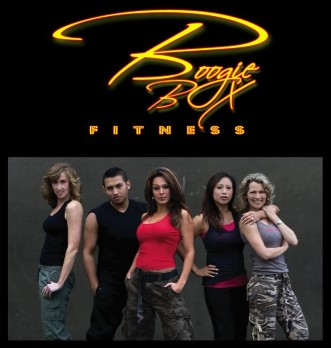
Historical Boogie Box Fitness team photograph and branding. Image via Shark Tank Blog.
What was Boogie Box Fitness?
Boogie Box Fitness was a workout format combining dance movements with martial-arts-inspired exercise. Its appeal centered on an energetic group experience.
The historical program profile identifies Barbanti-Parra and Lamm as the entrepreneurs and distinguishes their live instruction from the planned DVD offering.
A 2012 first-person class account describes attending a session taught by Barbanti. That provides a dated example of the program being delivered after the Shark Tank appearance.
The review also reproduces promotional fitness claims. Those claims are not adopted here as independently proven results. No specific calorie-burn rate, weight-loss promise or claim of superiority over other workouts is established by this article.
| Format | What participants received |
|---|---|
| Live classes | An instructor-led workout |
| Instructor training | A way for others to learn the format |
| Home-workout material | Recorded routines to follow away from a class |
| BBX branding | A later name associated with the program in follow-up reporting |
The table describes the historical offering. It is not a current class schedule or certification directory.
What happened on Shark Tank?
The founders appeared in Season 1, Episode 7. They requested $700,000 for 70% equity and did not receive an investment.
The specialist pitch account explains that the proposed investment concerned a home DVD line. The founders already had experience with classes and instructor training, but the video business was a further expansion.
| Pitch detail | Summary |
|---|---|
| Founders | Dede Barbanti-Parra and Kathy Lamm |
| Program | Boogie Box Fitness |
| Appearance | Season 1, Episode 7 |
| Investment requested | $700,000 |
| Equity offered | 70% |
| Intended expansion | Home-workout DVD business |
| Result | No deal |
| Implied asking valuation | $1 million |
Offering a majority stake did not remove the Sharks' concern about the amount of money required and the risk of the proposed venture.
The $1 million valuation is simply the arithmetic of the request. It does not support later claims that the company was worth $10 million or generated a particular annual revenue.
Why did the DVD plan change the business question?
A live class and a recorded workout reach customers in different ways. The class depends on an instructor, a venue and people attending at a particular time. A recording can reach more locations, but it needs production, distribution and marketing.
The pitch therefore asked investors to evaluate more than whether the workout looked engaging.
| Business question | Live instruction | Home-workout product |
|---|---|---|
| Delivery | Scheduled class | Recorded routine |
| Customer experience | Instructor and group present | User follows the material independently |
| Expansion | More classes or instructors | More product sales |
| Main operating challenge | Consistent teaching and attendance | Production, promotion and distribution |
These are analytical distinctions, not a claim that one model is inherently better. They help explain why existing interest in classes did not automatically settle the investment decision about DVDs.
The distinction also appears in Classroom Jams, whose pitch involved turning creative material into a commercial product with a clear paying audience.
What happened after Shark Tank?
Latest update — November 2026: Later specialist coverage describes the original business as inactive. Post-show classes and home-workout production are documented or reported, but an exact closure date and primary shutdown announcement were not verified.
The founders continued after leaving without investment. The historical product profile reports that they produced a DVD and operated under BBX branding.
The dated 2012 class account adds a separate piece of evidence. Its writer describes taking a Boogie Box session with Barbanti and discusses the workout from a participant's perspective. That supports continued activity after the episode without requiring a claim about nationwide sales.
Later updates are less definite. Shark Tank Blog's July 2021 check reported an unavailable website and a lack of recent social activity, concluding that the business appeared to have stopped.
The date of a research check is not necessarily the date a business closed. Nor is the last post on one platform a company-wide shutdown notice.
This matters because some summaries convert that 2021 observation into a definite closure year. The evidence supports reported inactivity, but not a precise final operating day or an independently documented cause.
The same page also retains older optimistic language about the business. Reading the later status note alongside the earlier description avoids presenting an old growth account as a current update.
No dependable source reviewed here establishes the company's final revenue, its founders' personal wealth or the value of any remaining rights to the workout material.
The program's status should also be distinguished from an individual founder's later career. A person continuing to teach, coach or work elsewhere does not by itself demonstrate that the original Boogie Box business is active.
For comparison, Body Jac is another Season 1 fitness venture whose history needs to be separated from promotional results. In both cases, the product story can be explained without promising a particular physical outcome.
Can you join Boogie Box Fitness or buy the original workouts today?
A current original-company store, class schedule or active instructor-certification program was not verified.
Old DVDs, archived videos and pages maintained by individual instructors may remain accessible. Their existence does not establish continuing support from the business that appeared on Shark Tank.
Someone considering a class should check the provider's current schedule and exactly what program is being offered. This article does not endorse an unverified class or infer a formal relationship from the letters “BBX” alone.
What can founders learn from Boogie Box Fitness?
The case illustrates why a new distribution format needs its own commercial plan. A workout can have enthusiastic participants while a home-video rollout still requires a different set of resources.
It also shows the value of tracking concrete milestones. A dated class report establishes activity. A product release establishes availability at that time. Neither automatically proves a large, profitable national company.
The available record supports a post-show continuation followed by reported inactivity. It does not support a simple story that the Shark rejection immediately ended the business.
Boogie Box Fitness FAQs
Who founded Boogie Box Fitness?
Dede Barbanti-Parra and Kathy Lamm pitched the program together.
What did they ask for?
They requested $700,000 for 70% equity in the proposed home-workout venture.
Did a Shark invest?
No. The pitch ended without a deal.
Did the founders make workouts after the show?
Follow-up reporting describes DVD production, and a 2012 participant account documents a live class with Barbanti.
Is BBX connected to Boogie Box Fitness?
Historical coverage identifies BBX as later branding associated with the program. That does not establish a connection to every business using those initials.
Did Boogie Box Fitness close in 2021?
A July 2021 status check reported signs of inactivity. A primary notice confirming that as the closure year was not found.
Are its calorie-burn claims verified here?
No. The article describes the workout and business history without validating a specific fitness result.
The weekly question
From obsession to clarity — one original question every week.
We answer one noisy topic at a time, in full. No daily roundup, no thread bait — just the question, the principles, and the system.