Aron Ralston, the Canyoneer Who Cut Off His Own Arm to Survive
Pinned alone for 127 hours, Aron Ralston used canyon skills and a brutal decision to escape Bluejohn Canyon alive.
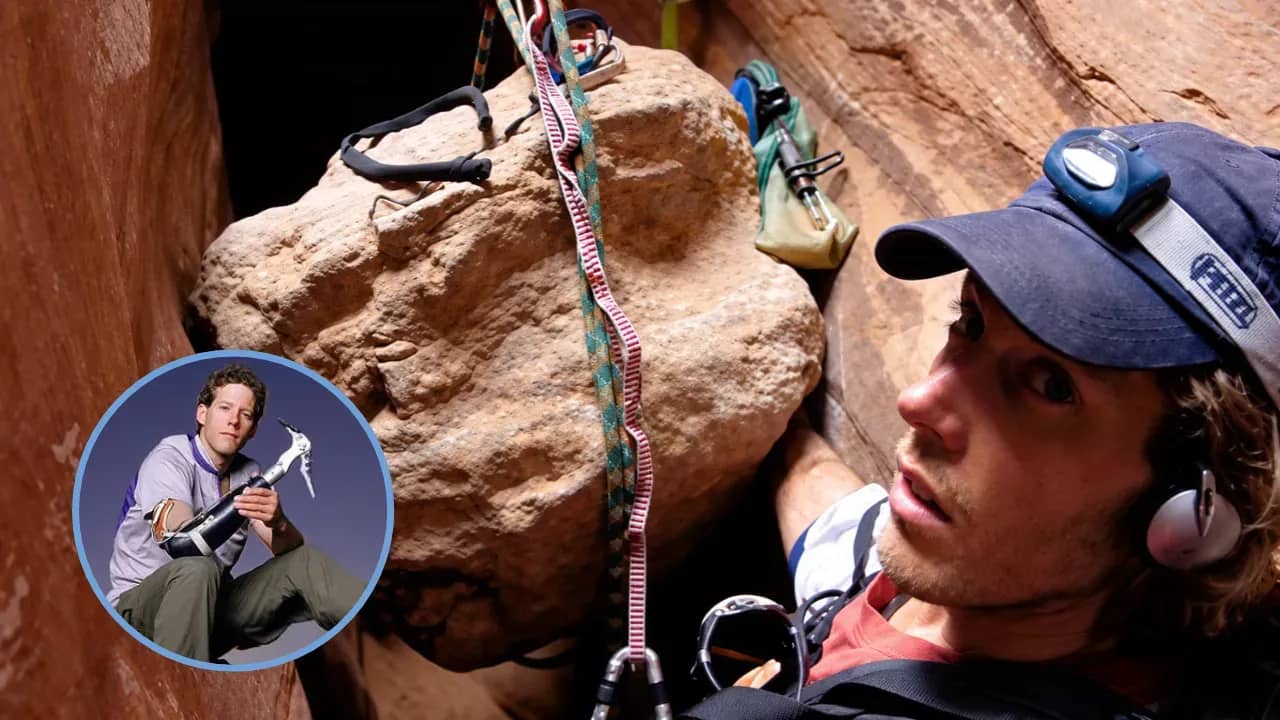
On April 26, 2003, Aron Ralston was moving alone through Bluejohn Canyon in southeastern Utah when a dislodged boulder crushed and pinned his right hand. No one knew his exact route. After 127 hours, with his water gone and rescue unlikely, the 27-year-old mountaineer broke the bones in his forearm, amputated it with a dull multitool, and began the long climb and hike toward help.
The act became the headline, then the memoir Between a Rock and a Hard Place and the film 127 Hours. The deeper story is about specialized outdoor knowledge under pressure, relentless improvisation, and one basic safety decision that no amount of experience could undo.
Fast Facts
- Who:
- American mountaineer, mechanical engineer, author and speaker Aron Ralston.
- Geek Obsession:
- Solo mountaineering, canyon travel and Colorado’s 14,000-foot peaks.
- Notable Feat:
- Amputated his trapped right forearm after 127 hours in Bluejohn Canyon and escaped alive.
- How It Worked:
- He broke both forearm bones, cut the remaining tissue, then rappelled and hiked toward help.
- Most Surprising Detail:
- His dull multitool could not cut bone. The breakthrough was realizing he could break it first.
- Reality Check:
- He was highly experienced, but had not told anyone his detailed route or expected return time.

An obsession built in mountains and canyons
Ralston was not a casual day hiker who wandered into technical terrain by accident. He trained as a mechanical engineer, worked for Intel, volunteered with the Albuquerque Mountain Rescue Council, and eventually left engineering to build his life around climbing.
In his first-person account for Outside, Ralston wrote that his family’s move to Colorado when he was 12 ignited his fascination with the wilderness. By 2002, he had climbed all of the Colorado summits he counted as fourteeners and had soloed 36 of them in winter.
“You guys make me proud. I go out looking for adventure and risk, so I can feel alive.”
Source: Aron Ralston’s account in Outside
That experience mattered in Bluejohn Canyon. It gave him the rope skills, gear knowledge and ability to work through a problem while cold, injured and dehydrated. It also fed a dangerous confidence in moving alone.
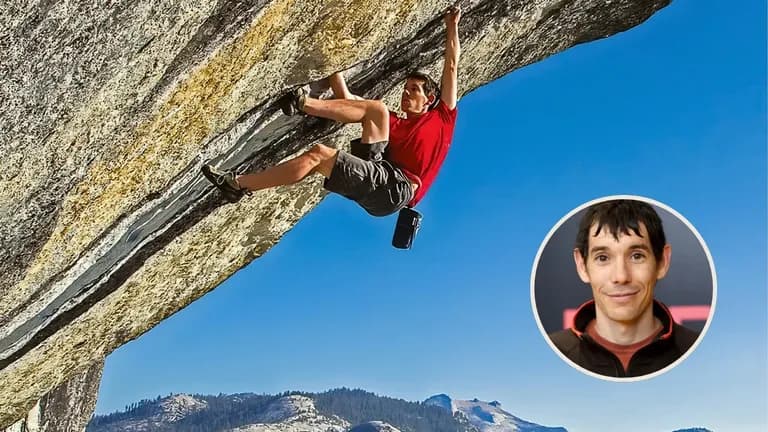
His combination of preparation and appetite for exposure has a modern parallel in Alex Honnold’s years of rehearsing El Capitan before his free-solo ascent. In both stories, the public sees one shocking act, while the real mechanics lie in years of technical practice.

The boulder that turned a day trip into 127 hours
Ralston planned a 30-mile circuit by bike and on foot through Bluejohn and Horseshoe canyons. At about 2:41 p.m., he reached a narrow slot and began lowering himself from a wedged rock. The chockstone shifted, fell with him and drove his right hand against the canyon wall.
He first attacked the problem like an engineer. He inventoried his gear, chipped at the rock with the knife, tried to build a lifting system with ropes, and considered cutting his arm. The estimated 800-pound boulder barely moved.
Time made every option worse. Temperatures dropped at night. His hand had no circulation. His water ran out. He used his camcorder to document the ordeal and record messages for his family, while the canyon’s depth and remoteness made a chance discovery unlikely.
The survival puzzle resembles Joe Simpson’s crawl back from Siula Grande: neither man escaped through willpower alone. Each kept converting a seemingly fatal situation into the next solvable mechanical task.
How Aron Ralston amputated his arm
The viral summary often says Ralston simply cut through his arm with a pocketknife. That leaves out the crucial problem: his blade could not saw through bone.
On the sixth day, he realized the trapped hand and forearm had deteriorated badly. He could use the boulder as leverage to bend and break the radius and ulna. Once the bones were broken, the multitool only had to cut skin, muscle, tendons, nerves and blood vessels.
In a 2004 interview with CBS News, he called the realization the best idea he had ever had because it solved the obstacle that had made amputation seem impossible.
“It was the best idea I’ve ever had.”
Source: CBS News interview with Aron Ralston
He used tubing from his water pack as a tourniquet and carried out the amputation in an organized sequence. The achievement was not a technique for others to copy. It was an improvised last resort after days of failed escape attempts, severe dehydration and tissue death.
The escape did not end at the boulder
Freeing himself only began the second phase. Ralston still had to leave the slot, descend a roughly 60-foot rappel one-handed, and travel through open desert while bleeding and exhausted.
A contemporary Los Angeles Times report said he walked about five miles before meeting hikers who gave him water and helped alert a nearby search helicopter. He remained conscious during the flight and walked into the emergency room.
The sequence matters because it shows what his canyon expertise actually contributed. The amputation freed him, but rope work, route knowledge, first aid and the ability to keep moving turned that freedom into survival.
The preventable mistake behind the survival feat
Ralston’s competence should not hide the most important safety lesson. He had not left friends or family a detailed route or return time. The only location he had mentioned was Utah, an enormous search area.
He had often shared itineraries before, but this trip was improvised after another plan was canceled. When he failed to return, his family and co-workers had to reconstruct his movements. A search was underway by the time he escaped, but rescuers did not know where the boulder had trapped him.
For remote travel, specialized ability is not a substitute for a check-in plan. Leave a route, trailhead, vehicle description and expected return time with a reliable person. In terrain without dependable phone service, a satellite communicator or personal locator beacon adds another layer of protection. Solo canyoneering also carries hazards that may be impossible to manage with one usable arm.
Isolation creates a different kind of endurance in Felicity Aston’s solo Antarctic crossing, where disciplined routines and communication planning helped her manage 59 days alone. Ralston’s ordeal shows why that planning matters even on a single-day objective.
What happened after Bluejohn Canyon
Ralston did not stop climbing. With prosthetic equipment, he returned to skiing, biking and mountaineering. In March 2005, he completed his winter solo project on Colorado’s fourteeners, a goal that had shaped his life before the accident.
A 2005 report from WildSnow documented his final winter summit on Mount Eolus. He also wrote Between a Rock and a Hard Place, and Danny Boyle’s 2010 film 127 Hours brought the story to a global audience.
Ralston later spoke with unusual honesty about the limits of a simple redemption story. In a 2010 Guardian interview, he said the experience did not immediately make him a more cautious person. Becoming a father changed how he weighed risk more deeply.
That makes his story more useful than a slogan about toughness. Expertise helped him survive a catastrophic trap. Improvisation gave him a way out. Yet the clearest lesson is quieter: adventure skills matter most when they are paired with humility, communication and a plan that lets other people find you.
Why Aron Ralston’s story still matters
The arm is the unforgettable fact, but the mind behind the decision is the reason the story lasts. Ralston tested options, rejected the ones that failed, discovered a new mechanical path and kept enough control to execute it.
Bluejohn Canyon did not prove that risk is noble or that determination defeats every hazard. It showed that niche expertise can become life-saving under pressure, while also exposing the cost of treating self-reliance as if it means being unreachable.
Ralston walked into the canyon chasing the identity he had built as a solo adventurer. He walked out with one arm, a second life and a much harder understanding of what survival really asks.
The weekly question
From obsession to clarity — one original question every week.
We answer one noisy topic at a time, in full. No daily roundup, no thread bait — just the question, the principles, and the system.