Alex Honnold Climbed El Capitan Without a Rope After Years of Preparation
Discover how Alex Honnold rehearsed thousands of moves before completing the first free-solo ascent of El Capitan in 3 hours 56 minutes.
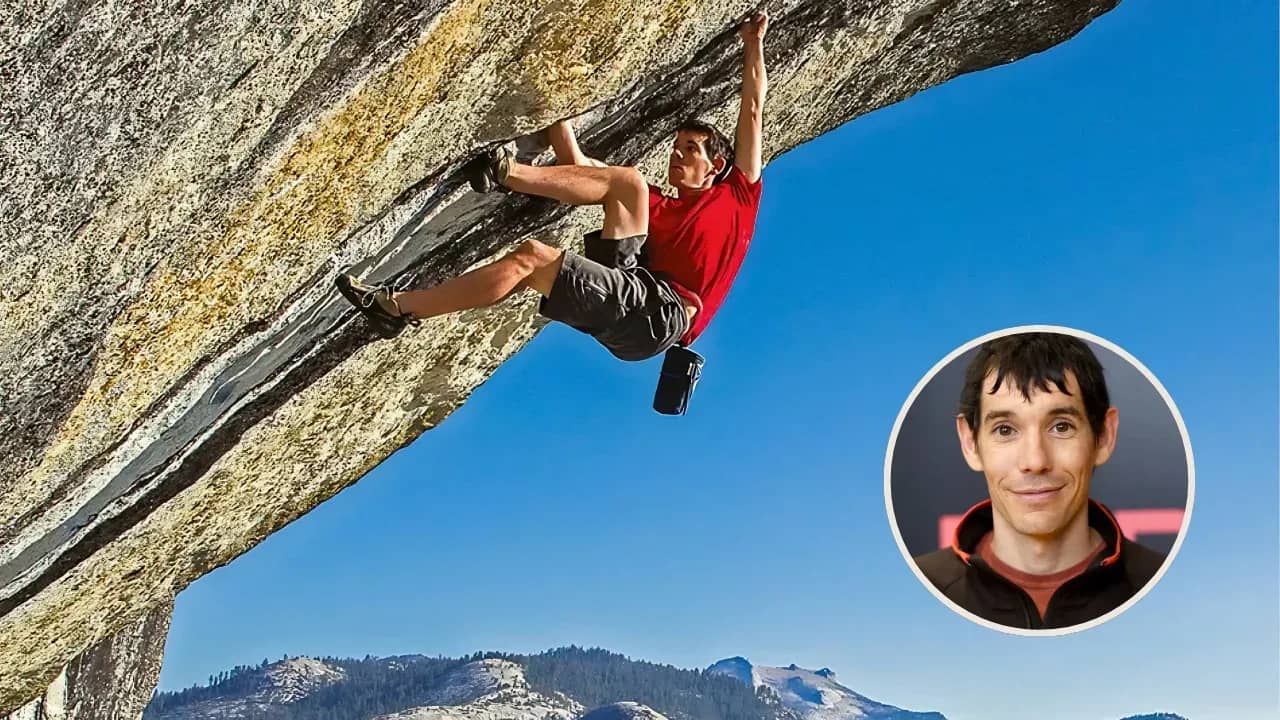
On June 3, 2017, American climber Alex Honnold became the first person to free-solo a complete route on Yosemite’s El Capitan. He climbed the roughly 3,000-foot granite wall without a rope or protective system, following the Freerider route to the summit in 3 hours 56 minutes.
The ascent looked almost impossibly calm. Its foundation was not fearlessness or improvisation. Honnold had spent years considering the climb and more than a year turning thousands of individual movements into a sequence he could execute from memory.
Fast Facts
- Who
- Alex Honnold, an American climber known for technically difficult free-solo ascents.
- Geek Obsession
- Studying, rehearsing and memorizing climbing movements until exposed routes feel familiar.
- Notable Feat
- First free-solo ascent of a complete El Capitan route, achieved on June 3, 2017.
- Key Number
- He completed the roughly 3,000-foot Freerider route in 3 hours 56 minutes.
- How It Worked
- Hundreds of protected practice hours turned thousands of hand-and-foot movements into a memorized sequence.
- Reality Check
- He used shoes and chalk, but no rope or system capable of arresting a fall.
The Climber Behind the El Capitan Free Solo
Honnold was already one of the world’s best-known free soloists before El Capitan. His earlier ropeless ascents included Moonlight Buttress in Zion National Park and the Regular Northwest Face of Half Dome in Yosemite.
Those climbs established his ability to move efficiently across long, difficult routes. El Capitan was a different scale of problem. Its southwest face rises about 3,000 feet above Yosemite Valley, and the Freerider route tests balance, grip, flexibility, endurance and decision-making across roughly 30 pitches.
Honnold had been thinking seriously about free-soloing El Capitan since at least 2009. He studied several possible routes before selecting Freerider, an elite free-climbing route that typically takes experienced roped parties several days to complete.
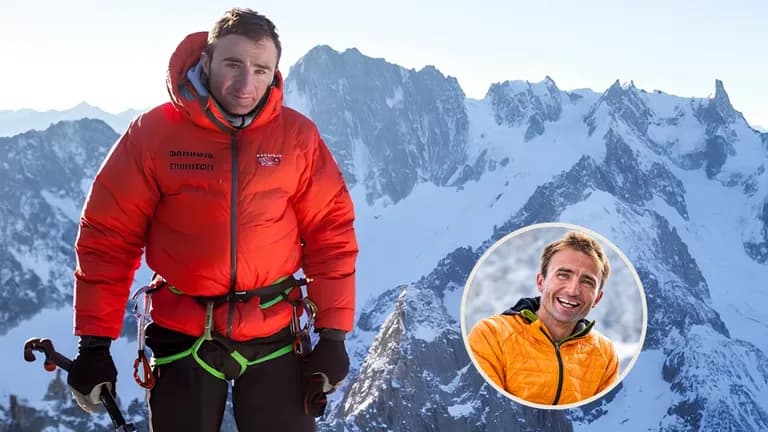
His analytical approach has parallels elsewhere in climbing. Ueli Steck’s precision-driven solo climbing on the Eiger similarly depended on making difficult movement efficient through repetition and detailed preparation.
Turning Freerider Into a Choreographed Sequence
Honnold did not prepare for El Capitan by simply becoming comfortable with exposure. He rehearsed Freerider while attached to ropes, testing holds, refining foot placements and finding solutions for sections where a small mistake could become unrecoverable.
According to National Geographic’s account of his preparation, he spent hundreds of hours practicing the route and memorized thousands of hand-and-foot sequences. Back in his van, he recorded training details in spiral notebooks.
The route demanded several different kinds of climbing. On the smooth Freeblast slabs, friction between his shoes and the granite mattered more than obvious handholds. The Monster Offwidth required him to wedge and move his body through a wide crack. At the Boulder Problem, about 2,300 feet above the valley, he faced the route’s most technically complex sequence.
He also practiced mentally. By visualizing the route and removing uncertainty before the climb, Honnold wanted each decision to feel familiar when no rope was available to catch a fall.
I knew exactly what to do the whole way. A lot of the handholds feel like old friends.
Alex Honnold : National Geographic
The First Attempt Ended With a Retreat
The successful climb was not his first attempt. In November 2016, Honnold started up Freerider but stopped after less than an hour because the conditions and his movement did not feel right.
That retreat is an important part of the story. It shows that his preparation included a willingness to abandon the climb rather than force it. He returned to roped rehearsals, continued refining the sections that troubled him and waited seven months before trying again.
He was especially concerned about the Freeblast slabs. Unlike a crack that can accept fingers or hands, slab climbing can depend on balance, body position and the friction created by climbing shoes against nearly featureless rock. Honnold had slipped there during protected practice sessions. Without a rope, there would be no equivalent second attempt.
Three Hours and 56 Minutes on the Wall
Honnold began climbing at 5:32 a.m. on June 3, 2017. He carried climbing shoes and a chalk bag, but no rope or protective equipment.
He moved through the Freeblast slabs shortly after dawn, passed climbers sleeping on ledges and worked through the Monster Offwidth and Boulder Problem. The final 600 feet took him about 20 minutes. At 9:28 a.m., he reached the summit.
The contemporary climbing report recorded his time as 3 hours 56 minutes. For comparison, it noted that most parties climbing Freerider with ropes took three to five days.
His reaction was characteristically understated. After reaching the top, exchanging hugs and sitting for an interview, he was already talking about doing a finger-strength workout later that day.
The Reality Behind “Climbing Without Gear”
Free soloing and free climbing are not interchangeable terms. In free climbing, a climber uses hands and feet to make upward progress while a rope and protection arrest a fall. In free soloing, that safety system is removed.
Honnold still used purpose-built climbing shoes and chalk during the El Capitan ascent. The accurate description is therefore that he climbed without a rope or protective equipment, not that he used no equipment at all.
The preparation reduced uncertainty, but it did not remove the consequences of a mistake. A broken hold, unexpected patch of moisture, loss of balance or momentary lapse in concentration could still have been fatal. His result should not be treated as evidence that free soloing is safe or suitable for ordinary climbers.
The feat was not the product of an inability to feel fear. Honnold described feeling nervous at the bottom and tense on parts of the route. His method was to select a climb within his technical ability, rehearse it intensively and wait until his physical condition, the rock and his mental state aligned.
From Free Solo to Taipei 101
Jimmy Chin and Elizabeth Chai Vasarhelyi documented the preparation and ascent in Free Solo. The film brought Honnold’s climb to a global audience and won the 2019 Academy Award for Best Documentary Feature.
Honnold continued climbing and supporting the nonprofit he founded in 2012. The Honnold Foundation funds community-based solar-energy projects, connecting his outdoor career with work on energy access and environmental impact.
On January 25, 2026, he completed another highly visible free solo, ascending the 1,667-foot Taipei 101 skyscraper in about 90 minutes. The urban setting placed him in a tradition also explored through Alain Robert’s decades of ropeless skyscraper climbing, although Honnold’s ascent was authorized and broadcast live.
What an incredible position, what a beautiful way to see Taipei.
Alex Honnold: Associated Press
The enduring lesson of El Capitan is not that fear can simply be ignored. It is that the apparent simplicity of one person moving across bare granite concealed years of route study, protected rehearsal, notebooks, judgment and thousands of carefully remembered movements.
The weekly question
From obsession to clarity — one original question every week.
We answer one noisy topic at a time, in full. No daily roundup, no thread bait — just the question, the principles, and the system.