Valery Rozov BASE Jumped From 7,220 Metres Beside Everest
Valery Rozov’s 2013 BASE jump beside Everest began at 7,220 metres, after years of preparation for a brief wingsuit flight.
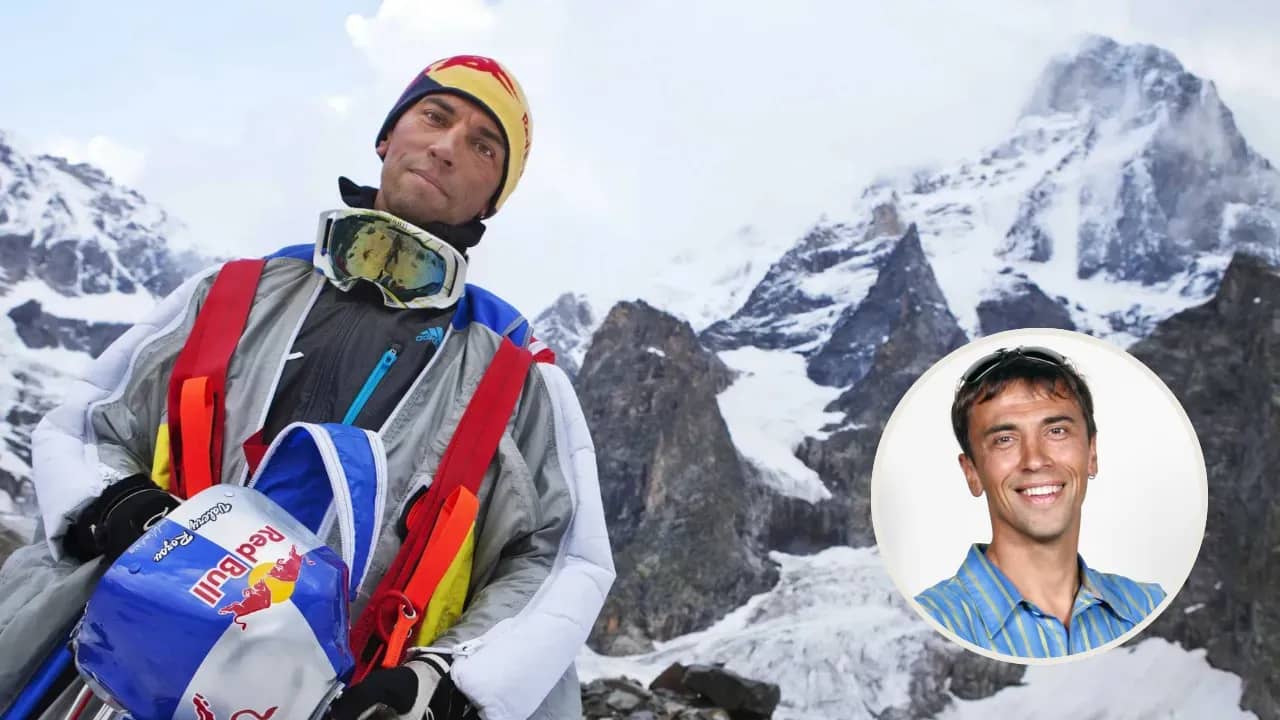
On May 5, 2013, Russian BASE jumper Valery Rozov launched himself into the Himalayan air from about 7,220 metres above sea level. Wearing a specially developed wingsuit, the 48-year-old flew toward the Rongbuk Glacier before opening his parachute and landing safely.
The feat became famous as an Everest BASE jump. More precisely, he launched from a buttress of Changtse, beside Everest on the Tibetan side, as contemporary coverage in ParaMag identifies. Getting there required an expedition. Making the wingsuit work after leaving the cliff was another challenge entirely.
Fast Facts
- Who
- Valery Rozov was a Russian mountaineer and BASE jumper who combined climbing expertise with wingsuit flying.
- Geek Obsession
- Exploring unusual mountain launch sites through climbing, equipment development, and carefully prepared wingsuit BASE jumps.
- Notable Feat
- On May 5, 2013, he launched from about 7,220 metres on Changtse, beside Everest, and landed on Rongbuk Glacier.
- How It Worked
- Years of preparation and a specially developed wingsuit supported the flight; a parachute completed the landing.
- Reality Check
- The launch was on neighboring Changtse, not Everest’s summit. The 7,220-metre figure measures elevation above sea level.
- What Happened Next
- Rozov surpassed his record on Cho Oyu in 2016 and died during an Ama Dablam BASE jump in 2017.
A Fascination With Places to Jump
Rozov brought together two demanding specialties: climbing mountains and jumping from fixed objects with a parachute. His earlier expeditions included jumps at Antarctica’s Ulvetanna in 2010 and the Himalayan mountain Shivling in 2012.
Those locations help explain his particular obsession. Each mountain presented a different combination of access, terrain, weather, and flight possibilities. Asked about his motivation after the 2013 jump, he resisted being defined entirely by records.
“I never strove to break records”
He explained that the attraction was the place itself and what he could do there. A record could follow, but the landscape supplied the idea.
Years of Preparation Before Four Days of Climbing
The project took shape over several years. An idea discussed in 2009 led to reconnaissance in 2011. Rozov later worked with wingsuit manufacturer Tony Suits on equipment suited to the challenge.
ITV’s contemporary report describes more than two years of preparation, including work on the wingsuit. Rozov’s expedition included four Sherpas, photographers, and a camera crew. The ascent from base camp to the departure point took four days.
The support belongs in the story. Himalayan achievements depend on people, timing, equipment, and acclimatization, a theme also central to Nimsdai Purja’s Himalayan climbing project. Rozov’s flight began only after that mountain work had been done.
The Difficult Seconds Before the Glide
A wingsuit does not immediately turn a step off a cliff into level flight. The jumper must gain speed while air enters the suit, allowing a controlled glide to develop.
Rozov told RFE/RL that the initial vertical section was short, about 200 metres. He needed room to accelerate, and the thin air made the transition less predictable. The mountain’s enormous elevation did not mean he had an equally enormous clear drop beneath him.
This was the technical problem at the heart of the attempt: reaching a usable glide while there was still room to clear the terrain.

A Glacier Landing and a Delayed Reaction
Contemporary accounts describe roughly a minute of wingsuit flight before the parachute landing on Rongbuk Glacier, at around 5,950 metres. The VOA report of the jump records those approximate figures and the expedition behind them.
The parachute completed Rozov’s descent. His approach differed from Gary Connery’s wingsuit landing on cardboard boxes, which used a specially prepared landing area to absorb the impact.
Rozov’s immediate response to reaching the glacier was quieter than the achievement might suggest.
“I was so exhausted that I barely felt anything.”
Source: Skydivemag’s 2013 interview feature.
He recalled that the deeper satisfaction arrived two days later at base camp. During the flight, he had concentrated on his position and route, with little opportunity to enjoy the view.
What the Everest Record Actually Meant
The 7,220-metre figure describes the departure point’s elevation above sea level. It does not describe a 7,220-metre freefall.
The geography also deserves precision. Although the sponsor and many headlines described Everest’s north face, the launch was on neighboring Changtse. Later reporting by ExplorersWeb explicitly corrects that description.
These distinctions preserve what Rozov actually achieved: a wingsuit BASE jump from an exceptionally high mountain departure point, followed by a successful glacier landing.
A Higher Jump, Then a Fatal Expedition
On October 5, 2016, Rozov jumped from around 7,700 metres on Cho Oyu. Guinness World Records documents that achievement and confirms that it surpassed his 2013 highest BASE exit point.
On November 11, 2017, he died during a BASE-jumping expedition on Ama Dablam in Nepal. He was 52. CNN’s reporting, carried by WRAL, includes confirmation from his sponsor and an expedition organizer.
His death is part of the story’s reality: extensive experience and preparation could not remove the danger. The brief flight beside Everest remains a striking example of climbing knowledge, equipment development, and practiced flying brought together for one carefully planned departure.
The weekly question
From obsession to clarity — one original question every week.
We answer one noisy topic at a time, in full. No daily roundup, no thread bait — just the question, the principles, and the system.