Top Shark Tank Deals: The 5 Biggest Investments Ever (2026 Update)
From Zipz Wine’s record $2.5 million handshake to Mark Cuban’s haunted hayride bet, these are the biggest Shark Tank deals ever — ranked by on-air investment size, with 2026 status updates.
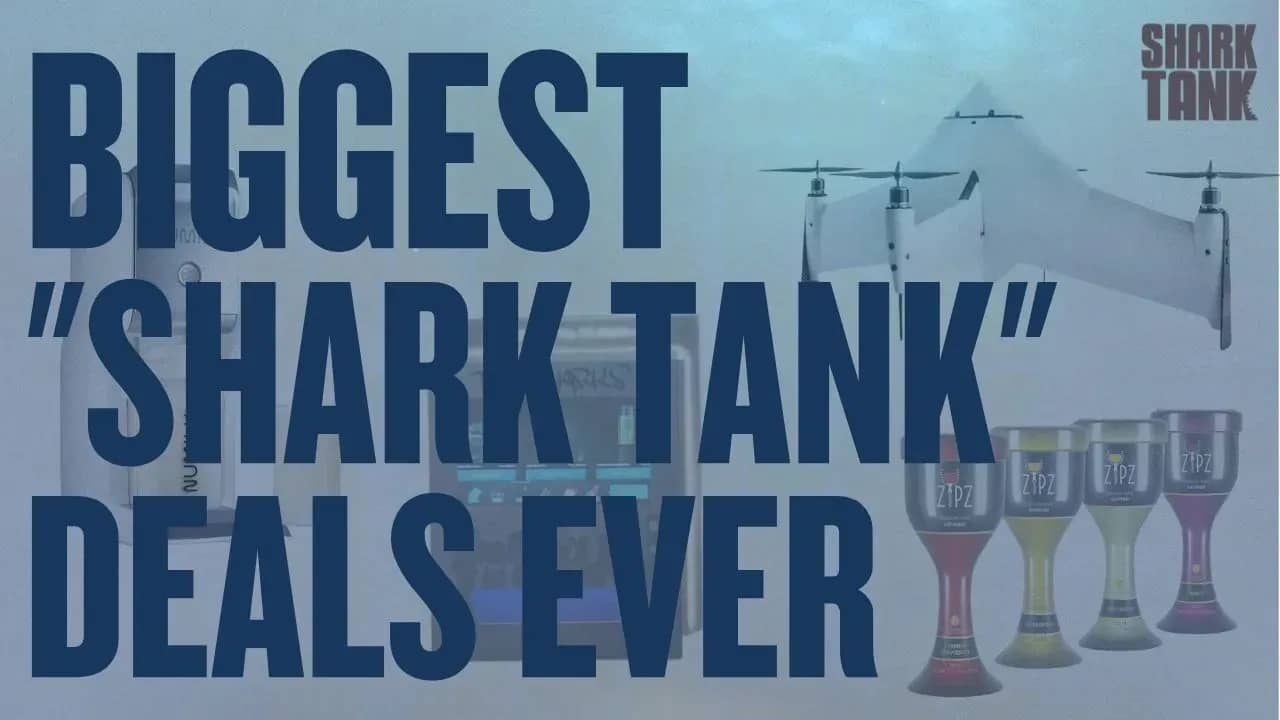
Quick answer: The biggest Shark Tank deals on our 2026 list are Zipz Wine ($2.5M), Vengo Labs ($2M), Ten Thirty-One Productions ($2M), Numilk (up to $2M), and xCraft ($1.5M on TV). We rank them by the highest on-air investment dollars, not by which company became the most valuable afterward. If you searched “top shark tank deals,” “best shark tank deals,” or “zipz wine net worth,” start with the comparison table, then read each company’s update below.
| Rank | Company | On-air deal | Shark(s) | Season | 2026 status |
|---|---|---|---|---|---|
| 1 | Zipz Wine | $2.5M for 10% | Kevin O’Leary | 6 (2014) | Largely inactive; licensing pivot |
| 2 | Vengo Labs | $2M debt + 3% equity | Kevin O’Leary & Lori Greiner | 7 (2016) | Active smart-vending company |
| 3 | Ten Thirty-One Productions | $2M for 20% | Mark Cuban | 5 (2013) | Sold in 2018 |
| 4 | Numilk | Up to $2M (7% + optional loan) | Mark Cuban | 12 (2021) | Active; Hamilton Beach partnership |
| 5 | xCraft | $1.5M for 25% (5 sharks) | All five sharks | 7 (2015) | TV deal never closed; still operating |
What are the top Shark Tank deals?
Shark Tank has logged thousands of pitches, but only a handful crossed the $1.5 million mark on camera. The five below are the best-known mega-deals by raw dollars at the handshake — the queries people type when they want “shark tank deals,” “best shark tank deals,” or “top shark tank deals” answered fast.
Important nuance: a huge TV offer is not the same as a closed investment or a lasting business. Zipz still tops the dollar list, but the brand is largely gone. xCraft made history with all five sharks, yet that syndicate deal never finalized after filming. Conversely, smaller checks (like QPay on Shark Tank Australia) can outperform giant U.S. headlines when the money actually lands and the model scales.
1. Zipz Wine — $2.5 million (largest Shark Tank deal at the time)
Founder: Andrew McMurray | Product: Single-serve wine in durable, stadium-friendly cups | Ask: $2.5M for 10% (~$25M implied valuation)
McMurray pitched Zipz on Shark Tank Season 6 in 2014. He framed Zipz less as a wine brand and more as a packaging and licensing platform — smart positioning given the show had already seen similar single-serve wine concepts. Four sharks passed. Kevin O’Leary, a wine investor himself, offered $2.5 million for 10% equity with a notable option: he could buy another 10% at the same $25 million valuation if Zipz landed in Costco. McMurray accepted after a quick call to his existing investors. At the time, it was the largest deal in Shark Tank history.
Why the sharks bit:
- Licensing fees were already flowing — McMurray cited six-figure packaging revenue before the pitch.
- Stadiums, concerts, and travel channels fit single-serve alcohol trends.
- O’Leary saw a Costco-sized distribution unlock (that partnership never materialized).
What happened after: The on-air handshake became a signed deal, and Zipz enjoyed a publicity spike. Sales climbed briefly, but margins on consumer wine were tough and competition was fierce. By 2016–2017, Zipz stopped selling its own branded wine and pivoted toward licensing the cup technology to other labels. Social channels and the consumer site faded. McMurray returned to his long career in the wine trade rather than scaling Zipz into a standalone unicorn.
Zipz Wine net worth in 2026
Searchers landing here for “zipz wine net worth” usually want a number, not nostalgia. Zipz is not an active consumer wine brand anymore. The operating entity pivoted to packaging/licensing and then went quiet. Without public financials, our best-supported editorial estimate for Zipz’s remaining enterprise value is under $1 million — effectively a dormant licensing shell rather than a growth company.
Do not confuse the old $25 million implied TV valuation with current worth. That figure reflected O’Leary’s 10% price at the handshake, not today’s cash flows (there essentially aren’t any on the consumer side). The more honest 2026 headline: Zipz is a cautionary mega-deal — record check, real contract, but the business did not convert hype into a lasting brand.
2. Vengo Labs — $2 million venture debt + 3% equity
Founders: Brian Shimmerlik & Steven Bofill | Product: Wall-mounted smart vending machines with digital ad screens | Ask: $2M for 12.5%
Vengo entered Season 7 (2016) after raising millions from tech and celebrity angels (including Nas and Tony Hsieh’s orbit). Shimmerlik negotiated hard. Kevin O’Leary and Lori Greiner teamed up on a structure that is still rare on the show: $2 million in venture debt repaid over 36 months at 7% interest, plus 3% equity — far less dilution than the 12.5% originally offered.
What happened after: Vengo kept deploying compact machines in offices, gyms, apartments, and hospitality venues, treating each unit as both a product sale and an ad network. The company reported thousands of live placements and eight-figure revenue in recent years. Unlike Zipz, Vengo’s mega-deal translated into ongoing operations, even though debt-first financing is tougher to headline than pure equity.
3. Ten Thirty-One Productions — $2 million for 20%
Founder: Melissa Carbone | Product: Live horror attractions (LA Haunted Hayride, horror campouts) | Ask: $2M for 10%
Carbone walked into Season 5 (2013) with zombies and numbers that changed the room: the LA Haunted Hayride was doing about $1.8 million in 17 nights with roughly $600,000 profit. Kevin O’Leary balked at the valuation. Daymond John offered $2M for 40%. Carbone countered $2M for 20%, and Mark Cuban instantly said yes — at the time, another biggest-deal-ever headline.
What happened after: Cuban helped open doors with Live Nation and Ticketmaster; Ten Thirty-One expanded toward New York and scaled cast to nearly 1,000 people in peak season. Cuban later grouped it among his most profitable Shark Tank bets. In 2018, Carbone sold the company to Thirteenth Floor Entertainment Group, converting the haunted attraction into part of a larger regional horror portfolio.
4. Numilk — up to $2 million from Mark Cuban
Founders: Joe Savino & Ari Tolwin | Product: On-demand plant-milk machines (commercial + home) | Ask: $1M for 5%
Numilk’s Season 12 (2021) pitch leaned into Mark Cuban’s plant-based portfolio. Despite years of heavy R&D losses, Cuban saw upside in the countertop unit. His offer totaled up to $2 million: $1 million for 7% equity, plus an optional $1 million loan at 3% interest that grants another 3% advisory equity if drawn — effectively 10% for $2 million if fully used. The deal closed in 2022.
What happened after: Numilk pivoted from a stalled Whole Foods rollout toward coffee shops and food service, scaled commercial placements, and partnered with Hamilton Beach Brands on next-gen home and commercial appliances (consumer units rolled out in 2024). For a deeper company-specific update, see our Numilk net worth update.
5. xCraft — $1.5 million from all five sharks (deal never closed)
Founders: JD Claridge & Charles Manning | Product: Hybrid drone (vertical takeoff + high-speed forward flight) | Ask: $500K for 20%
xCraft’s Season 7 (2015) segment turned into a bidding war. The founders asked whether all five sharks would syndicate. The final on-air terms: $1.5 million for 25% total — each shark putting in $300K for 5%, implying a $6 million post-money valuation (more money and a higher price than they originally requested).
What happened after: Despite the historic handshake, reporting indicates the five-shark syndicate never closed after due diligence — a reminder that Shark Tank’s biggest moments are not always binding. xCraft raised via crowdfunding and shifted toward enterprise, mapping, and public-safety drone markets rather than mass-market consumer quadcopters.
READ ALSO: What happened when a mega-deal never closed (iCapsulate) · Sweep Easy net worth update
How we rank the biggest Shark Tank deals
We sort this list by on-air investment dollars at the handshake, using U.S. Shark Tank episodes. That is why Zipz stays #1 even though newer seasons occasionally flirt with similar numbers, and why we still include xCraft despite the post-show collapse — the TV commitment was $1.5M.
We exclude or footnote deals that were purely contingent (options, unraveled handshakes, or purely verbal caps) unless they were stated as firm on air. When you compare best shark tank deals for investors, also weigh: Did the check close? Did the shark stay involved? Did the category support margins?
Frequently asked questions
What are the top shark tank deals?
By on-air dollars on our 2026 list: Zipz Wine ($2.5M), Vengo Labs ($2M debt/equity package), Ten Thirty-One Productions ($2M), Numilk (up to $2M), and xCraft ($1.5M five-shark syndicate on TV).
What is the best shark tank deal ever?
Dollar size says Zipz; outcomes say otherwise. Mark Cuban’s Ten Thirty-One bet and Numilk’s structured Cuban deal delivered more lasting operating value. Vengo proves debt-heavy deals can scale. Zipz and xCraft show that biggest does not mean best.
What is Zipz Wine’s net worth?
We estimate Zipz’s remaining enterprise value at under $1 million in 2026. The consumer wine business wound down; the brand pivoted to licensing and then went largely inactive.
Did the xCraft five-shark deal close?
No. All five sharks agreed on air to $1.5M for 25%, but the syndicate did not finalize after filming.
Is Numilk still in business?
Yes. Numilk closed Mark Cuban’s deal in 2022, expanded commercial deployments, and partnered with Hamilton Beach on consumer and commercial milk machines.
How we verified this update
This update is based on the on-air terms and reported post-show outcomes for Zipz Wine (Season 6), Vengo Labs (Season 7), Ten Thirty-One Productions (Season 5), Numilk (Season 12), and xCraft (Season 7), plus subsequent partnership and acquisition reporting (including Ten Thirty-One’s 2018 sale and Numilk’s Hamilton Beach agreement). Net worth figures for defunct or private companies are editorial estimates where audited financials are unavailable. We refresh this hub when new verified facts emerge.
RELATED: Top 4 memorable Shark Tank pitches · Flasky Flowers net worth update · Scrub Daddy net worth update · QPay net worth update · Shark Tank: things you should know
The weekly question
From obsession to clarity — one original question every week.
We answer one noisy topic at a time, in full. No daily roundup, no thread bait — just the question, the principles, and the system.