
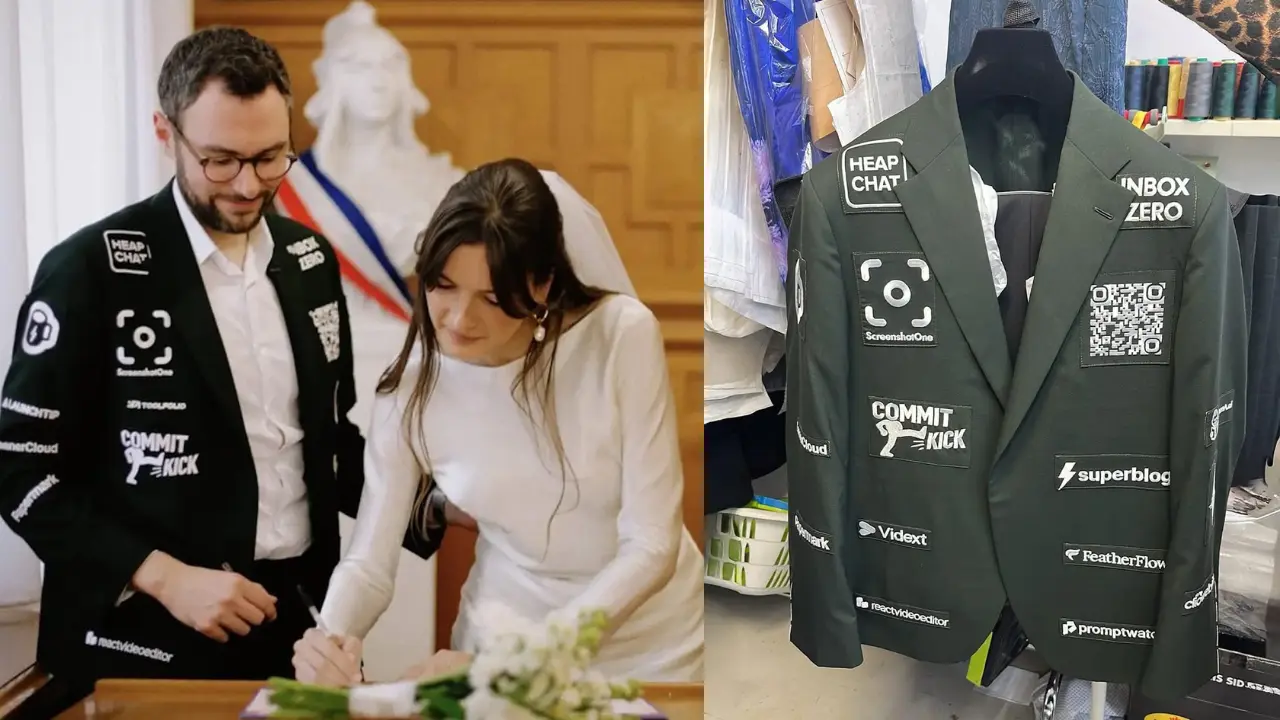
On October 25, 2025, in Lille, France, indie founder Dagobert Renouf made startup history at his own wedding. Instead of a quiet personal ceremony, he turned his tuxedo into a billboard for 26 tech startups, selling logo space to fund his wedding expenses and celebrate the indie hacker community.
The idea began as a simple joke in July but grew into a viral marketing event that blurred the line between creativity and commercialization. What started as a personal milestone became a global headline and a symbol of the “build in public” movement.
Fast Facts
- Date & Place: October 25, 2025, Lille, France
- Who: French indie founder Dagobert Renouf
- What: Sold ad space on his wedding suit to 26 tech startups
- Funds Raised: About €10,000, covering his custom €5,500 tuxedo
- Impact: Viral global story celebrating creativity in startup culture
The Idea That Sold Out Before the Wedding
Renouf announced his plan on July 24, 2025, through a thread on X (formerly Twitter). “Currently getting people to sponsor my wedding,” he wrote. Within days, the post spread across the tech world. By late July, all 26 ad spots were sold.
Currently getting people to sponsor my wedding and pass it as business expense under advertising. Sold 7 spots today. https://t.co/p8tK3q1rWl pic.twitter.com/i2OmLlTKnp
— Dagobert – Corporate sellout 👔 (@dagorenouf) July 24, 2025
He priced the sponsorships between €300 and €500, depending on placement, and raised roughly €10,000. His motivation was clear and practical. After burning over $100,000 building his previous startup, Logology.co, Renouf wanted to celebrate his marriage without taking on debt.
He called it “a community celebration” and a way to say goodbye to his indie hacking years “in style.” The response was overwhelming. Startups ranging from AI tools like ScreenshotOne and Rank.ai to SaaS platforms like LaunchTip and InboxZero joined the campaign. Each got its logo embroidered onto his black tuxedo.
Saying goodbye to indie hacking in style. Wedding suit is almost ready. pic.twitter.com/PC4d2PcaAa
— Dagobert – Corporate sellout 👔 (@dagorenouf) October 16, 2025
Even his new employer, CompAI, joined in, a fitting touch since the viral stunt helped him land his high-paying sales role.
Designing the Sponsored Suit
Renouf’s tuxedo wasn’t a gimmick hastily thrown together. It was professionally tailored in Lille, featuring embroidered patches carefully placed for maximum visibility.
The design process took about two weeks and cost €5,500. Logos were printed and hand-sewn by a local tailor, creating a sleek but eye-catching look. The chest and sleeves were prime spots, giving 90 percent visibility in photos and videos.
Sponsors received simple invoices through LemonSqueezy, allowing them to record their payments as business expenses. Some even added QR codes to their patches, turning a traditional wedding outfit into a live marketing asset.
By the time of the ceremony, Renouf’s posts about the suit had reached over 900,000 views, and his wedding photos became viral content.
Holy shit the tailor just sent me this. It's almost ready. Now he will manually sew everything onto the suit. pic.twitter.com/gxk22eFSwS
— Dagobert – Corporate sellout 👔 (@dagorenouf) October 22, 2025
How It Paid Off: From Suit to Sales
Financially, the project worked. Renouf earned €10,000 in sponsorships, covering the €5,500 suit and €2,500 in taxes, leaving a small profit of around €2,000.
But the real payoff wasn’t just money. The publicity helped him transition from an indie founder to a corporate salesperson at CompAI, where he reportedly earns over $20,000 per month. Sponsors benefited too. LaunchTip, one of the participants, claimed the campaign “broke the internet” and delivered millions of impressions across social platforms.
The event even became a talking point on French TV, in outlets like M6, Creapills, and Hindustan Times, all praising the mix of absurdity and genius.
Renouf later posted that the day was “beautiful” and thanked the 26 startups that “helped us pay for our wedding.”
Public Reactions and Ethical Debate
The internet reaction was intense but mostly positive. About 95 percent of comments supported his creativity. Followers called it “peak indie energy” and a “masterclass in community branding.”
A smaller portion found the idea troubling. Some called it “shabby” or “sad desperation,” arguing that weddings should remain personal. Yet the stunt resonated because it reflected the scrappy resourcefulness of the indie hacker world, where transparency and self-promotion are part of the culture.
French outlets treated it as a cultural curiosity, while international audiences saw it as clever entrepreneurship. The mix of romance, humor, and branding created a perfect viral storm.
Even Renouf’s spouse supported the project. She initially had doubts but later posted that she loved the idea and found it fun. The contrast between her pure white dress and his logo-covered tuxedo became a symbol of balance between personal and professional life.
Explore this surprising study revealing how being rude to ChatGPT made it 5% more accurate .
Why the Stunt Worked
The campaign succeeded because it combined simplicity, story, and surprise, the key elements of viral marketing. A wedding is one of the most personal events in life, and turning it into a community-funded project was both unexpected and deeply relatable.
It also appealed to emotion. Viewers admired Renouf’s determination to avoid debt after burnout and rebuild his life with humor. His honesty about financial struggles and open collaboration with fellow founders made the campaign feel authentic, not exploitative.
From a marketing perspective, it was a textbook case of earned media. One viral thread on X generated global coverage worth far more than the €10,000 raised.
Cultural Impact and Lessons for Founders
Renouf’s stunt pushed the boundaries of what personal branding can look like in the startup era. It highlighted how modern founders use storytelling, humor, and community to gain visibility.
The move also revealed a cultural shift: personal moments are now powerful platforms for business visibility. The blend of sincerity and spectacle made the story unforgettable.
Experts in the indie scene called it “authentic hustle,” not exploitation. In an ecosystem where thousands of founders struggle for attention, Renouf proved that creativity can still win against massive marketing budgets.
The event sparked copycat jokes online, including “sponsored baby cribs” and “brand-backed honeymoons,” hinting that the concept might inspire new waves of personal-event marketing.
The Suit That Changed Everything
After the ceremony, Renouf posted a cinematic thank-you video and promised more updates. He reported no regrets, calling it “a celebration of the community that kept me going.”
Big thanks to the 26 startups who helped us pay for our wedding, it was a beautiful day 😍 (full cinematic video coming soon) pic.twitter.com/2LDcrjjws5
— Dagobert – Corporate sellout 👔 (@dagorenouf) October 26, 2025
His next chapter is focused on his new sales career, but the wedding stunt remains a defining moment in his journey. For the sponsors, it became a badge of honor, proof that they supported a one-of-a-kind marketing experiment that went global.
Whether seen as a genius move or a bold overstep, the project captured the essence of modern entrepreneurship: turning personal stories into viral business opportunities.
Dagobert Renouf’s sponsored wedding wasn’t about selling out; it was about standing out. It showed that authenticity, transparency, and humor can turn even a wedding into a viral campaign that captures global attention.
In a world where startups fight for visibility, Renouf’s story proves that creativity still beats budget. He turned his tuxedo into a message: your life can be your brand if you dare to stitch it in.
Curious how far AI has come? Read the latest insight on how AI models now pass the world’s hardest finance exam in minutes .
FAQs
Renouf shared the idea on X in July 2025 to fund his wedding without debt after losing over $100,000 on a previous startup. The post went viral, and 26 startups quickly bought logo spots on his tuxedo.
He raised about €10,000 from logo placements, covering his €5,500 suit and taxes, and made roughly €2,000 profit. The stunt also boosted his visibility and career opportunities.
Most praised his creativity and humor, while a few criticized the commercialization. The story trended globally and was featured by NDTV, Hindustan Times, and Business Today.
“`