
The World’s Youngest Self-Made Billionaires Are Three 22-Year-Olds Behind AI Giant Mercor
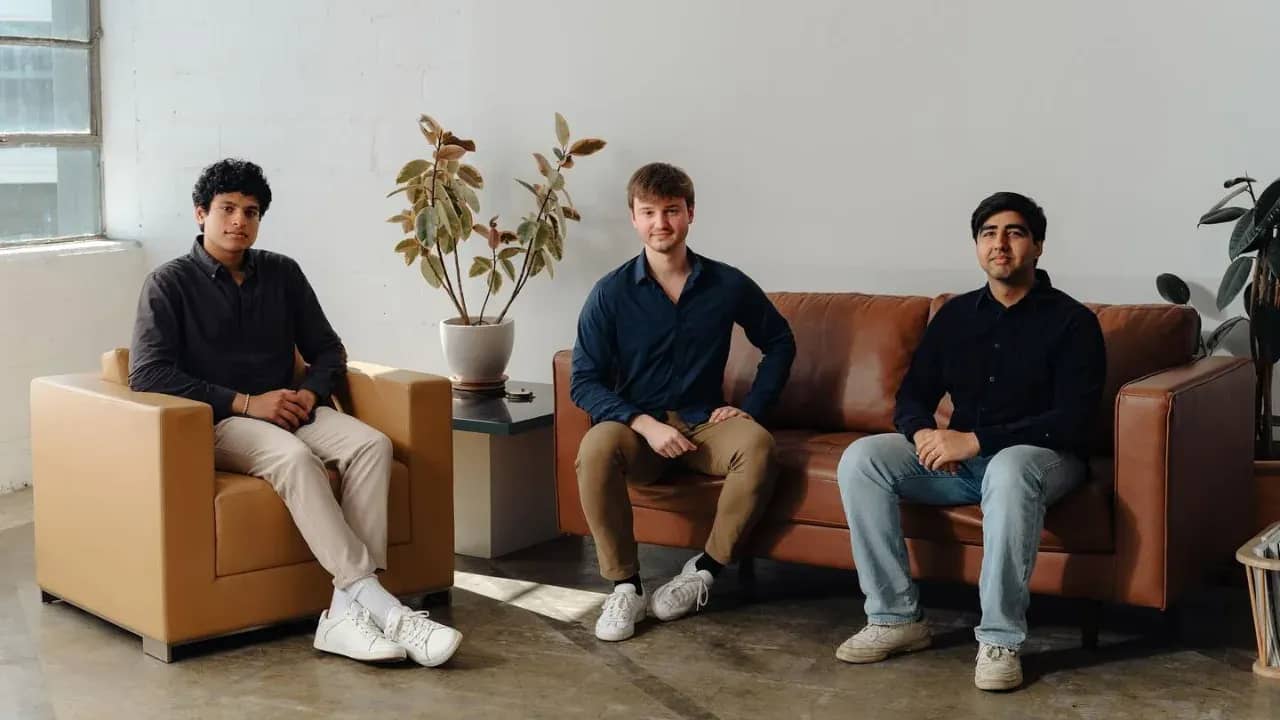
Three 22-year-old college dropouts just became the world’s youngest self-made billionaires after their AI startup, Mercor, reached a $10 billion valuation in 2025
When Forbes confirmed in October 2025 that Brendan Foody, Adarsh Hiremath, and Surya Midha each crossed the billion-dollar mark, they became the youngest self-made billionaires in the world. Their company, Mercor, had just closed a $350 million Series C funding round led by Felicis Ventures, pushing its valuation to $10 billion (TechCrunch, WSJ, Oct 2025). At only twenty-two, each founder now owns about twenty-two percent of the company, enough to outpace Mark Zuckerberg, who joined the Forbes list at twenty-three in 2008.
Foody, Hiremath, and Midha each crossed the billion-dollar mark, they became the youngest self-made billionaires in the world. Mercor’s rise has been staggering. It grew from a dorm-room prototype in 2023 to a platform serving the world’s top AI labs, including OpenAI, Anthropic, and Meta. What began as a hiring tool for engineers quickly became the backbone of the human-data pipeline powering frontier AI systems.
Fast Facts
- Valuation: Mercor reached a $10B valuation in October 2025 after a $350M Series C.
- Founders: Brendan Foody, Adarsh Hiremath, and Surya Midha, each just 22 years old.
- Core Business: AI data-labeling platform connecting 30,000+ human experts worldwide.
- Annual Revenue: Over $500M in 2025, projected to hit $20–26B by 2026.
- Recognition: Forbes named them the world’s youngest self-made billionaires.
From Debate Kids to Silicon Valley Prodigies
The story began in high school debate tournaments in San Jose, where Foody, Hiremath, and Midha bonded over big ideas and competition. By college, they had different paths: Foody studied economics at Georgetown, Hiremath attended Harvard, and Midha enrolled in Georgetown’s School of Foreign Service. They shared the same frustration that hiring in tech felt broken. In 2023, they dropped out and founded Mercor to fix it.
View this post on Instagram
Their early version matched engineers with jobs through automated interviews. When OpenAI and Anthropic began paying for specialized data work, the trio pivoted. Mercor evolved into a platform where human experts such as doctors and lawyers label and evaluate data for AI systems. That pivot became their billion-dollar turning point.
Each founder brought a different strength. Foody, a dyslexic who built his first business selling donuts in middle school, became CEO. Hiremath, Harvard dropout and coder, became CTO. Midha, with a focus on global labor markets, became chairman. Together, they turned a student project into a Silicon Valley giant in just over two and a half years.
How Mercor Powers the AI Economy
Mercor connects AI labs with more than thirty thousand vetted experts worldwide who train, test, and refine models through data labeling and evaluation. These experts are not generic crowd-workers; they include professionals in medicine, law, finance, and robotics. By paying an average of ninety-five dollars an hour, Mercor attracts high-skill contributors and maintains strict quality standards.
The company takes a twenty-to-thirty percent commission on contractor earnings, generating an estimated five hundred million dollars in annual recurring revenue by late 2025 (Sacra, Aug 2025). Its core advantage lies in scale and precision. Mercor’s algorithms automatically match experts to projects, while humans handle the nuance machines cannot learn alone.
Competitors like Scale AI and Sama operate on volume, using hundreds of thousands of low-wage workers. Mercor chose depth over breadth, focusing on expert-level knowledge and transparency. That decision positioned it as the preferred partner for elite AI research groups that need reliable, bias-resistant data.
Funding, Valuation, and the Race to $10 Billion
Mercor’s funding trajectory mirrors the speed of the AI boom. It raised three-point-six million dollars in early 2024, followed by thirty million in September 2024 at a two-hundred-fifty-million valuation. Just five months later, its hundred-million-dollar Series B pushed the value to two billion. The October 2025 round multiplied that fivefold to ten billion, with major backers like Felicis, Benchmark, and General Catalyst joining the cap table. Robinhood’s CEO, Vlad Tenev, also invested personally.
A year ago, our entire company fit into one conference room.
— adarsh (@adarsh_exe) October 27, 2025
Now, we’ve moved offices twice to keep up with our growth. We’re a team of more than 300 people globally, across engineering, product, and operations. I’m proud of how far we’ve come, and even more energized about… https://t.co/UTOZhDYDpj
Mercor’s annual revenue grew from one million dollars in 2023 to over five hundred million by 2025. The company remains lean, with only thirty full-time employees running a remote-first operation out of San Francisco. Contractors stretch across the U.S. and India. Analysts project revenue could reach between twenty and twenty-six billion dollars by 2026, as demand for high-quality human data continues to outpace synthetic alternatives.
The Ethics Debate Around Human Data Labor
Mercor’s success also raises questions. Its network of contractors earns fairer wages than traditional data-labeling firms, but they remain classified as independent workers without full employment benefits. Critics argue this leaves them exposed to unstable income and limited protections. Supporters counter that Mercor pays far above the market average and offers a transparent, global opportunity structure.
The company also faced a lawsuit in September 2025, when rival Scale AI accused it of trade-secret theft and client poaching. Mercor denied all claims, calling the lawsuit a tactic to slow competition. While no judgment has been reached, the case highlighted the fierce competition to control the AI data supply chain.
Ethical discussions extend beyond contracts. AI ethicists note that even expert-driven labeling can introduce bias, depending on regional and cultural differences. Mercor says its goal is fairness and precision. In Foody’s words, “We’re unlocking human potential for the AI economy, not replacing it.”
Insight into the elite AI talent wars at Meta? See how a former OpenAI executive joined Meta after rejecting a $1.5 billion offer.
Why Human Expertise Still Matters in the AI Era
Despite the rise of synthetic data, leading researchers agree that human-labeled data remains essential for reliable AI systems. Models trained solely on machine-generated content often fail in real-world contexts. Mercor bridges that gap by connecting expert insight to the data pipelines of companies like OpenAI and DeepMind.
Analysts estimate that the human-data labeling market already exceeds five hundred million dollars annually and continues to grow. Each labeled dataset improves AI performance, reduces hallucinations, and increases trust. As Felicis founder Aydin Senkut explained in a 2025 interview, the “human bottleneck” remains the central constraint in AI’s evolution. Everything valuable in AI, he said, still depends on how well humans train it.
Three Founders Who Redefined the Billionaire Archetype
Foody, Hiremath, and Midha’s achievement stands apart from earlier tech prodigies. Zuckerberg took four years to hit a fifteen-billion-dollar valuation at Facebook. The Mercor trio did it in under three. Unlike social-media founders, they built infrastructure rather than a consumer product. Their story reflects the shift from viral apps to invisible systems powering global technology.
last week, I shared with the mercor team that I’ll be transitioning into a new role as chairman of the board and stepping away from my position as chief operating officer.
— surya (@suryamidha) October 7, 2025
mercor has been the defining journey of my life. I first met adarsh when I was 10 and brendan when I was… pic.twitter.com/hqMS5jMU1L
Evan Spiegel reached billionaire status at twenty-five through Snapchat’s viral growth, and Vitalik Buterin became one at nineteen through Ethereum’s crypto boom. Mercor’s trio carved a different path by monetizing human knowledge instead of digital attention or speculation.
Mercor’s valuation equals about three-hundred-thirty million dollars per employee, one of the highest in the tech industry. That ratio signals investor confidence in its automation-driven scale. It also highlights how a small, skilled team can shape a sector once dependent on vast labor forces.
What Comes Next for Mercor and Its Founders
Mercor plans to expand its expert network to more than one hundred thousand specialists, covering new fields like medicine, law, and finance. The company is deepening partnerships with major AI labs and exploring enterprise services for large corporations. Analysts at Sacra project potential revenue between twenty and twenty-six billion dollars by 2026 if human-data demand keeps rising.
Still, challenges loom. Advances in synthetic data could reduce the need for human labeling, and regulatory scrutiny may tighten around global contractor work. Yet most experts agree that the human bottleneck in AI training will persist. Mercor’s founders believe they are building the “rails for the knowledge economy,” a term Foody used in an interview with No Priors podcast.
The Emotional Core Behind the Numbers
Beyond the valuation, the story resonates because it feels human. Three friends gave up predictable futures to build something faster than anyone thought possible.
Foody, once told he couldn’t keep up because of dyslexia, now runs one of the fastest-growing startups in history. Hiremath sees Mercor as proof that young innovators can reshape global labor. Adarsh Hiremath and Surya Midha each crossed the billion-dollar mark through Mercor’s success story. Midha calls their journey “the quiet revolution of human expertise.”
The trio’s focus remains on execution, not fame. They keep a low profile, live modestly, and continue working from the same rented San Francisco office where they started. Their story represents more than wealth; it signals a generational shift in how humans and machines create value together.
The Youngest Billionaires of the AI Era
Mercor’s rise captures the tension and promise of the modern AI race. It shows that while algorithms drive innovation, human knowledge still defines progress.
Three 22-year-olds proved that understanding how people and machines learn together can create immense value. Whether Mercor’s $10 billion dream endures or not, its founders already changed the conversation from what AI can do alone to what humans can still teach it.
Curious how the next wave of AI is learning to remember like humans? Read about the 19-year-old building an AI with real long-term memory.
FAQs
Mercor’s founders, Brendan Foody, Adarsh Hiremath, and Surya Midha, built an AI data-labeling platform that connects experts like doctors and lawyers with top AI labs. After raising $350 million in Series C funding led by Felicis Ventures in 2025, the company’s valuation reached $10 billion, making each 22-year-old a billionaire.
Mercor focuses on expert-level labeling instead of mass low-wage labor. It pays contractors an average of $95 per hour and emphasizes high-accuracy data from specialists in law, medicine, and finance. This expert-driven approach sets it apart from volume-based competitors that rely on cheaper crowd-sourced workers.
Even as AI systems improve, human-labeled data remains vital for accuracy, fairness, and real-world reliability. Models trained only on synthetic data tend to produce errors or bias. Companies like Mercor help bridge that gap by integrating authentic human expertise into AI training pipelines, improving model performance and trust.
From obsession to clarity — one original question every week.
We answer one noisy topic at a time, in full. No daily roundup, no thread bait — just the question, the principles, and the system.