

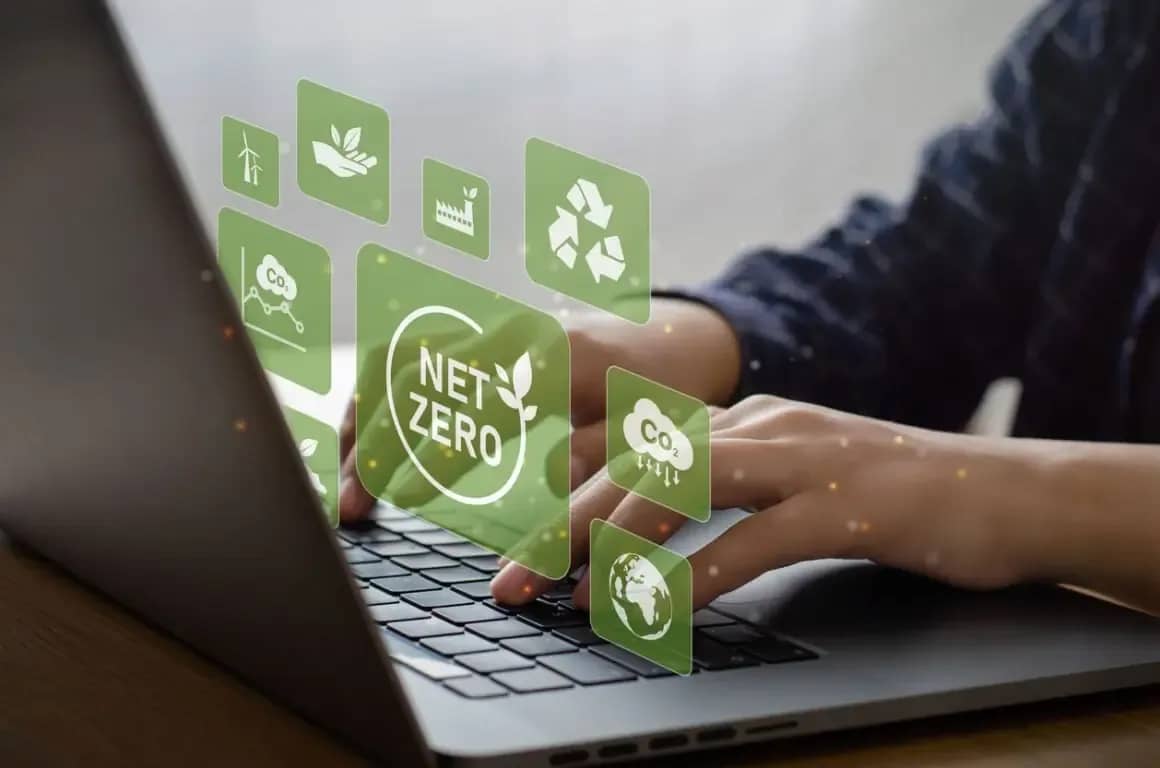
Sustainable Websites: A Guide for Modern Businesses
Sustainable websites reduce digital carbon footprints through green hosting, optimized design, and efficient coding, making them essential for modern businesses.
In today’s world, the environment is a major concern, and it should be taken seriously. Therefore, businesses are urged to decrease their carbon footprint. While a lot of people focus on the tangible operations of a firm, the digital aspects are just as important. For example, the visit to a web page is a digital operation, but data, energy, and even server power are expended on it. Hence, energy efficient web design is an obvious option for businesses that want to be sustainable. A professional website design company in Dubai will be able to teach you the essentials of more sustainable web design, such as server selection, traffic balancing, and coding in a more efficient way.
The Impact of a Website’s Carbon Footprint
Every single piece of data that is sent and received on the internet needs energy. The aforementioned energies, in turn, are a cause of the global CO₂ emissions. The numerous variables that contribute to a website’s carbon footprint includes but are not limited to:
Hosting: Different types of servers and the powering source. For instance, green hosting companies power their data centers by sustainable energy sources.
Website Design: Websites that have heavy, unoptimized designs and large images, and complicated codes use more data and more power regardless of the intended design.
User Activity: The length of time a user spends on a site and the amount of pages they visit is a major contributing factor of energy consumption.
When purposeful options are taken in these domains, an organization is indeed able to contain their environmental impact in their processes. Reputable website design Qatar firms, for instance, suggest practices such as style sheet and image format compression in order to achieve smaller, faster, and more sustainable websites.
5 Ways to Make Your Website More Sustainable
To improve a website’s sustainability is to not compromise how it operates or how it looks. Here is a list of five practical suggestions to promote a greener website.
Select Green Hosting: This is perhaps the most important green initiative to undertake for your website.
Optimize Images and Media: Use compression, more efficient file structures such as WebP and lazy loading to minimize the data that is moved and stored.
Thoughtful and Efficient Design: With simple intuitive architecture and visually.
Use Efficient Fonts: Screen fonts are more desirable but can increase loading time.
Clean Up Your Code: Minimizing code, eliminating the spacing, and structuring the code for simplicity helps to reduce file size.
The Benefits of Going Green
Remember, a sustainable website also has business advantages over others. A website’s sustainability is a proven competitive advantage. A website which is speed optimized and streamlined improves a user’s experience, which increases engagement and retention rate while improving the search visibility. At the same time, it allows the business to expose itself as a green business which adds to its brand value. A professional website design company in Saudi Arabia would tell you that sustainability is not only a matter of responsibility, but also an important element of business sense, considering the changing business environment.
From obsession to clarity — one original question every week.
We answer one noisy topic at a time, in full. No daily roundup, no thread bait — just the question, the principles, and the system.
Continue reading
More in Software Development
Lead Software Testing Expert and CNCF Kubestronaut Iuliia Kozlova on Why a Slop Detector You Cannot Run Is a Slop Detector You Cannot Trust

Walmart Senior Software Engineer Makarand Gujarathi on Why "Production-Grade" Is a Claim That Has to Survive Real Data