
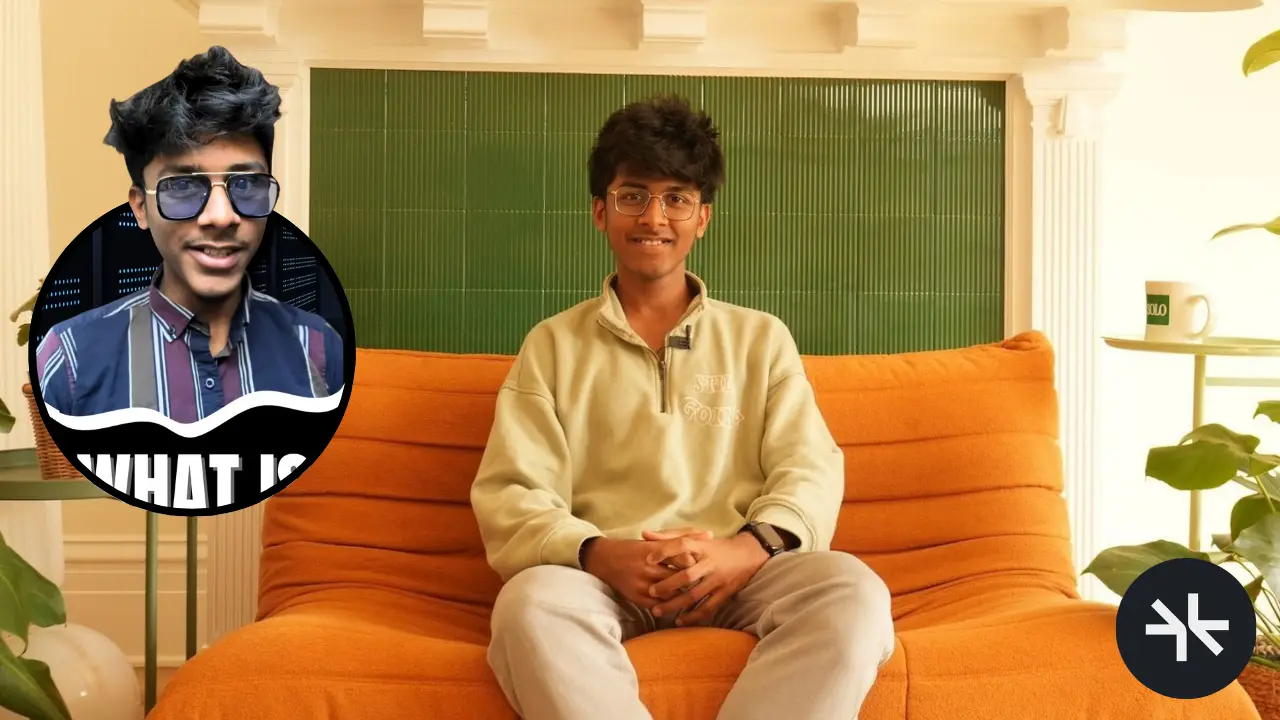
At just 19, Dhravya Shah built something that billion-dollar AI labs had failed to perfect. His startup, Supermemory AI, promises to give artificial intelligence what it never had, long-term memory. In October 2025, Shah raised $3 million from executives at OpenAI, Google, DeepMind, Meta, and Cloudflare. The idea sounds simple, but it strikes at the core of AI’s biggest weakness: machines that forget everything once a session ends.
From a small dorm room project to a globally backed infrastructure startup, Supermemory aims to become the “memory layer for the AI era.” What makes this story remarkable isn’t just the funding, it’s how a teenager built the missing brain for the world’s smartest machines.
Excited to announce that I've raised $3 Million to build @supermemoryai, the best memory for LLMs and agents. I turned 20 last month
— Dhravya Shah (@DhravyaShah) October 6, 2025
Memory is one of the hardest challenges in AI right now.
I realized this when building the first version of supermemory, which was merely a… pic.twitter.com/0VMrYIgJHi
Fast Facts
- Founder: Dhravya Shah, 19-year-old self-taught developer from Mumbai.
- Startup: Supermemory AI, a “memory layer” giving AI systems long-term recall.
- Funding: Raised $2.6M in 2025 from OpenAI, Google, DeepMind, and Cloudflare executives.
- Core Feature: Enables cross-session memory across models like GPT-4 and Claude.
- Goal: Build the universal memory infrastructure for the next generation of AI tools.
Why AI Keeps Forgetting Everything
Most AI models today are brilliant but forgetful. ChatGPT, Claude, or Gemini can summarize books or write code, but they forget what users told them once the session resets. Their short-term memory, called a “context window,” holds only a few thousand words before new information pushes the old out. For developers and users, this makes every interaction start from zero.
That gap creates frustration. People want assistants that recall old projects, preferences, or client notes. Businesses want chatbots that remember customers over time. Shah saw this gap early.
“Memory is the hardest problem in AI,” he said in interviews. “We’ve made machines think, but not remember.”
Supermemory was born from this challenge to build a persistent, reliable way for AI systems to retain useful context across sessions, applications, and even models.
What's the difference between RAG and Memory?
— Dhravya Shah (@DhravyaShah) October 10, 2025
👇 Explained below 🙂 https://t.co/1JlPffC5nP
Inside Supermemory: How It Actually Works
Supermemory AI functions as a plug-and-play “memory API” that connects to popular tools like Google Drive, Notion, Gmail, and Slack. Once connected, it ingests files, chats, and PDFs, converting them into “memories” that AI systems can recall later. It works with any large language model, including GPT-4, Claude, and Gemini.
Each piece of information is turned into an embedding, a mathematical vector that represents meaning, and stored in a hybrid system combining a graph database with a vector index. This allows fast and accurate retrieval. When an AI app requests context, Supermemory pulls relevant pieces in under 100 milliseconds, much faster than traditional vector databases like Pinecone or LangChain setups.
The system also evolves over time. Developers can instruct it to “extend,” “update,” or “forget” old data through APIs. This design mimics how human memory works, keeping what’s useful and pruning what’s not. The result is an AI assistant that doesn’t just recall what you said yesterday but understands how your needs have changed since then.
Early adopters already include startups such as Cluely, Montra, Scira, and Rets. A robotics company is testing it for visual memory, allowing robots to remember objects and routes. In one case, Scira reported a 32% increase in user adoption after integrating Supermemory, citing faster recall and better personalization.
Can We Trust AI That Remembers?
Giving AI long-term memory raises real ethical and privacy concerns. What if your digital assistant remembers sensitive data? What if it recalls private emails long after you forget them? Shah says Supermemory was designed to prevent those risks from the start.
The platform uses AES-256 encryption for all stored data and complies with SOC 2 and GDPR standards. Users control their own data, with options to delete, export, or isolate information per project. Supermemory never trains its own models on user data, acting only as a “dumb pipe” that stores and retrieves memory on demand.
It also includes a “forget” API, allowing developers to set memory lifespans or delete specific content. These features aim to stop over-retention and surveillance fears. Critics on Reddit and Hacker News have questioned whether any company can fully secure such data, but Supermemory’s transparent documentation and open-source SDKs have earned cautious optimism.
As one Reddit user noted, “If AI is going to remember, at least let us decide what it remembers.” That mindset shapes Supermemory’s design philosophy: memory as a tool, not a trap.
The Prodigy Behind the Code
Dhravya Shah’s path to Silicon Valley wasn’t traditional. Born in Mumbai in 2005, he grew up in a middle-class family and was expected to pursue engineering through India’s IIT system. Instead, he dropped out at 18, teaching himself programming through online courses and YouTube tutorials. Within months, he built 40 software projects in 40 weeks, a challenge he documented on X (formerly Twitter).
One of those projects evolved into Supermemory. Shah noticed how AI tools like Notion AI or ChatGPT lost context after every session. So he started building a memory layer for his own notes app. When he shared it online, thousands of developers signed up. Soon after, venture capital firms began calling.
By 19, Shah had secured $3 million from major investors, including Google’s Jeff Dean and Cloudflare’s Dane Knecht. He now lives in San Francisco under an O-1 visa for individuals with “extraordinary ability.” Yet he still codes daily, often sharing progress with his 50,000 followers. His motto: “Build fast. Forget nothing.”
“I didn’t want to build another app,” he said in one interview. “I wanted to build infrastructure, the memory layer every AI system will need.”
Shah’s story reflects a new kind of Silicon Valley founder, young, global, and open-source first.
Honored to build in America on an O-1 @extraordinary visa https://t.co/fG9LAXmSeX pic.twitter.com/Gu4D13OvkI
— Dhravya Shah (@DhravyaShah) October 7, 2025
Why Memory Could Be the Key to AGI
Experts agree that long-term memory could be a crucial step toward Artificial General Intelligence (AGI), machines that can learn, reason, and adapt like humans. Without memory, AI can’t truly grow or understand context. Supermemory’s architecture, which links data through graph-based relationships, gives models a way to evolve their understanding over time.
Researchers on arXiv have noted that long-term memory systems make AI more capable of forming plans and self-correcting errors. In robotics, persistent memory helps machines learn from failure. For writers, educators, and analysts, it enables assistants that can recall every project or lesson ever taught.
Still, this power carries risk. An AI that remembers everything can also misremember or misuse information. Ethical guardrails, like selective forgetting and user consent, will define how safe such systems become.
“Memory is what makes us human,” he said. “AI deserves that evolution too.”
Curious how young innovators are reshaping the future of AI? Read about the 14-year-old who built an AI app to detect heart disease in seconds.
Building the Future of AI’s Memory Layer
Supermemory is already positioning itself as the backbone of future AI infrastructure. It plans to expand into multimodal memory, adding support for video, audio, and robotics data. The company is also developing open-source frameworks for AI agents to store and retrieve memories independently. Upcoming partnerships include Vercel and potential collaborations with major model providers like OpenAI.
Its roadmap outlines a mobile app, new SDKs, and enterprise-level analytics by 2026. Shah envisions a world where every digital tool, from CRMs to household robots, relies on Supermemory to stay contextually aware. “We’re building the brainstem for the AI ecosystem,” he wrote on X.
Investors call this market “memory-as-a-service.” Analysts estimate it could reach $5 billion by 2028 as more AI companies add persistent memory to their systems. For developers, that means faster, smarter, more personalized agents. For users, it means an AI that finally remembers who you are and what matters to you.
A Teen’s Code That Could Reshape Intelligence
In less than two years, Dhravya Shah has gone from self-taught coder to architect of a core AI technology. His journey is both a personal triumph and a glimpse of what’s coming next. If Supermemory succeeds, it may quietly power the next generation of digital assistants, business tools, and autonomous agents, machines that don’t just think but remember.
It started with one question from a teenager: What if AI could finally keep its promises? Today, that question has a name and a $2.6 million answer.
FAQs
Supermemory AI is not just a database, it’s a full memory infrastructure layer.
Unlike LangChain, which requires manual setup for each memory chain, or Pinecone, which only stores vectors, Supermemory connects directly to data sources like Google Drive, Notion, and Gmail. It automatically builds and updates “memories” that AI apps can access instantly across sessions and models. This makes it faster, more adaptable, and easier for developers who want true long-term context without complex coding.
Supermemory is built for both.
While developers use its SDKs and APIs to integrate memory into apps, individuals can also connect their own accounts to give AI assistants personal recall, like remembering past chats, notes, or files. The company plans to launch a mobile app and browser integrations so everyday users can manage and control what their AI remembers safely.
The main concern is over-retention, AI remembering data longer than users expect.
Supermemory addresses this by allowing users to delete or “forget” specific memories anytime. It uses AES-256 encryption, follows SOC 2 and GDPR standards, and does not train any models on user data. All stored information belongs to the user, not the company. This design gives people full control over how their AI remembers and when it forgets.
Want to see what’s next for AI innovation? Discover how a 16-year-old created an AI tool that turns thoughts into digital art.