14-Year-Old Indian Teen Builds AI App Detecting Heart Disease in Seconds
“A 14-year-old’s AI-powered app claims to detect heart disease in just seven seconds, sparking both excitement and caution.
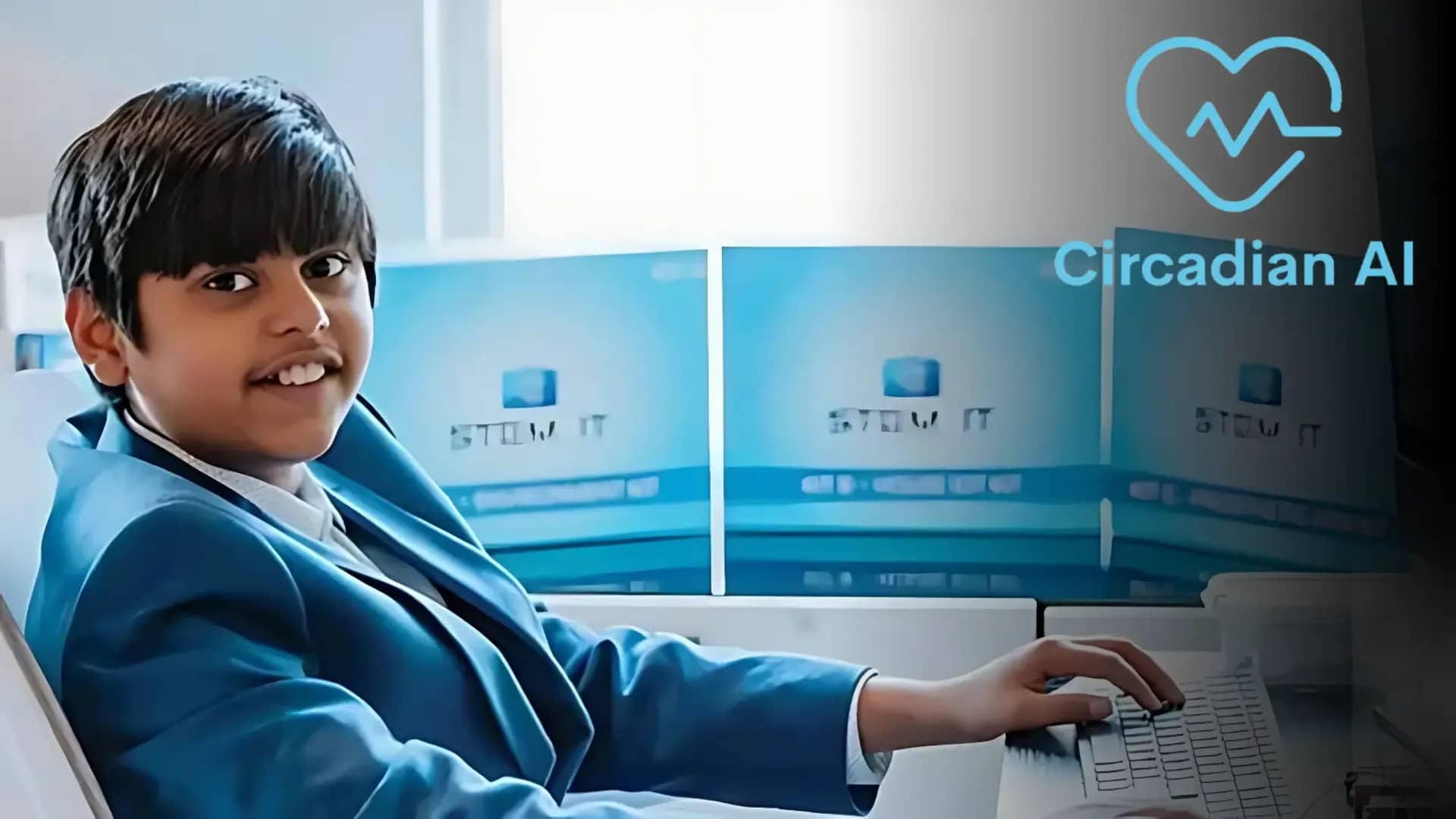
A 14-year-old from Texas is making global headlines with a bold claim: his smartphone heart disease detection app can spot warning signs in just seven seconds. Meet Siddharth Nandyala, the teen innovator behind CircadiaV, an AI-powered tool that listens to your heartbeat through your phone’s mic and checks for irregular rhythms, murmurs, or early heart failure.

The goal is as ambitious as it is urgent. According to the World Health Organization, cardiovascular diseases are the leading cause of death globally, taking an estimated 17.9 million lives each year. Early trials in the U.S. and India suggest promise, but experts warn that without independent validation and regulatory approval, this story is as much about potential as it is about proof.
Fast Facts
- Checks heart sounds with a phone mic and returns a result in about seven seconds.
- Claims over 96 percent accuracy, but no peer-reviewed validation is published yet.
- Not FDA, CE, or CDSCO approved. Treat as a screening tool, not a diagnosis.
- Best used in a quiet room. Follow any positive screen with an ECG or echocardiogram.
- Site says data is stored securely. HIPAA and GDPR compliance is not confirmed.
The 7-Second Heart Check: A Teen’s Idea, A Big Promise
Siddharth Nandyala is only 14, but he has already built an AI tool called CircadiaV. It listens to your heartbeat through your phone’s microphone and looks for signs of trouble like irregular rhythms, murmurs, or early heart failure. The app claims to deliver results in under seven seconds.
The idea came after Siddharth lost his grandfather to heart failure, a condition the American Heart Association says can develop slowly over time or occur suddenly after a heart attack. He wanted a way for people, especially in rural or low-income areas, to catch problems before they turn deadly. In pilots, he says CircadiaV has screened more than 15,000 patients in the U.S. and thousands more in India.
The promise is simple: quick, affordable heart screening for anyone with a smartphone. But there is more to the story.
Read how a Neuralink patient wrote her name after 20 years using only her thoughts →
How a Smartphone Listens to Your Heart
At its core, CircadiaV works like a digital stethoscope. The app uses the phone’s built-in microphone to record the sound of your heart beating. It then sends that audio to a cloud-based AI system, which compares the pattern to thousands of known recordings from patients with and without heart disease.
If the AI detects something unusual, it alerts you. The conditions it aims to flag include atrial fibrillation (AFib), murmurs from valve problems, and some signs of early heart failure. Siddharth says the app’s accuracy is more than 96 percent.
However, CircadiaV does not claim to detect heart attacks, clogged arteries, or advanced heart failure. Like any tool that depends on sound quality, it works best in a quiet room with a decent microphone.
Can You Trust It? Accuracy, Trials, and Doctor Opinions
On paper, the numbers sound impressive. News reports and the company’s site say CircadiaV has over 96 percent accuracy based on internal testing. Trials in India included screenings at Guntur and Vijayawada government hospitals, where dozens of cases were confirmed by ECG or echocardiogram.
What is missing is independent proof. There are no peer-reviewed studies in medical journals. There are no regulatory approvals from the U.S. Food and Drug Administration’s Digital Health Center of Excellence or India’s Central Drugs Standard Control Organization (CDSCO). Without that kind of validation, doctors urge caution.
Some physicians in the pilots praised the app’s potential, especially in areas with few specialists. Others said it is a promising screening tool but stressed that any positive result must be confirmed with gold-standard tests.
Read how Denmark’s new AI law could let you copyright your face →
Safety, Privacy, and Cost: What People Worry About First
Even if the technology works, people want to know: is it safe, and is my data secure?
CircadiaV is marketed as a screening tool for clinical settings, not for at-home diagnosis. The company says anyone flagged should see a doctor for further tests. It has not set age limits, though there is little information on performance in children or people with complex conditions.
On privacy, the website says recordings are stored securely in a cloud database and not shared without consent. It promises users can export or delete their data. But there is no mention of compliance with major health privacy laws like HIPAA in the U.S. or GDPR in Europe.
The app is not in Apple’s App Store or Google Play. The website lists it as available for iOS and Android, but no public download links were found in searches. Basic screening is said to be free, with the possibility of paid upgrades later.
After a Positive Result: Real Next Steps and a Human Story
One patient in the Guntur pilot recalled how the app flagged an irregular heartbeat. That prompted a hospital ECG, which confirmed a problem. The patient got treatment early, possibly avoiding a worse outcome.
If you ever receive a positive screen from CircadiaV, here is what experts recommend:
- Repeat the test in a quiet room to reduce the chance of noise errors.
- See a doctor quickly for confirmation with ECG or echocardiogram.
- Bring your results to the appointment, even if they are just screenshots.
- Do not ignore symptoms like chest pain, dizziness, or shortness of breath. Call emergency services right away.
AI tools can offer helpful alerts, but they are not a replacement for professional care.
What Comes Next: Limits, Rivals, and the Road Ahead
CircadiaV faces several challenges before it can win over regulators and doctors. Ambient noise, poor microphone quality, and user error can all affect results. The app has not been tested publicly across all ages, body types, or health conditions. Until independent researchers confirm the accuracy claims, skepticism will remain.
In the wearable health space, competitors like the Apple Watch ECG and KardiaMobile already have FDA clearance for detecting AFib. Digital stethoscopes from Eko and StethIO can pick up murmurs and are also cleared for clinical use. According to the European Society of Cardiology, AI-powered heart screening is advancing quickly, but approval requires extensive clinical evidence.
Siddharth says he plans to expand the technology to detect lung diseases like pneumonia. He is also working on a low-cost prosthetic arm that responds to brain signals. Whether CircadiaV will reach app stores and meet the standards for medical devices will depend on how it handles validation, regulation, and privacy concerns.
Risks and Limitations
- Accuracy claims have not been verified in independent, peer-reviewed studies.
- No government approvals mean it is not certified for medical diagnosis.
- Privacy practices are not confirmed to meet HIPAA or GDPR standards.
- Requires quiet surroundings and proper phone placement for best results.
- Should never replace an in-person medical exam for concerning symptoms.
If CircadiaV flags a heart issue: See a healthcare professional immediately for follow-up testing. Treat the app’s output as an early warning, not a final diagnosis.
FAQ
It was developed by Siddharth Nandyala, a 14-year-old Indian-American student from Texas. He has AI certifications from Oracle and ARM and has worked with hospitals in India and the U.S. on pilot testing.
The developer claims over 96 percent accuracy from internal testing on more than 15,000 U.S. patients and thousands in India. These results have not been confirmed by independent medical studies.
No. As of August 2025, there is no FDA clearance, CE mark, or CDSCO approval. It is not classified as a regulated medical device.
It is not available in the Apple App Store or Google Play Store. Some clinical pilots have used private versions, but no public download link is confirmed.
Repeat the test in a quiet setting. Then, contact a healthcare provider promptly for confirmation with an ECG or echocardiogram. Always follow medical advice.
Read how AI is replacing jobs before students even graduate →
Potential That Needs Proof
CircadiaV is one of the most talked-about health-tech ideas of the year, a smartphone heart disease detection app built by a teenager with the goal of making life-saving screening available to everyone. The vision is inspiring, especially for communities with limited access to cardiologists or expensive diagnostic tools.
But the gap between potential and proof is still wide. Without peer-reviewed studies, regulatory clearance, and clear privacy protections, it is too early to treat CircadiaV as a trusted medical tool. For now, it is best seen as an exciting innovation to watch, and a reminder that the next big step in healthcare might come from a teenager’s idea, but will still need to meet the same rigorous standards as any other medical device.
The weekly question
From obsession to clarity — one original question every week.
We answer one noisy topic at a time, in full. No daily roundup, no thread bait — just the question, the principles, and the system.