
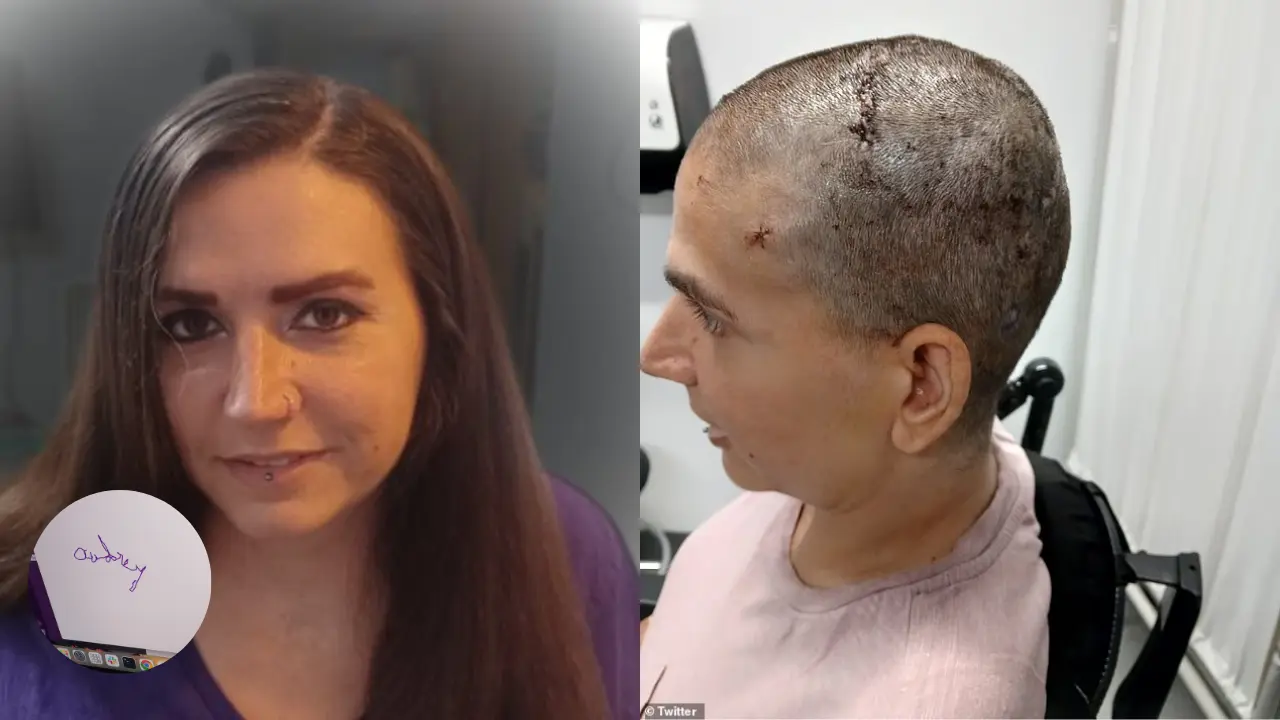
In July 2025, Audrey Crews, paralyzed since the age of 16, did something that stunned the world. She wrote her name without using her hands or a keyboard. She used her thoughts alone.
Thanks to Neuralink’s brain implant, Audrey became the first woman to publicly show she could move a digital cursor and write again after 20 years of paralysis. Her post on X (formerly Twitter), where she shared a violet-colored digital signature that simply read “Audrey,” quickly gained millions of views.
I tried writing my name for the first time in 20 years. Im working on it. Lol #Neuralink pic.twitter.com/xzPBam5mAS
— Audrey Crews (@NeuraNova9) July 26, 2025
This was not a sci-fi dream. It was reality, backed by groundbreaking brain-computer interface science.
Fast Facts
- Patient: Audrey Crews, paralyzed for 20 years, used her thoughts to write her name in 2025.
- Technology: Neuralink’s Link (N1) implant with 64 threads and 1024 electrodes inserted in the motor cortex.
- Breakthrough: She typed, drew, and moved a cursor using only her thoughts.
- Public Response: Audrey’s story went viral, gaining over 2 million views on social media.
- Founder’s Note: Elon Musk confirmed the milestone, calling it a glimpse of what’s possible.
From Car Crash to Comeback: Audrey’s Story
Audrey Crews is a 36-year-old quadriplegic from Louisiana. A tragic car crash at age 16 left her paralyzed from the neck down. For two decades, she had no control over her arms or legs.
That changed when she joined Neuralink’s PRIME Study. Audrey became Patient 9 and underwent surgery at the University of Miami. A small hole was drilled into her skull. Then, a robot carefully placed 64 ultra-thin threads with 1024 electrodes into her motor cortex, the part of the brain responsible for movement.
Before unwrapping and after. #Neuralink #BCI pic.twitter.com/hUrUadah4H
— Audrey Crews (@NeuraNova9) July 26, 2025
Audrey’s case became the most emotional success story in Neuralink’s trial to date.
She did not just regain the ability to type. She shared her artwork too. Her doodles of faces, pizza slices, and birds were all drawn with her mind. On X, she joked, “Imagine your pointer finger is the left click and the cursor is your wrist without physically doing it. Just a normal day using telepathy.”
Here are some more of my doodles! Im taking request. Lol Imagine your pointer finger is left click and the cursor moment is with your wrist. With out physically doing it. Just a normal day using telepathy. pic.twitter.com/MDzIp1Z9jv
— Audrey Crews (@NeuraNova9) July 28, 2025
What’s Inside Her Head?
At the heart of this technology is the Link (N1) implant. It is small, about the size of a coin, and sits inside her skull. The implant connects to the brain using 64 threads, each just 4 to 6 micrometers wide, made of flexible polyimide. Together, they carry 1024 electrodes.
These threads detect signals from neurons as they fire when a person thinks about movement. In Audrey’s case, she imagines moving her hand or clicking. The implant picks up those signals, decodes them using advanced software, and translates them into commands for a computer.
This science is supported by peer-reviewed research, such as the study “An Integrated Brain-Machine Interface Platform With Thousands of Channels.” Neuralink has also filed patents for its electrode designs and robotic implantation method.
Elon Musk Responds
Elon Musk, who co-founded Neuralink in 2016, responded to Audrey’s progress on X.
“She is controlling her computer just by thinking. Most people don’t realize this is possible.” – Elon Musk
She is controlling her computer just by thinking. Most people don’t realize this is possible. https://t.co/5XnOaLfJU7
— Elon Musk (@elonmusk) July 27, 2025
This statement helped push the story into viral territory. Musk’s comment was short, but the impact was massive. Her story reached millions within days. The world began to take notice not just of the company but of the real people whose lives it could change.
What Can She Really Do?
So far, Audrey can:
- Type her name
- Move a digital cursor
- Draw simple sketches
- Take drawing requests from social media
Audrey has said she is still working on accuracy and speed. This means the technology is functional but not perfect yet. It is also important to note that she still cannot move her limbs. This is not a cure for paralysis. It is a way to restore digital independence.
Working on my accuracy and speed. #Neuralink pic.twitter.com/LHEILHydIE
— Audrey Crews (@NeuraNova9) July 26, 2025
Her drawings and updates continue to inspire people. She has become a symbol of what is possible with neurotechnology.
What About Risks and Safety?
Audrey’s implant was inserted during surgery at a leading medical facility. The procedure was robot-assisted, which is designed to reduce risks. Still, like all brain surgeries, it carries potential complications like bleeding, infection, and damage to brain tissue.
Neuralink has FDA approval for human trials, which began in 2023. However, the company has faced criticism over transparency, especially concerning animal testing. Reports claim several monkeys died during experiments, though Neuralink has stated that the deaths were not caused by the implants. Investigations by advocacy groups like PCRM are still ongoing.
Ethics experts have raised concerns about:
- Ownership of brain data
- Accessibility and affordability of the technology
- Unknown long-term cognitive and emotional effects
As of July 2025, Neuralink’s human trials are not yet listed on ClinicalTrials.gov, raising additional transparency questions. Audrey remains under close medical supervision during this early stage of testing.
The day after surgery. Thank you University of Miami Health Center. #Neuralink pic.twitter.com/19FPhOPQbm
— Audrey Crews (@NeuraNova9) July 26, 2025
How Does Neuralink Compare to Other Brain Tech?
Neuralink is not the only company working on this type of brain-computer interface. Others include Synchron, Blackrock Neurotech, and BrainGate.
- Synchron uses a non-invasive method that delivers its device through blood vessels
- Blackrock Neurotech has implanted its Utah Array in over 30 patients since 2004
- BrainGate has achieved up to 97 percent accuracy in speech and cursor control during human trials
Neuralink stands out for its fully implantable design, robotic surgery, and wireless communication. Still, it operates in a competitive and rapidly advancing field.
What Comes Next?
Musk has shared that Neuralink’s long-term vision is to implant millions of devices. The company is also working on a separate implant called Blindsight, which aims to restore vision by stimulating the visual cortex. The device has received FDA breakthrough designation, and trials are expected in the next year or two.
Audrey has expressed interest in writing a book about her journey. While mentoring or public speaking could be possibilities, these plans have not been confirmed.
Curious about what else Neuralink has achieved? Read 12 mind-blowing moments from the 2025 update →
A Viral Wave of Support
Audrey’s posts received over 2 million views on X. Replies included comments like:
This made me cry. Science is amazing.
This is incredible. So happy for you, Audrey.
On Reddit, users praised her courage and the technology, while others raised important questions about ethics and long-term safety.
Screenshots and short video clips from Audrey’s X posts were widely shared. Most media coverage referenced these posts, rather than formal interviews. Her story continues to be one of the most shared examples of real-world brain-computer interface progress.
Final Thoughts
Audrey’s story is more than just a medical milestone. It combines science, persistence, and personal resilience. She did not need a keyboard or her hands. She used her thoughts and a bit of courage to prove what is possible.
Would you use a brain implant to control your computer with your mind?
Let’s talk about it.
Frequently Asked Questions
Audrey Crews, a quadriplegic paralyzed for 20 years, became the first female Neuralink patient to publicly demonstrate mind-controlled digital actions. Using the N1 brain implant, she wrote her name, moved a cursor, and drew pictures on a computer using only her thoughts.
Neuralink’s Link (N1) implant uses 64 ultra-thin threads with 1024 electrodes inserted into the motor cortex. These electrodes detect neural signals related to movement intention and translate them into computer commands, allowing the user to move a cursor or type using thought alone.
Neuralink’s current technology does not cure paralysis or restore physical movement. Instead, it allows paralyzed users to interact with digital devices through thought, restoring a form of digital independence. Future applications may explore mobility restoration, but this is not yet available.