

Meet the Fastest Human Calculator Who Shattered a Guinness World Record with His Mind in Just 15 Seconds
What if your brain could outpace a calculator? Scott Flansburg did just that, and his 15-second world record might change how you see math forever.
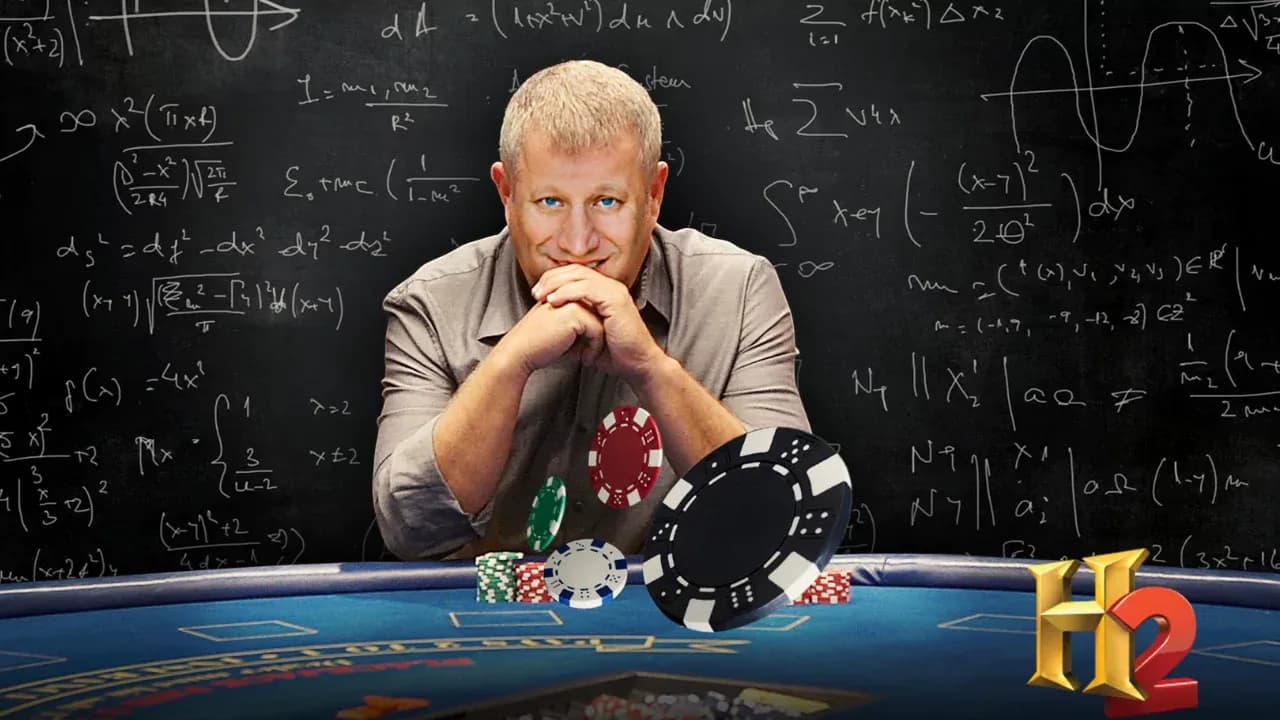
Imagine someone hands you the number 38 and says, “Keep adding it to itself 36 times. But you only have 15 seconds… and no calculator.”
Most people would panic. Some might reach for their phones. Others might laugh and give up.
But in the year 2000, a man named Scott Flansburg accepted that challenge live on television, and he crushed it. Using nothing but his brain, Scott became known worldwide as The Fastest Human Calculator.
Let’s explore how he did it, who he is, and why this mind-blowing moment still matters today.
Fast Facts
- Name: Scott Flansburg, also known as “The Human Calculator”
- Record: Mentally added 38 to itself 36 times in 15 seconds
- Verified by: Guinness World Records on April 27, 2000
- Method: Mental math using left-to-right addition and number patterns
- Mission: Making math fun and confidence-building for everyone
Who Is the Human Calculator?
Scott Flansburg, born in 1963, grew up in New York and now lives in Phoenix, Arizona. He is more than just a math genius. He is a teacher, a speaker, and a man with a mission: to help people love math.
Scott first noticed his talent in third grade. While his classmates struggled to solve problems, he found an easier way by adding numbers from left to right instead of right to left. It worked. And it felt natural.
As a child, he would add up grocery prices in his head while shopping with his mom. By the time he became an adult, Scott realized this wasn’t just a party trick. It was a gift he could share.
Today, he is the founder of The National Counting Bee, the Herkimer 9 Foundation, and the creator of The Human Calculator brand.
The Record-Breaking Moment
On April 27, 2000, Scott walked onto the Guinness World Records set in Wembley, United Kingdom. His goal was to add the number 38 to itself 36 times in just 15 seconds.
He succeeded. No calculator. No paper. Just his brain.
To understand what he did, picture this:
38 + 38 + 38… done 36 times. That is the same as multiplying 38 by 36, which equals 1,368. But Scott didn’t multiply. He added each time, one after the other, faster than most people can press buttons on a phone.
This feat earned him the official Guinness title: Fastest Human Calculator.
How Did He Do It Without a Calculator?
Scott does not use tricks or memorize long answers. He uses a method he developed himself, based on patterns in numbers. One of his favorite tricks involves the number 9. He says that all numbers eventually relate back to 9.
For example, 5 plus 5 is 10. Then take 10 minus 1, which is 9. It may seem strange at first, but Scott claims these patterns help your brain stay focused and fast.
He also adds numbers from left to right, which feels more natural once you get used to it.
In an episode of Stan Lee’s Superhumans, scientists scanned Scott’s brain. They found that he used a part of the brain linked to auditory memory—the area we use for sounds. That means Scott may be hearing the numbers in his head instead of seeing them.
“All of you have a calculator sitting right there,” Scott said once, pointing to his forehead. “And you’re not using it.”
Source: Greenwich Time Interview, 2012
Can You Learn to Do This Too?
Yes. You might not break a world record, but Scott believes anyone can get better at mental math.
His books, like Math Magic, are written for both adults and kids. He also created The Human Calculator Game, a mobile app that teaches his techniques in a fun and easy way.
He even started a math contest called The National Counting Bee, where students race to solve math problems in their heads.
If you want to begin, start with adding numbers from left to right. Try simple exercises every day. And remember: it is not about being fast. It is about building confidence.
Why Is This Going Viral Again in 2025?
You might be wondering why people are still talking about something that happened in 2000. It’s because mental math has made a comeback.
In early 2025, a teen named Aaryan Shukla broke six math world records. That sparked a new wave of interest in fast mental math. Videos of Scott Flansburg’s record began showing up again on TikTok, Reddit, and YouTube Shorts.
Comments online call him “a human CPU” and “ChatGPT before AI existed.” His Oprah clip, now on YouTube, has fans saying things like, “I wish he taught my math class.”
Is It Real? Or Just a Trick?
Some people wonder if Scott’s talent is real or just a trick. But the answer is clear. His record was performed live under strict rules by Guinness officials.
No shortcuts. No electronics. No guessing.
Even more, brain scans showed unusual brain activity, suggesting he is processing numbers in a way most people do not.
While some argue that he might be a math savant, there is no medical proof of that. Scott says his goal is not to seem superhuman. He wants to show that anyone can improve their math skills with practice.
What Is Scott Flansburg Doing Today?
Scott now travels the world teaching people how to enjoy math. He speaks at schools, NASA, IBM, and even the Smithsonian.
He continues to run The National Counting Bee and supports World Maths Day as a global ambassador.
He is still adding numbers in his head. But more importantly, he is adding confidence to classrooms around the world.
Why Scott’s Story Matters Today
We live in a world where people say, “I’m just bad at math,” like it is no big deal. But Scott Flansburg wants to change that.
“Why has it become so socially acceptable to be bad at math?” he once said. “If you were illiterate, you wouldn’t say that on TV, but you can say that you are bad at math. We have to change the attitude.”
His message is simple: Math is not just for smart people. It is for everyone.
Try It Yourself
Want to give it a shot?
Take the number 25 and try adding it to itself 10 times. Do it in your head.
Now try it left to right. Can you beat your own time tomorrow?
From obsession to clarity — one original question every week.
We answer one noisy topic at a time, in full. No daily roundup, no thread bait — just the question, the principles, and the system.