
Never Have I Ever After Shark Tank: The Two Royalties Behind Its Nail Art
Susana Chen accepted Kevin O’Leary’s offer for artist-designed press-ons. His capped royalty was separate from the payments that made the designs possible.
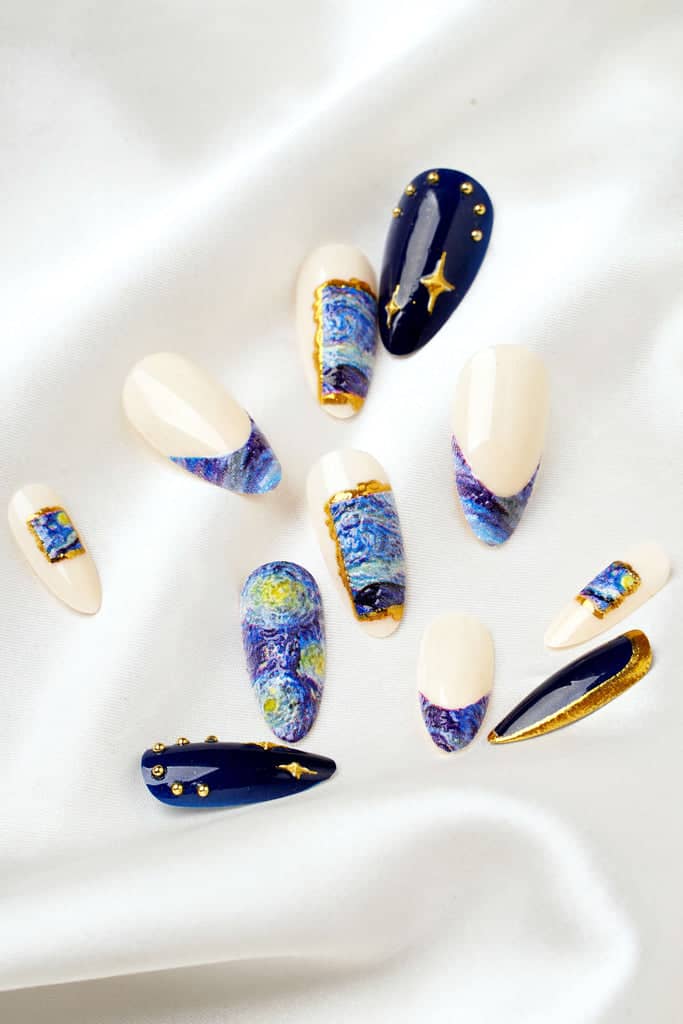
Put a painting on a T-shirt and a shopper can recognize it across the room. Put it on a fingernail and the designer has to decide which few details will still read at arm’s length. Susana Chen and Jess Wu made that constraint the basis of Never Have I Ever, a beauty company that treats a box of press-on nails as a miniature art collection.
When Chen went on Shark Tank, the company was already paying for the right to put artists’ work on its products. Kevin O’Leary proposed another kind of payment on each sale: a temporary royalty for himself alongside a 10% ownership stake. The difference between those obligations explains both the appeal of the business and the questions an investor needs to ask.
On-air deal
Pitch outcome
$150,000 for 10% plus $0.50 per unit until $450,000, with Kevin O’Leary.
$150,000 for 8%
Opening ask
Terms sought on Shark Tank.
November 2023
Product detail
The founders’ reported commercial launch.
Product snapshot
| Field | Details |
|---|---|
| Company | Never Have I Ever |
| Founder or founding team | Susana Chen and Jess Wu founded the business; Chen pitched. |
| Product | Artist-designed press-on nail sets and related wearable art |
| Industry | Beauty and art licensing |
| Shark Tank episode | Season 17, Episode 14 • March 18, 2026 |
| Current status | The official store lists artist and character collections. |
How does Never Have I Ever work?
The brand catalog organizes sets by design, nail shape and collaboration. Its range includes Van Gogh and Matisse interpretations, character designs such as Miffy, and work by contemporary artists. Shoppers choose a set the way they might choose a print or accessory, then apply the nails according to the kit instructions.
The commercial idea is not simply to decorate a mass-produced nail. A recognizable design can give someone a reason to choose this set over another, while an artist collaboration can bring in an audience that would not ordinarily browse a beauty catalog. The price, fit and finish still have to make sense after that first introduction.
Who built Never Have I Ever?
Chen and Wu officially launched the brand in November 2023, according to their Entrepreneur interview. Chen brought a product designer’s interest in unexpected surfaces. Early in-person sales gave the founders a chance to watch shoppers pick up a set, inspect the art and decide whether it worked as a wearable object.
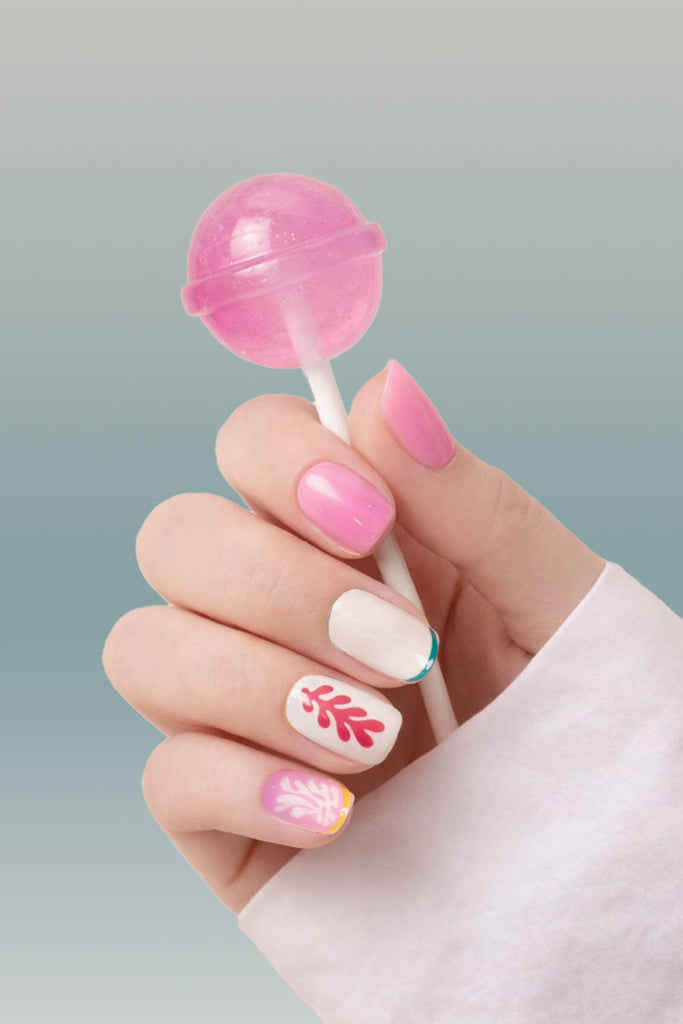
A Never Have I Ever product photograph showing the art at its intended scale.
“Multiple meanings to empower people in their individuality” — Susana Chen on the brand name, in Entrepreneur.
What happened to Never Have I Ever on Shark Tank?
Chen offered 8% for $150,000. Episode coverage reports approximately $900,000 in total sales discussed on the show and about $600,000 in receivables. The figures are not interchangeable: a sale may be booked before the customer has paid, and cash tied up in invoices cannot immediately fund the next batch.
Robert Herjavec offered 25%, then 20%, for the requested check. Chen declined. O’Leary returned with a lower equity requirement but a continuing cash payment: 50 cents per unit until $450,000 had been paid. Chen accepted. At that rate it would take 900,000 qualifying units to hit the cap; that is arithmetic, not a forecast of units sold. Episode reporting.
Deal snapshot
| Negotiation point | What the evidence supports |
|---|---|
| Asked | $150,000 for 8% |
| On-air outcome | $150,000 for 10% plus $0.50 per unit until $450,000, with Kevin O’Leary. |
| Key negotiating point | The investor royalty is capped; artist royalties are separate obligations. |
Why licensing changes the margin on a box of nails
Episode reporting puts the price around $18–$20 per set against manufacturing costs of roughly $2–$3, and describes an artist royalty of 5%. The wide gap between factory cost and retail price can look like profit until the full route to the customer is considered. The brand may also pay for packaging, distribution, sales commissions, retail discounts and design development. O’Leary’s proposed royalty would be another claim on cash leaving each qualifying sale.
The upside is that a successful collaboration can give fans a reason to return for another collection, even when their first set is still usable. The downside is inventory complexity: each additional design, nail shape and retail placement can tie up money in sets waiting to be sold or invoices waiting to be paid.
Business model snapshot
| Business question | Answer |
|---|---|
| Product | Artist-designed press-on nail sets and related wearable art |
| Sales channel | Direct collections, artist collaborations and wholesale distribution. |
| Buyer decision | Evaluate the specific artwork, nail shape, length and kit contents. |
| Business question | Can the brand collect cash quickly enough to fund a widening catalog? |
What happened after Shark Tank?
Latest update — November 12, 2026. The store features licensed and artist-led collections as well as products beyond nails. The founder interview independently describes the brand’s development and O’Leary’s terms.
A listed collaboration is evidence of a commercial product; it does not reveal the private licensing contract or the profit on that collection. The company may have different agreements with individual artists and licensors. The show’s reported artist percentage should not be assumed to govern every item in today’s catalog.
Current status evidence
| Evidence | What it establishes |
|---|---|
| Official offering | The official store lists artist and character collections. |
| Pitch evidence | $150,000 for 10% plus $0.50 per unit until $450,000, with Kevin O’Leary. |
| What is still unknown | Collection-specific margins, actual royalty payments and final private ownership. |
Company timeline
| Date | Milestone |
|---|---|
| November 2023 | Chen and Wu launched the business. |
| March 18, 2026 | Chen accepted O’Leary’s on-air equity-and-royalty offer. |
| April 2026 | The founders discussed the brand’s development with Entrepreneur. |
| November 2026 | The store lists art, character and artist collaborations. |
What should a buyer check?
Choose the shape and length as carefully as the artwork. A design photographed on long almond nails may look quite different on a short square set. Check sizing, adhesive instructions and the exact contents of the selected box. For a gift, the recipient’s preferred nail shape is a more reliable guide than simply choosing the best-known artist.
What can founders learn from Never Have I Ever?
A royalty can be a productive sales cost when it pays for the art that makes the product distinctive. An investor royalty serves a different purpose and should be evaluated separately. Founders comparing offers should model both payments at wholesale as well as retail prices, then account for how long invoices take to turn into cash.
The Season 17 episode guide lists the other pitches. Readers following the other investment decisions in this part of Season 17 can also find GOB Earplugs, Beer Girl, REMplenish.
Frequently asked questions
Who presented Never Have I Ever on Shark Tank? Susana Chen and Jess Wu founded the business; Chen pitched.
What did the founders ask for? $150,000 for 8%.
What happened in the negotiation? $150,000 for 10% plus $0.50 per unit until $450,000, with Kevin O’Leary.
Is Never Have I Ever still operating? The official store lists artist and character collections.
Is Kevin O’Leary’s royalty permanent? The reported agreement caps it at $450,000.
The weekly question
From obsession to clarity — one original question every week.
We answer one noisy topic at a time, in full. No daily roundup, no thread bait — just the question, the principles, and the system.
More from Shark Tank USA Season 17
All season pitches
Shark Tank USA
The Christmas Carolers After Shark Tank: Barbara’s 60% Deal, Expansion and Current Status
Shark Tank USA
pi00a After Shark Tank: How the Stein Family Took Deaf-Owned Pizza From Restaurant to Freezer
Shark Tank USA