Beer Girl After Shark Tank: Fawn Weaver Said Yes to Equity, No to a Credit Line
Caroline Foulk secured $125,000 for her light lager, but a proposed $500,000 credit line did not make it into the deal.
Winning a grocery order can put a young brewer under more pressure than losing one. The cans have to be bought, the beer brewed and the cases delivered before the retailer pays. Caroline Foulk brought that distinction into the Shark Tank negotiation when she asked guest Shark Fawn Weaver for more than an equity investment: she wanted a line of credit to finance purchase orders.
Weaver declined the credit line. Foulk still took the $125,000 offer for 20% of Beer Girl, a light lager developed at her family’s brewery. The exchange is a useful guide to what the deal did and did not buy, and why a brand’s retail footprint is only one part of its financial story.
On-air deal
Pitch outcome
Fawn Weaver offered $125,000 for 20%; Caroline Foulk accepted.
$125,000 for 10%
Opening ask
Terms sought on Shark Tank.
3.5% ABV
Product detail
Beer Girl is a lower-alcohol lager, not a nonalcoholic beer.
Product snapshot
| Field | Details |
|---|---|
| Company | Beer Girl |
| Founder or founding team | Caroline Renezeder Foulk |
| Product | Mexican-style light lager brewed with corn |
| Industry | Alcoholic beverages |
| Shark Tank episode | Season 17, Episode 14 • March 18, 2026 |
| Current status | Beer Girl continues to market its lager. |
How does Beer Girl work?
Beer Girl is a 3.5% ABV Mexican-style lager. The brand’s website describes its brewing approach and lists zero added sugar. The brand is built around people who want a lighter beer but might otherwise choose a cider or hard seltzer. That positioning describes the intended occasion and flavor; claims about how a drink feels are not a guarantee of how an individual will respond.
The distinction between a lower-alcohol beer and an alcohol-free one matters here. Beer Girl contains alcohol. Also check the product label rather than treating gluten-reduced as synonymous with gluten-free.
Who built Beer Girl?
Foulk previously toured as a musician and worked at her family’s Wagon Wheel Brewing Company. The brand’s origin story describes an idea that came from her own experience at the brewery. Customers who might happily join friends for a drink were choosing something other than beer. Working with the brewer gave her a chance to make a specific alternative and put it in front of those customers.
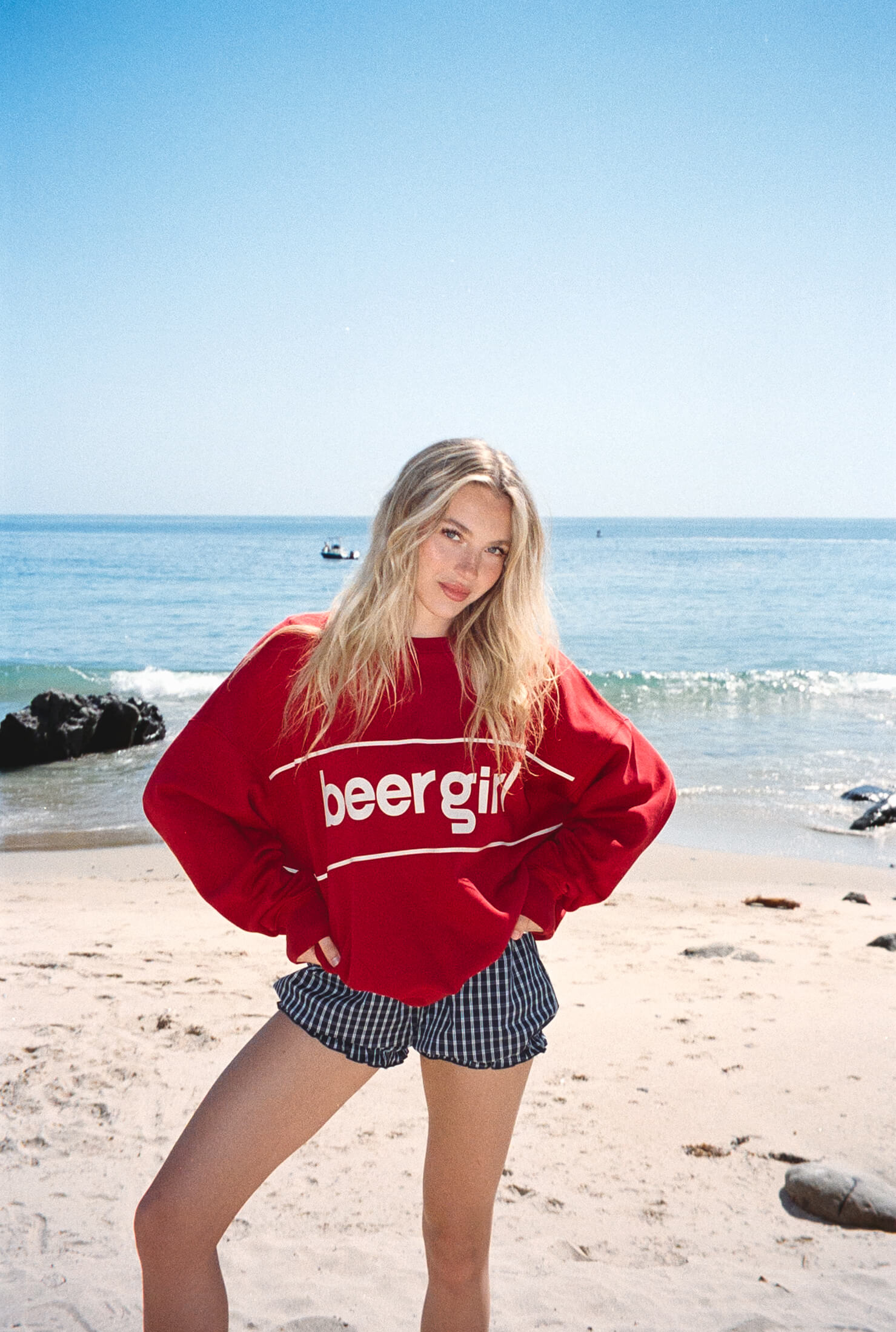
From Beer Girl’s official brand story.
“Made for good times - loved by all” — Beer Girl’s description of its audience.
What happened to Beer Girl on Shark Tank?
Foulk originally offered 10%, implying a $1.25 million post-money price. She discussed about $140,000 in 2023 sales and an expansion into more retail doors. A projection tied to those placements was not cash already collected. Several Sharks passed, even when they liked the sample. Weaver brought drinks-industry experience and offered double the requested equity for the same money.
Foulk asked whether Weaver would also provide a $500,000 credit line for purchase orders. Weaver declined that addition, and Foulk accepted the original terms. At $125,000 for 20%, the implied post-money value was $625,000. The credit line should not be added to the size of the deal. Episode reporting.
Deal snapshot
| Negotiation point | What the evidence supports |
|---|---|
| Asked | $125,000 for 10% |
| On-air outcome | Fawn Weaver offered $125,000 for 20%; Caroline Foulk accepted. |
| Key negotiating point | A requested $500,000 purchase-order credit line was not included. |
Why a purchase order can create a cash problem
A retailer placing an order validates interest, but the order and the cash often arrive at different times. A brewery may have to pay for ingredients, cans, production, transport and other costs before the retailer settles the invoice. A fast increase in accounts can therefore make working capital more urgent, even if each case is profitable.
Equity and a credit line address different needs. An investor buys ownership, while a line can be drawn and repaid as orders move through the business. Foulk’s attempt to secure both showed that getting beer onto shelves and financing the next production run were separate decisions. The public record confirms the on-air equity offer; it does not show that Weaver guaranteed future orders.
Business model snapshot
| Business question | Answer |
|---|---|
| Product | Mexican-style light lager brewed with corn |
| Sales channel | Brewery and retail distribution, supported by a consumer-facing brand site. |
| Buyer decision | Compare the actual local pack size, price and alcohol content. |
| Business question | Do retailers reorder quickly enough to finance continued production? |
What happened after Shark Tank?
Latest update — November 12, 2026. The official brand site still features the lager and its 3.5% ABV. ABC’s episode roster independently confirms the appearance.
A live brand and product page support continued commercial activity. Availability depends on location and distributor. Neither an announcement of new retail doors nor an on-air handshake proves current sell-through, a final equity transfer or a particular revenue figure.
Current status evidence
| Evidence | What it establishes |
|---|---|
| Official offering | Beer Girl continues to market its lager. |
| Pitch evidence | Fawn Weaver offered $125,000 for 20%; Caroline Foulk accepted. |
| What is still unknown | Current revenue, completed private deal terms and retail reorder rates. |
Company timeline
| Date | Milestone |
|---|---|
| 2023 | Beer Girl emerged from Foulk’s family brewing operation. |
| March 18, 2026 | Foulk accepted Weaver’s offer after the credit-line request was declined. |
| November 2026 | The brand continues to feature its light lager. |
What should a buyer check?
For adults choosing between a light lager and a seltzer, begin with taste and the stated 3.5% ABV. Check the brand’s current availability information and verify stock with the retailer before making a trip. A brand can be distributed in a region without being on every shelf.
What can founders learn from Beer Girl?
Founders preparing for a retail expansion should enter an investor meeting with two numbers: how much ownership capital they need and how much short-term cash they must draw to fill confirmed orders. Beer Girl’s pitch made those needs unusually visible. Securing the first number does not automatically solve the second.
The Season 17 episode guide lists the other pitches. Readers following the other investment decisions in this part of Season 17 can also find REMplenish, Hot Girl Soda, CRANEL.
Frequently asked questions
Who presented Beer Girl on Shark Tank? Caroline Renezeder Foulk
What did the founders ask for? $125,000 for 10%.
What happened in the negotiation? Fawn Weaver offered $125,000 for 20%; Caroline Foulk accepted.
Is Beer Girl still operating? Beer Girl continues to market its lager.
Was the $500,000 credit line part of the deal? No. Weaver declined it, and Foulk accepted the equity offer without it.
The weekly question
From obsession to clarity — one original question every week.
We answer one noisy topic at a time, in full. No daily roundup, no thread bait — just the question, the principles, and the system.