Meet Kairan Quazi, the 16-year-old Elon Musk hired for Starlink who is now inspiring a new wave of geeks
At just 14, Kairan Quazi joined SpaceX’s Starlink team. Now at 16, his viral LinkedIn comeback is sparking a global conversation about talent over age.
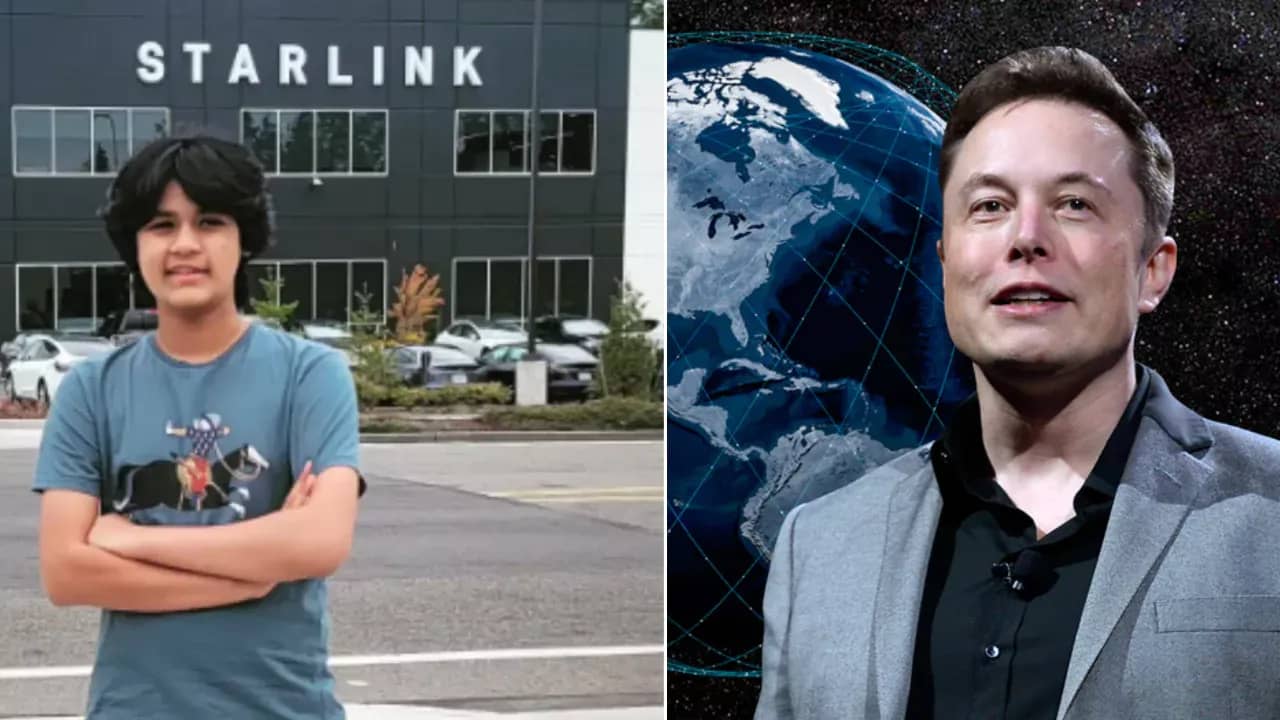
Most teenagers spend their afternoons doing homework or gaming with friends. At 14, Kairan Quazi was solving global internet problems for SpaceX’s Starlink. In March 2025, he went viral again for a simple but powerful reason. He returned to LinkedIn after being banned for being “too young” and turned that comeback into a celebration of talent over age bias.
This is the story of how a gifted kid from California became one of the youngest engineers in aerospace and why his journey is inspiring a new wave of young tech enthusiasts.
The viral moment that had the internet talking
In early 2023, LinkedIn removed Kairan’s profile because he was under its minimum age requirement of 16. At the time, he was already working at SpaceX and had a résumé that most adults would envy.
When he turned 16 in March 2025, Kairan posted a screenshot of LinkedIn’s original rejection notice on Instagram with the caption, “Now that I’m 16, LinkedIn has let me back on the platform.” The post quickly spread, with fans and tech lovers flooding the comments with messages like “Back where he belongs” and “Welcome back! We missed you.”
Media outlets such as The Times of India and India Today picked up the story within days, amplifying it worldwide. The mix of humor, resilience, and irony made his comeback stand out.
Who is Kairan Quazi
Kairan was born on January 27, 2009, in the San Francisco Bay Area to parents of Bangladeshi descent. His father is a chemical engineer, and his mother works in finance. From a young age, Kairan showed an unusual ability to learn and understand complex ideas.
At 14, he graduated from Santa Clara University, becoming the youngest in its history. He had already interned at Intel Labs, where he worked on AI projects, and at Blackbird.AI, where he built tools to detect false information online. In 2023, SpaceX hired him to join the Starlink engineering team, where he focuses on beam planning and data-driven optimization.
View this post on Instagram
How he got the SpaceX job
Kairan’s hiring process was intense. In an interview with Vogue in 2023, he explained that he went through 10 interview rounds, including a 4-hour technical challenge, which he completed in less than two hours. He described the hiring process as one of the rare times a company did not let his age influence their decision.
“I faced cultural adultism through my job search. Many recruiters dismissed my résumé because of my age. SpaceX looked at my skills, not my birth year.”
Kairan Quazi, Vogue Interview, 2023
What he does at Starlink explained simply
Starlink is a satellite network that delivers internet access around the world. Kairan works on “beam planning.” Imagine satellites as stage lights in the sky. His job is to make sure the “lights” (internet signals) hit the right places at the right times.
This work involves programming, data analysis, and optimization so signals move fast without delays. While the exact tools he uses are not public, engineers in similar roles often work with Python, C++, and high-performance computing platforms.
Can you follow in his footsteps
Kairan’s role is advanced, but anyone can start learning the basics. Here are starting points for aspiring young engineers:
- Learn Python through freeCodeCamp or Codecademy.
- Take Google’s Machine Learning Crash Course.
- Join open-source projects on GitHub related to speech generation or network optimization.
- Seek out mentors through schools, local tech groups, or online communities.
Even if you do not aim for aerospace engineering, these skills can lead to careers in AI, robotics, or software development.
Why his story is trending now
People love stories of young prodigies, especially in technology. Kairan’s return to LinkedIn became a symbol of breaking outdated rules that block young talent. The timing also helped. Conversations about fairness in hiring and platform policies are gaining attention online, and his story fit perfectly into that discussion.
Challenges and debates
The main debate around Kairan’s journey is about age restrictions in professional spaces. While these policies are often meant to protect minors, critics say they can unfairly limit opportunities for gifted young people.
His story has no evidence of exaggeration. SpaceX confirmed his hire, Santa Clara University verified his graduation, and his internships at Intel Labs and Blackbird.AI are documented.
What’s next for Kairan
Kairan continues to work at SpaceX on expanding Starlink’s reach. He has shown interest in applying satellite technology to areas like precision farming, which could help farmers make better use of resources. While he has not announced any personal projects, his career path suggests more groundbreaking work is ahead.
Why this matters
Kairan’s story proves that talent does not have a minimum age. For young readers, it is a reminder that starting early and seeking mentors can open doors that seem impossible. For everyone else, it is a chance to rethink how we judge potential.
The weekly question
From obsession to clarity — one original question every week.
We answer one noisy topic at a time, in full. No daily roundup, no thread bait — just the question, the principles, and the system.