
Steve Wozniak: Still the Same Geek or a New Kind of Innovator?
From hacking phone lines as a teen to mapping space debris today, Steve Wozniak’s story proves a true geek never really grows up.
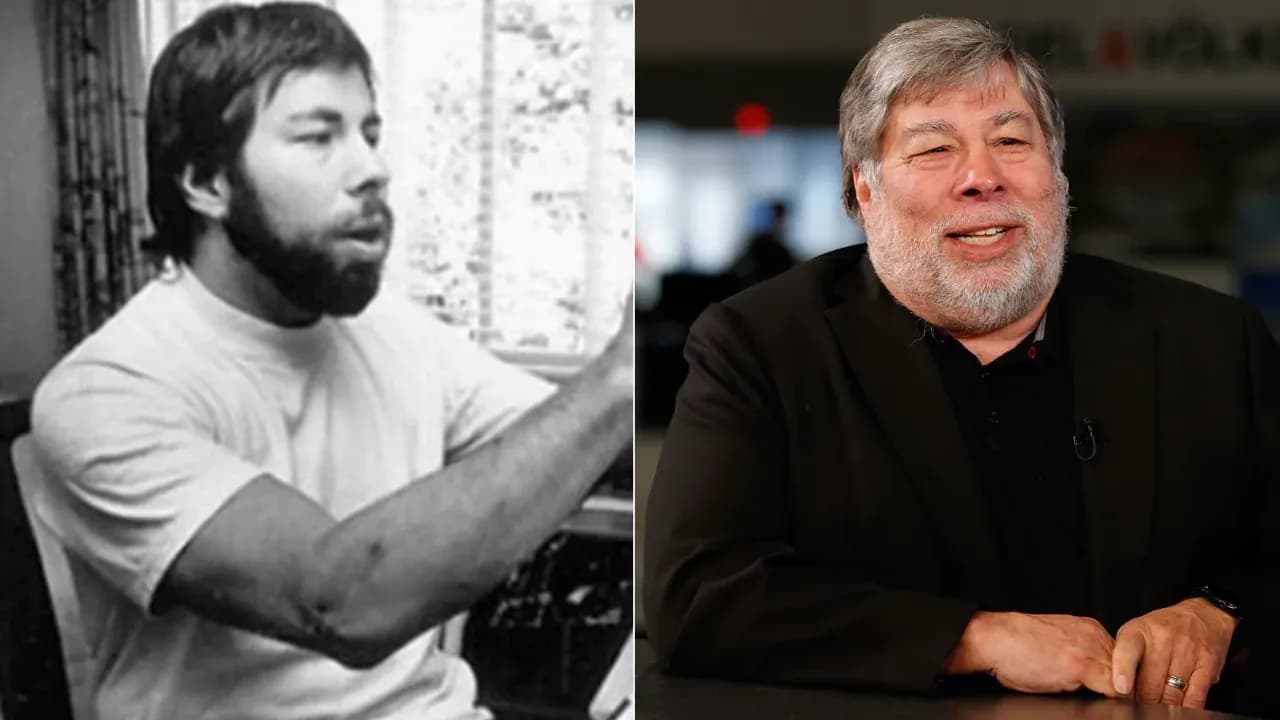
In the early 1970s, a teenage Steve Wozniak sat in his San Jose bedroom surrounded by wires, soldering irons, and circuit boards. On the desk in front of him was a homemade “blue box,” a device he had designed to hack into global phone networks and make free calls. With Steve Jobs beside him, they dialed the Vatican pretending to be Henry Kissinger, asking to speak to the Pope.
It was half prank, half proof of genius. What started as a mischievous hobby would unknowingly set the stage for Apple’s birth. The question is, 50 years later: has Wozniak’s inner geek survived?
Fast Facts
- Subject: Steve Wozniak, Apple cofounder
- Early Geek Focus: Ham radio, DIY electronics, Homebrew Computer Club
- Breakthrough: Apple I and Apple II designs that popularized personal computing
- Today: Education advocate and Privateer Space cofounder
- Core Theme: Curiosity first, build for people, share what you learn
What They Geeked On Back Then
Steve Wozniak was born on August 11, 1950, in San Jose, California. His father, Jerry Wozniak, was an engineer at Lockheed Missiles and Space Company. From a young age, Jerry introduced Steve to engineering concepts.
“I saw diagrams of the first chip that would have six transistors: now we have 20 billion transistors on a chip for the same price,” Wozniak recalled in 2018, reflecting on how those moments sparked his curiosity.
By age 11, he had built his own ham radio and earned an operator’s license. He made homemade devices like voltmeters, calculators, and games, often working alone in his room for hours. At 13, he presented an adder and subtractor at a science fair, earning recognition for his creativity.
He was inspired by Tom Swift Jr. books: stories about a young inventor building airplanes and rocket ships, which fueled his belief that he could build anything he imagined.
By the 1970s, Wozniak was part of the Homebrew Computer Club, a gathering place for Silicon Valley’s tech enthusiasts. There, he showed his Apple I prototype to fellow hobbyists, expecting nothing more than peer approval. “My idea was never to sell anything. It was really to give it out,” he told NPR in 2006.
His playful side was equally strong. He created a Dial-a-Joke phone line, telling jokes himself, and collaborated with Jobs on building “blue boxes” to hack phone systems: a blend of technical skill and harmless rebellion.
What Made Them Successful
Wozniak’s fascination with building devices directly led to Apple’s breakthrough products. His first major invention, the Apple I, was designed in 1975 to impress the Homebrew Computer Club. It stood out because it could display characters on a TV screen, unlike the Altair and other computers of the time. “The Apple I became the first home computer to display a character on a TV screen,” Wozniak said.
Years of building radios and calculators gave him the ability to design the Apple I’s hardware, circuit boards, and operating system alone. Jobs, recognizing the commercial potential, turned Wozniak’s creation into a business.
His skill for elegant, efficient design was legendary. For Atari’s Breakout game, Wozniak cut the number of chips by 50 percent, impressing industry peers. This minimalistic engineering carried into the Apple II, released in 1977. With a built-in keyboard, color graphics, and a floppy disk drive (designed by Wozniak in just two weeks), the Apple II became the first personal computer to appeal to a mainstream audience, not just hobbyists.
Source: Britannica, Apple II History
Wozniak’s approach to innovation was rooted in persistence and independence. “It’s important to be persistent. Inventors need to trust themselves even in the face of overwhelming opposition,” he wrote in iWoz. He had no formal training in computer engineering and little money, but those constraints forced him to find creative, unconventional solutions.
Are They Still That Same Geek?
Today, at 74, Wozniak’s work still reflects his early passions, though the scope has changed. He is no longer hand-wiring computers in a garage, but he continues to explore and support cutting-edge technology.
In 2018, he spoke about his years teaching computer basics to fifth- to ninth-graders, focusing on motivation over memorization. “It was less important to me what you teach, and more important to motivate people by making things as fun as you can,” he said.
In 2020, he co-founded Efforce, a blockchain-based platform for funding eco-friendly projects. In 2021, he launched Privateer Space to address space debris, applying his engineering mindset to global challenges. In May 2024, Privateer raised 56.5 million dollars and acquired Orbital Insight to expand its geospatial intelligence capabilities.
His hobbies remain geeky and playful. He is a known promoter of Segway polo, even lending his name to the “Woz Cup.” At a 2024 tech event in Beirut, he showed off a 3D-printed metal business card: another nod to his love of inventive, offbeat ideas.
He still engages with the tech world through speeches, interviews, and media appearances. His educational platform, Woz U, continues to promote hands-on learning for aspiring tech professionals.
The Takeaway
Steve Wozniak is still, at heart, the same geek who built radios and circuit boards in his bedroom as a child. His early passion for electronics fueled the innovations that created the Apple I and II, transforming personal computing.
Today, he channels that same curiosity into education, blockchain, and space technology. While he no longer spends nights coding alone, his work with Woz U, Efforce, and Privateer Space shows that his love for building and problem-solving never faded.
He has evolved from a solitary inventor to a mentor and advocate, using his influence to inspire others. The setting has changed, but the spark remains. Wozniak proves that staying true to your inner geek can open doors to entirely new worlds.
FAQs
Is Steve Wozniak still active in technology in 2025?
Yes. As of 2025, Wozniak co-founded Privateer Space, supports educational tech via Woz U, and speaks on AI and innovation—showing he remains curious and involved.
What sparked Wozniak’s early interest in electronics?
His engineer father showed him transistor diagrams and introduced him to ham radio at a young age, launching a lifelong passion for tinkering and invention.
How did Woz’s childhood passions lead to Apple’s success?
Years of building DIY electronics and minimal-chip designs enabled Woz to design the Apple I and II, which launched the personal-computer revolution.
Does Wozniak still see himself as a geek?
Absolutely. He continues playful tech hobbies like Segway polo, mentors on education platforms, and remains hands-on in new innovation projects.
From obsession to clarity — one original question every week.
We answer one noisy topic at a time, in full. No daily roundup, no thread bait — just the question, the principles, and the system.