
Ball 2 After Shark Tank: MrBeast's 55% Deal, the $455K Valuation and What Happens Next
Two Pennsylvania cousins asked the Sharks for $200,000 at a $2 million valuation. They left having sold 55% of Sperry Labs to MrBeast and Beast Industries for $250,000. Here is what that deal really means, and where Ball 2 stands in November 2026.
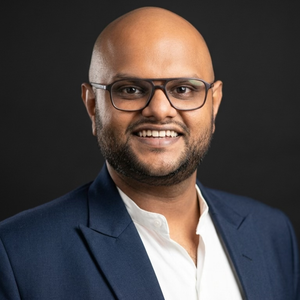

The most-watched deal of the Shark Tank Season 18 premiere was also the one most recaps got backwards. Two first cousins from rural Pennsylvania walked in asking for $200,000 for 10% of their AI-toy company. They walked out having handed a 55% majority stake to MrBeast and Beast Industries CEO Jeff Housenbold for $250,000.
That is not an investment in the ordinary Shark Tank sense. It is a change of control. The founders of Sperry Labs are now minority shareholders in the company they built, and the valuation the deal implies is roughly a quarter of what they asked for.
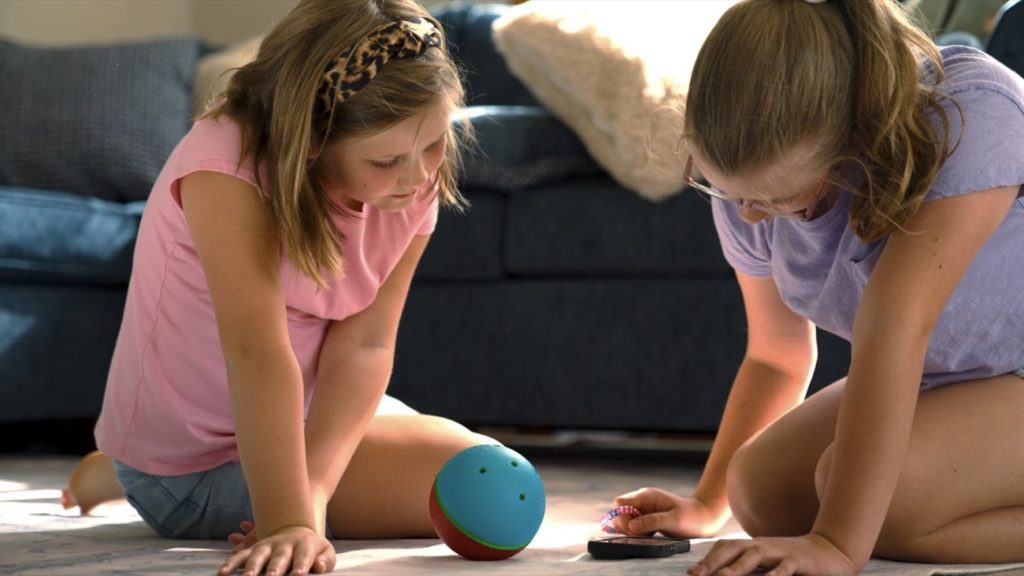
Ball 2: a foam ball with motion sensors and Bluetooth that never needs charging. Photo: Courtesy Sperry Labs, via Pulse 2.0
Let's dive into what Ball 2 is, how the negotiation actually went, why the numbers pushed the founders into that corner, and what owning 45% of a MrBeast-controlled toy company is likely to mean.
Ball 2 After Shark Tank: Quick Answer
Short on time? Here is what happened to Ball 2 after Shark Tank.
Pitch result: Andrew Brown and Kevin Langdon asked for $200,000 for 10% of Sperry Labs. Every regular Shark passed. Guest Sharks MrBeast (Jimmy Donaldson) and Jeff Housenbold opened at $300,000 for 66%, the founders countered at 51%, and the two sides settled at $250,000 for 55%, an implied valuation of about $455,000 against the $2 million the founders came in with.
Current status: Active. Ball 2 is sold through the company's website at $49 for the standard version and $69 for the AI-enabled version. The founders say orders began arriving during the broadcast. Whether the deal has formally closed has not been publicly confirmed, and no post-show sales figures have been released.
| Ball 2 at a glance | Details |
|---|---|
| Company | Sperry Labs |
| Founders | Andrew Brown (game design, ex-Electronic Arts) and Kevin Langdon (software and AI); industrial designer Hugh Tompkins is a third co-founder |
| Based in | Lewisburg, Pennsylvania |
| Product | Foam ball with embedded sensors and Bluetooth, paired with an app that uses conversational AI to invent games |
| Launched | First units shipped December 2025; official launch at New York Toy Fair, February 2026 |
| Shark Tank appearance | Season 18, Episode 1 ("Beast Mode"), September 30, 2026 |
| Ask | $200,000 for 10% ($2 million valuation) |
| Deal | $250,000 for 55% with MrBeast and Jeff Housenbold (about $455,000 valuation) |
| Reported sales | About $74,000 from roughly 1,300 units in under six months |
| Website | ball2.ai |
What Is Ball 2?
Ball 2 is a soft foam ball about the size of a volleyball with motion sensors inside. It connects over Bluetooth to a phone app that tracks every throw, roll, bounce and catch, and it never needs charging. Two balls can be linked for head-to-head play.
The app ships with more than 100 community-built games. The feature that got it on television is the AI game maker: a player describes a game out loud, and the app writes the rules in seconds. During the pitch the founders invented one live in the Tank, "10 Feet of Death," in which players compete to throw the ball as close to ten feet high as possible.
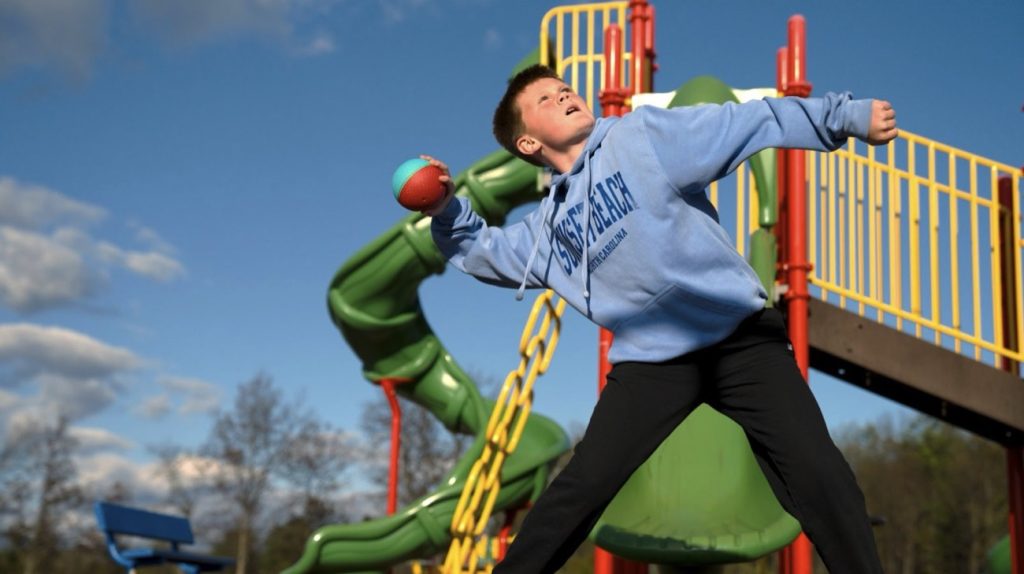
The companion app tracks every throw and lets players describe a new game out loud. Photo: Courtesy Sperry Labs, via Pulse 2.0
$69
Retail price, AI version
$49 without AI credits
$13.29
Cost to manufacture one ball
$37
Customer acquisition cost
Per customer, as stated in the Tank
1,300
Units sold before the pitch
About $74,000 in revenue
Source: Shark Tank Season 18, Episode 1; Dealroom; Dexerto
Those four numbers explain the whole episode. A $13.29 ball sold for $69 is a healthy gross margin. But spending $37 to acquire each customer for a $69 one-time purchase leaves very little, and 1,300 units in six months is not the sales curve that earns a $2 million valuation from professional investors.
Who Founded Ball 2?
Sperry Labs was founded in December 2018 by cousins Kevin Langdon and Andrew Brown, both graduates of Messiah University. Ball 2 is the fourth company the pair have worked on together.
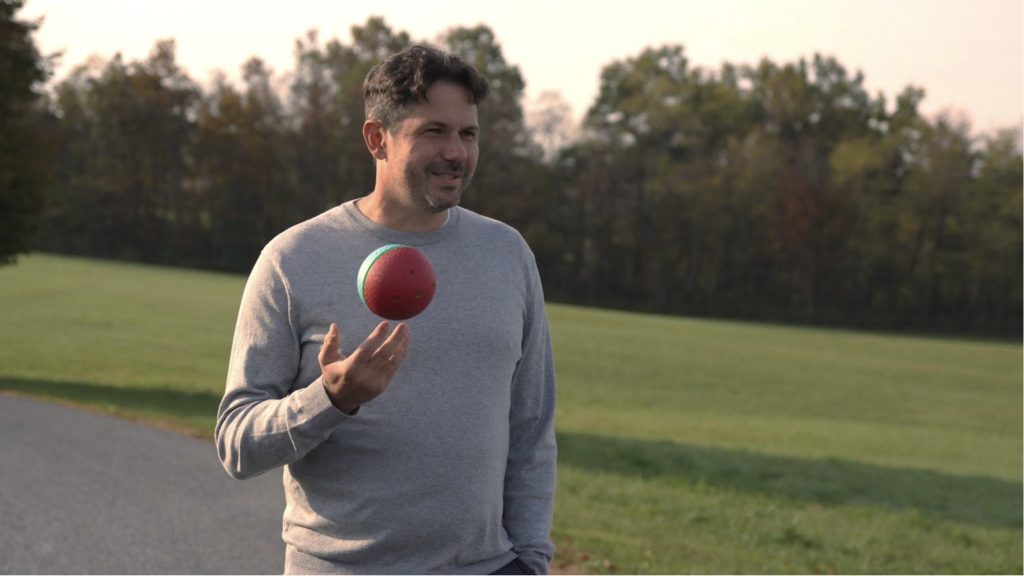
Co-founder Kevin Langdon built Ball 2's software and AI platform. Photo: Courtesy Sperry Labs, via Pulse 2.0
Brown is a game designer who previously worked at Electronic Arts; his job on Ball 2 is to make sure the technology stays fun. Langdon built the software and AI platform. A third co-founder, industrial designer Hugh Tompkins, is responsible for the ball's durability and look. The five-person team self-funded development with no outside investment before the show.
Langdon has said in interviews that the company is building a way for customers to switch off the AI features entirely and still use the ball's physical-play tracking, an acknowledgment that AI in a children's toy is a selling point for some parents and a red flag for others.
What Happened to Ball 2 on Shark Tank?
Ball 2 appeared in Season 18, Episode 1, the premiere that introduced MrBeast and Jeff Housenbold as guest Sharks. The regular panel was Barbara Corcoran, Kevin O'Leary, Lori Greiner and Daniel Lubetzky.
Brown and Langdon introduced themselves as "dads from rural Pennsylvania" and asked for $200,000 for 10%. MrBeast and Lori Greiner both played a round of the live-invented game.
How the regular Sharks reacted
Once the sales and acquisition-cost figures came out, the room cooled fast. Barbara Corcoran said the packaging did not feel persuasive enough to a customer on a shelf. Kevin O'Leary flagged the $37 acquisition cost and the weak sales and went out. Daniel Lubetzky and Lori Greiner went out after hearing the guest Sharks' opening offer.
The Beast Industries offer
MrBeast said the $69 price worried him but that the AI interaction reminded him of being a kid and could be entertaining content. Housenbold's pitch was the distribution network behind the existing MrBeast Lab toy line: in his words, the team could make the customer acquisition cost "basically zero."
Then came the number. Team Beast offered $300,000 for 66% of the company.
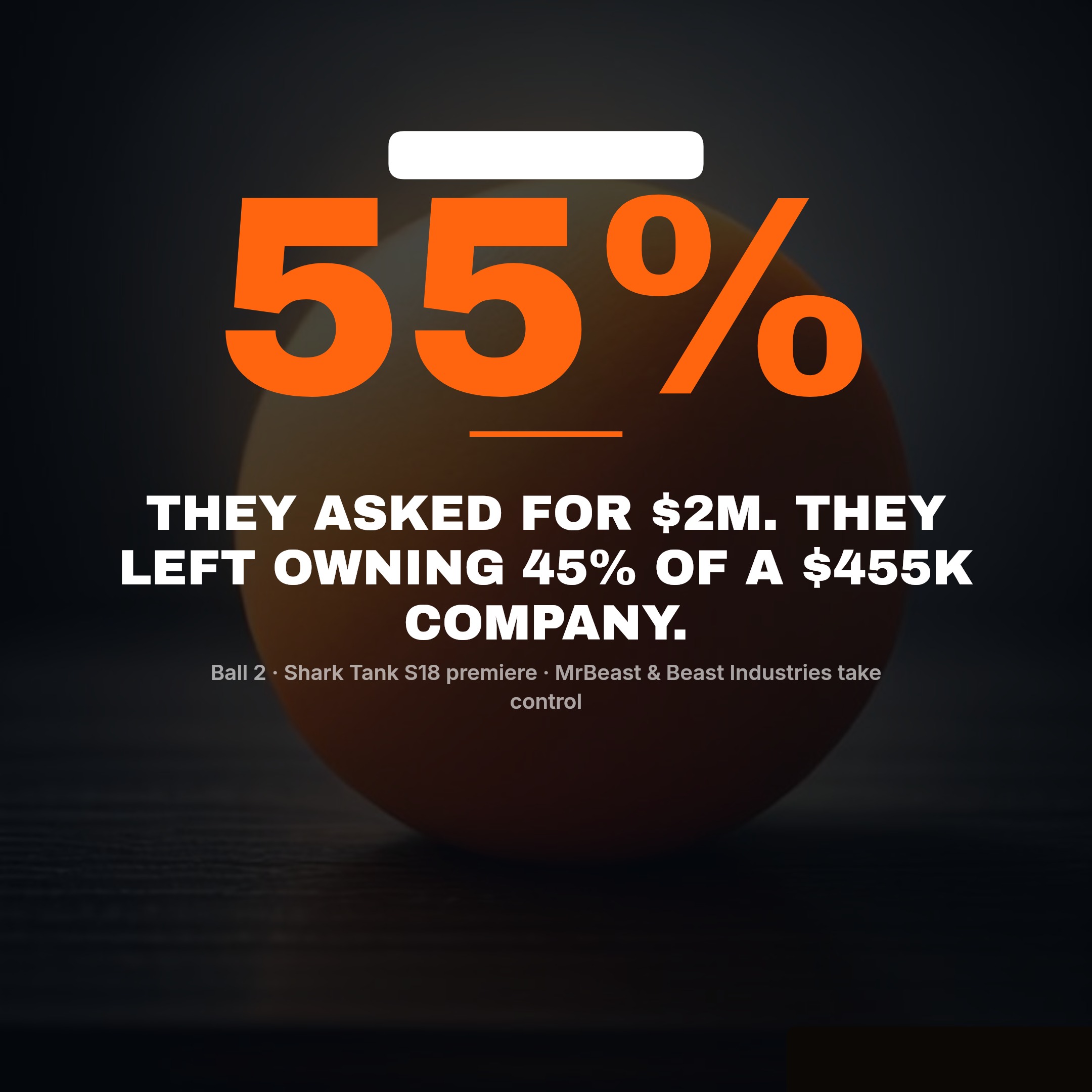
Graphic: Geeks Around Globe
The founders asked to come down to 51%. The two sides settled at $250,000 for 55%.
| Ball 2: what the founders asked vs. what they accepted | |
|---|---|
| Founders' ask ($200K for 10%) | $2,000,000 |
| Team Beast opening offer ($300K for 66%) | $454,545 |
| Final deal ($250K for 55%) | $454,545 |
Source: Implied post-money valuations, Shark Tank Season 18, Episode 1
| Ball 2 Shark Tank deal snapshot | Details |
|---|---|
| Ask | $200,000 for 10% |
| Implied ask valuation | $2,000,000 |
| Opening offer | $300,000 for 66% (MrBeast and Housenbold) |
| Founders' counter | $300,000 for 51% |
| Final deal | $250,000 for 55% |
| Implied deal valuation | About $454,545 |
| Founders' remaining stake | 45% combined |
| Other Sharks | All out |
Why this is a different kind of deal
Most Shark Tank deals leave the founders in control. A Shark takes 10%, 20%, occasionally 40%, and the founders keep running the company. Giving up 55% means the investors can, in principle, outvote the founders on every major decision: hiring, pricing, product direction, a future sale.
It also means the founders took a 77% cut to their own valuation on national television. At the $2 million ask, the cousins' combined stake was worth $1.8 million on paper. At the deal price, their 45% is worth about $205,000.
What they bought with that discount is the thing Housenbold named: distribution. Beast Industries is a $5 billion holding company whose consumer-products arm, led by Feastables, now out-earns its media business. It already licenses a MrBeast toy line into mass retail. For a hardware startup with a $37 acquisition cost and a $69 product, access to that machine may be worth more than the equity. That is the bet the founders made, and it is a defensible one. It is just not the bet the episode's cheerful edit suggested.
How Does Ball 2 Make Money?
| Business model element | Ball 2's approach |
|---|---|
| Customers | Parents of school-age children; schools and after-school programs are a stated target |
| Value proposition | Active, social, screen-light play with the novelty of AI-invented games |
| Revenue sources | Hardware sales ($49 / $69); AI game credits bundled with the premium version |
| Production | Contract manufacturing at a reported $13.29 per unit |
| Sales channels | Direct-to-consumer website; Beast Industries' retail relationships are the post-deal plan |
| Advantages | Strong gross margin, defensible software layer, a built-in content hook for MrBeast's channels |
| Main risks | $37 acquisition cost, one-time purchase with no recurring revenue, AI-in-toys backlash, dependence on a majority owner's priorities |
The structural problem is that Ball 2 is a single purchase. A family buys one ball, maybe two. Unless the AI credits become a meaningful subscription, there is no recurring revenue to amortise the acquisition cost against. That is why the regular Sharks were unmoved by the margin and why "we can make your CAC zero" was the only argument that could have worked.
What Happened After Shark Tank?
Latest update, November 6, 2026: Ball 2 remains on sale through its own website at $49 and $69. Co-founder Andrew Brown told public broadcaster WITF that orders began arriving during the broadcast and that the team had dozens of customer emails before the episode ended. The company has not published post-show sales figures, and neither Sperry Labs nor Beast Industries has publicly confirmed that the deal has closed. Shark Tank deals are subject to due diligence after taping, and a meaningful share of on-air agreements change or fall through.
Beast Industries, for its part, has been busy. In October 2026 it named its first chief marketing officer, Michelle St. Jacques, who also runs Feastables. CEO Housenbold has publicly framed the company's ambition as building "10 more Jimmys," and the Ball 2 deal is the first visible example of Beast Industries acting as an investor in other founders rather than a builder of its own brands.
December 2018
Kevin Langdon and Andrew Brown found Sperry Labs in Lewisburg, Pennsylvania
December 2025
First Ball 2 units ship
February 2026
Official launch at New York Toy Fair
Mid-2026
About 1,300 units sold, roughly $74,000 in revenue, at the time of taping
September 30, 2026
Shark Tank Season 18 premiere airs
MrBeast and Jeff Housenbold take 55% for $250,000.
October 2026
Beast Industries names Michelle St. Jacques its first CMO
November 2026
Ball 2 on sale at $49 / $69; deal closing not yet publicly confirmed
| Area | Evidence | Assessment |
|---|---|---|
| Website | Active, both versions on sale | Verified |
| Pre-show sales | About $74,000, roughly 1,300 units | Founder-reported on air |
| Post-show sales | Orders during broadcast; no figures released | Unverified |
| Deal closing | No public confirmation from either side | Unknown |
| Retail distribution | Not yet announced | Pending |
| Business status | Active, majority control agreed to Beast Industries | Early stage, high dependency |
Lessons From Ball 2's Journey
Your acquisition cost is your valuation
The Sharks did not pass on Ball 2 because of the product. They passed because $37 to win a $69 one-time sale is a business that shrinks as it grows. Founders who walk in with a strong gross margin and a weak CAC should expect the conversation to be about the second number.
"Strategic" money has a price, and the price is control
Housenbold's offer was honest about what Beast Industries brings: an audience and shelf space that make paid acquisition unnecessary. The cost of that was a majority stake. Founders should know before they walk in whether they would accept that trade, because there is no time to work it out under studio lights.
A $2 million ask with $74,000 in sales invites a reset
As with Donna's Pickle Beer and LiquidView, an aggressive valuation set the tone of the room. The difference is that Ball 2's founders accepted the reset rather than walking away.
Watch what the majority owner does with the first product
Beast Industries' consumer playbook is Feastables: launch into Walmart, iterate on packaging, scale through the creator's channels. If Ball 2 appears in a MrBeast video and on a mass-retail shelf by spring 2027, the founders' 45% could be worth far more than the 100% they held on September 29. If it does not, they gave up control for $250,000.
Final Take
Ball 2 is a well-engineered product with a real idea behind it and unit economics that could not support the price its founders put on it. The deal they took is the clearest example this season of what celebrity Sharks are really selling: not capital, but distribution, priced in control.
Whether that was a good trade will be visible within a year. The signals to watch are a confirmed closing, a retail placement, and whether Ball 2 shows up in Beast Industries' own content. Until then, the founders own 45% of a company whose next move is not theirs to make.
We will update this piece as those signals arrive.
Frequently Asked Questions
Did Ball 2 get a deal on Shark Tank?
Yes. MrBeast and Beast Industries CEO Jeff Housenbold agreed on air to invest $250,000 for 55% of Sperry Labs, the company behind Ball 2.
What did the Ball 2 founders originally ask for?
$200,000 for 10%, implying a $2 million valuation. The final deal implied a valuation of about $455,000.
Who owns Ball 2 now?
If the deal closes as agreed, MrBeast and Beast Industries hold 55% and founders Andrew Brown and Kevin Langdon and their team hold the remaining 45%.
How much does Ball 2 cost?
$49 for the standard version and $69 for the version with AI game credits, sold through the company's website.
How many Ball 2s had been sold before Shark Tank?
About 1,300 units, roughly $74,000 in revenue, in under six months.
Has the MrBeast deal closed?
As of November 2026, neither Sperry Labs nor Beast Industries has publicly confirmed the deal has closed.
Where is Ball 2 made?
Sperry Labs is based in Lewisburg, Pennsylvania. The ball is contract-manufactured at a reported cost of $13.29 per unit.
More Shark Tank Season 18 Case Files
- Fundelivered: the $600K mystery-box deal from the same episode
- Nutcase: Ninja's cashew milk and the $10M-to-$500K valuation gap
- ZALT: the nicotine-free pouch three Sharks refused to touch
- Loli-Med: Lori Greiner's deal and what "FDA registered" really means
- Donna's Pickle Beer: no deal at a $10M valuation
More Shark Tank Updates
- Flightpath Golf: the $11.8M brand the Sharks rejected
- LiquidView: no deal and 2026 update
- Shark Tank Season 17 products, deals and episode guide
Sources: ABC, Season 18 Episodes 1 and 2; Dexerto (Oct 3, 2026); Dealroom; Shark Tank Index, Season 18; abc27 (WHTM); Shark Tank Blog; Pulse 2.0 interview with Kevin Langdon; Fortune on Beast Industries; Inc. on the Step acquisition.
The weekly question
From obsession to clarity — one original question every week.
We answer one noisy topic at a time, in full. No daily roundup, no thread bait — just the question, the principles, and the system.
More from shark-tank-usa-season-18
All season pitches
Shark Tank USA
Loli-Med After Shark Tank: Lori Greiner's Deal, What "FDA Registered" Really Means, and 2026 Update

Shark Tank USA
ZALT After Shark Tank: Kevin O'Leary's Deal, the Zyn Lookalike Problem, and 2026 Update

Shark Tank USA