
Loli-Med After Shark Tank: Lori Greiner's Deal, What "FDA Registered" Really Means, and 2026 Update
Two pharmacists turned a children's oral syringe into a lollipop and got $150,000 from Lori Greiner at double their asking valuation. Here is the deal, the royalty, the difference between "FDA registered" and FDA approved, and where Loli-Med stands in November 2026.

Every parent who has pinned a toddler to the kitchen floor to get a dose of amoxicillin down understood the Loli-Med pitch in the first ten seconds. Two pharmacists took the standard plastic oral syringe, put a lollipop on the end, and let the medicine flow through the candy.
Lori Greiner understood it too. She offered $150,000 for 10%, double the valuation the founders asked for, plus a per-unit royalty, and the founders accepted.
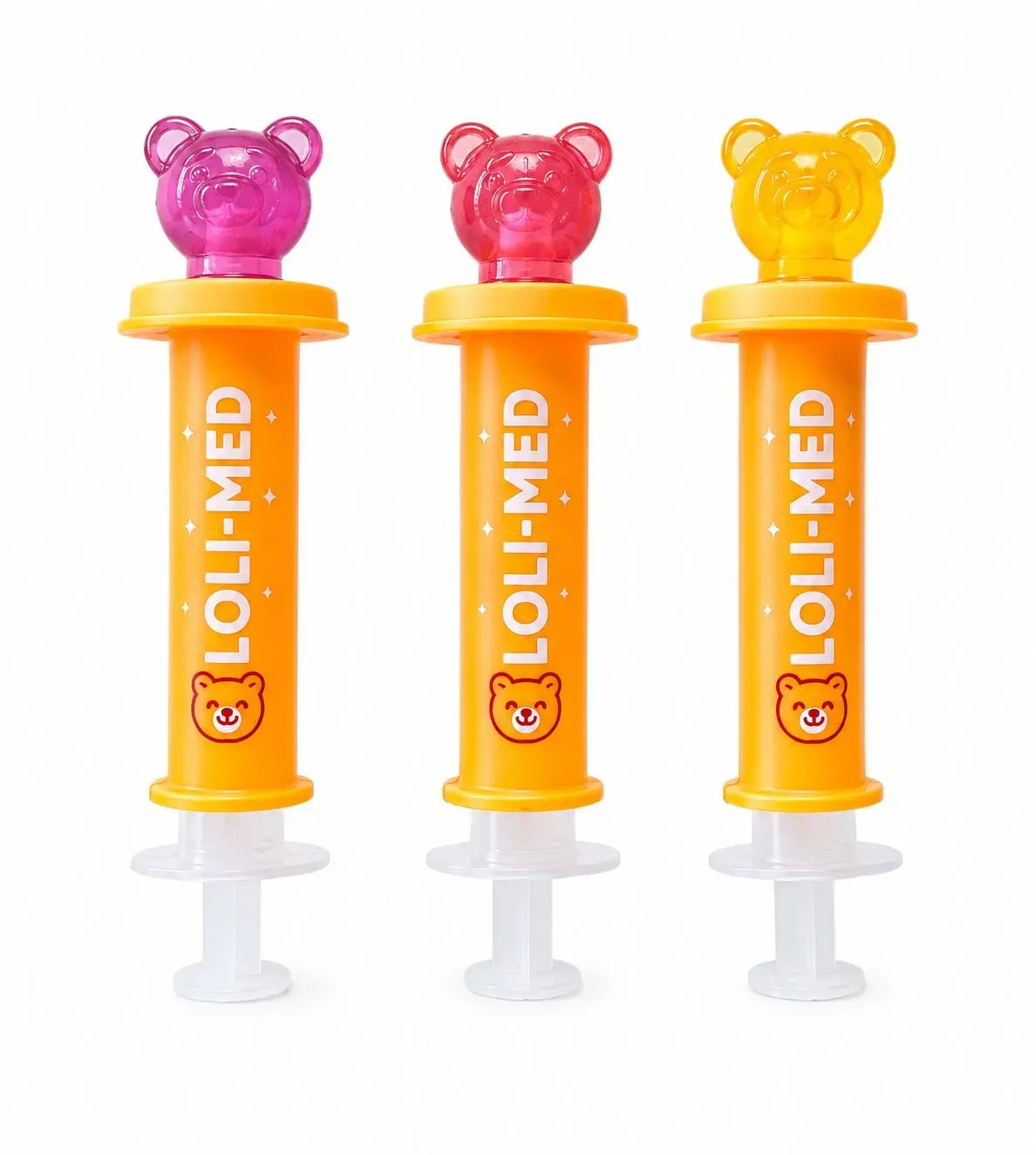
Loli-Med's three flavors: strawberry, orange and blueberry. Photo: Courtesy Loli-Med
It is a smart product with a real problem behind it. It is also a medical device for children that is sold with the phrase "FDA registered" on its website, a phrase that is accurate, legal, and widely misunderstood. Here is the deal, the business, and what that phrase does and does not tell you.
Loli-Med After Shark Tank: Quick Answer
Short on time? Here is what happened to Loli-Med after Shark Tank.
Pitch result: Pharmacists Crystal Naoum and Ekhlas Khalaf asked for $75,000 for 10%. Lori Greiner offered $150,000 for the same 10%, with a $2.25-per-unit royalty until $50,000 is repaid, a cap the founders negotiated down before accepting. Final deal: $150,000 for 10% plus the capped royalty, valuing Loli-Med at $1.5 million.
Current status: Active. Loli-Med sells a three-pack of dispensers for $12.99 through its website. The company reported $92,000 in sales and about $66,000 in profit at the time of taping. The founders are targeting pharmacy retail. Whether the Greiner deal has closed has not been publicly confirmed.
| Loli-Med at a glance | Details |
|---|---|
| Company | Loli-Med |
| Founders | Crystal Naoum, PharmD, and Ekhlas Khalaf, PharmD |
| Based in | Aurora, Colorado |
| Launched | Late 2025 (October per one report, December per another) |
| Product | Lollipop-headed oral medication dispenser; medicine supplied separately |
| Price | $12.99 for a three-pack (strawberry, orange, blueberry) |
| Shark Tank appearance | Season 18, Episode 4 ("The Mindy Project"), October 14, 2026 |
| Ask | $75,000 for 10% ($750,000 valuation) |
| Deal | $150,000 for 10% plus $2.25 per unit royalty capped at $50,000, with Lori Greiner ($1.5 million valuation) |
| Regulatory status | FDA establishment registration No. 10095359; patent pending |
| Website | loli-med.com |
What Is Loli-Med?
Loli-Med is an oral medicine dispenser disguised as a lollipop. A caregiver draws liquid medicine into the syringe body, which has 10 mL dosing markings, attaches the lollipop head, and hands it to the child. As the child works on the candy, the medicine passes through a central channel in the head. The idea is that the sweet taste masks the medicine and the familiar shape removes the fear of the syringe.
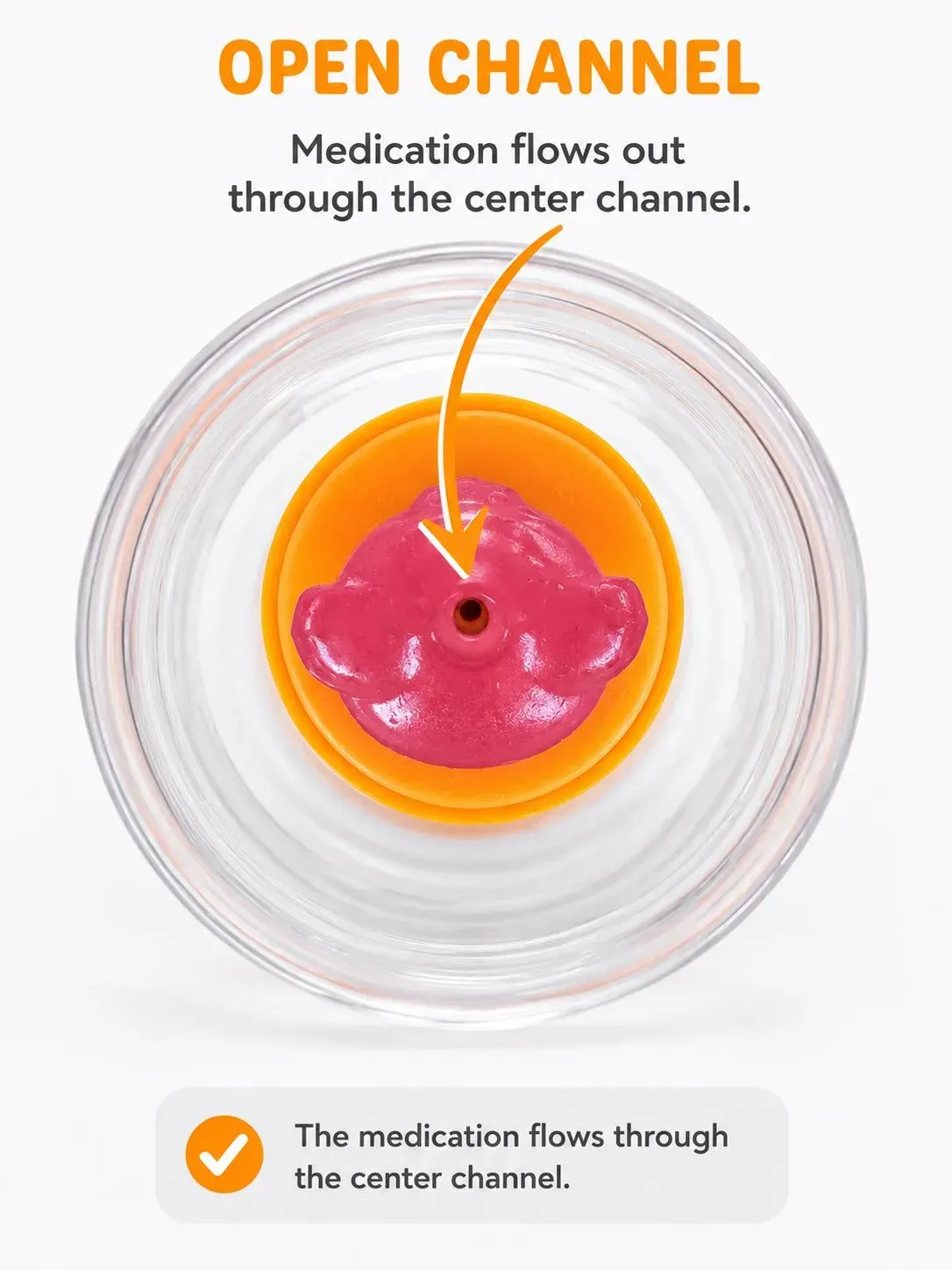
How it works: medicine from the syringe passes through an open channel in the centre of the candy head. Image: Courtesy Loli-Med
The lollipop portion contains about six grams of carbohydrate and 24 calories, using isomaltulose, a reduced-glycemic sugar, plus vitamin C, with natural colouring from beetroot. The syringe components are described as BPA-free, medical-grade plastic. A three-pack sells for $12.99.
One detail is inconsistent across the public record. Shark Tank Index describes Loli-Med as a single-use dispenser; another detailed write-up notes protective caps "to keep the dispenser clean between uses." Parents should read the instructions on the pack rather than either description.
$92K
Sales at taping
Launched late 2025
$66K
Reported profit at taping
$12.99
Price per three-pack
2x
Lori Greiner's valuation vs. the ask
$1.5M against $750K
$2.25
Royalty per unit
Until $50,000 repaid
Source: Shark Tank Season 18, Episode 4; Shark Tank Index; Shark Tank Insights
Who Founded Loli-Med?
Crystal Naoum and Ekhlas Khalaf are both practising pharmacists, which is the most important fact about the company.
Naoum earned her PharmD from Xavier University of Louisiana in 2018, has held licences in Louisiana, California and Virginia, and worked at CVS Health, North Coast Medical Supply and a compounding pharmacy before stepping away in April 2026 to focus on Loli-Med. Khalaf earned her PharmD from Shenandoah University and has worked at Walgreens, CVS Health and Denver Health, and has been pharmacy manager at DNA Pharmacy since October 2024.
Both have spent years at the counter watching parents struggle with the plastic syringe that comes taped to every bottle of children's antibiotic. Loli-Med is the product of that view.
What Happened to Loli-Med on Shark Tank?
Loli-Med appeared in Season 18, Episode 4, with Mindy Kaling as guest Shark alongside Lori Greiner, Kevin O'Leary, Daymond John and Daniel Lubetzky.
The pitch opened with Naoum's husband Patrick dressed as a baby. The Sharks then tested the dispenser themselves, with rosé standing in for medicine. Naoum and Khalaf asked for $75,000 for 10% and said they were looking for a strategic partner who could get the product into major pharmacy chains. They disclosed $92,000 in sales and about $66,000 in profit since launch.
Lori doubles the valuation
Greiner, whose portfolio is built on exactly this kind of problem-solving consumer product, offered $150,000 for the same 10%, doubling the founders' own valuation to $1.5 million. The offer came with a royalty of $2.25 per unit until she had been repaid $50,000. The founders negotiated the cap down before accepting. On a $12.99 three-pack, a $2.25 royalty is a meaningful slice; the $50,000 cap means it covers roughly the first 22,000 units.
Graphic: Geeks Around Globe
| Loli-Med Shark Tank deal snapshot | Details |
|---|---|
| Ask | $75,000 for 10% |
| Implied ask valuation | $750,000 |
| Lori Greiner's offer | $150,000 for 10% plus $2.25 per unit royalty |
| Royalty cap | $50,000 (negotiated down by the founders) |
| Final deal | $150,000 for 10% plus capped royalty |
| Implied deal valuation | $1,500,000 |
| Sharks present | Lori Greiner, Kevin O'Leary, Daymond John, Daniel Lubetzky, Mindy Kaling (guest) |
All four companies in Episode 4 left with deals, including Polygons, the folding measuring spoon that took $350,000 plus a $500,000 line of credit from Greiner and Kaling, Sunday Club, the print-only puzzle newspaper, and Bye Bye Button, the fake-call keyfob.
What "FDA Registered" Actually Means
Loli-Med's website says the company is "FDA registered as a medical device company" and cites U.S. FDA Establishment Registration No. 10095359. That statement is true, and the company is careful to say "registered," not "approved." It is still worth explaining, because the distinction is one most shoppers do not know and one the FDA itself polices.
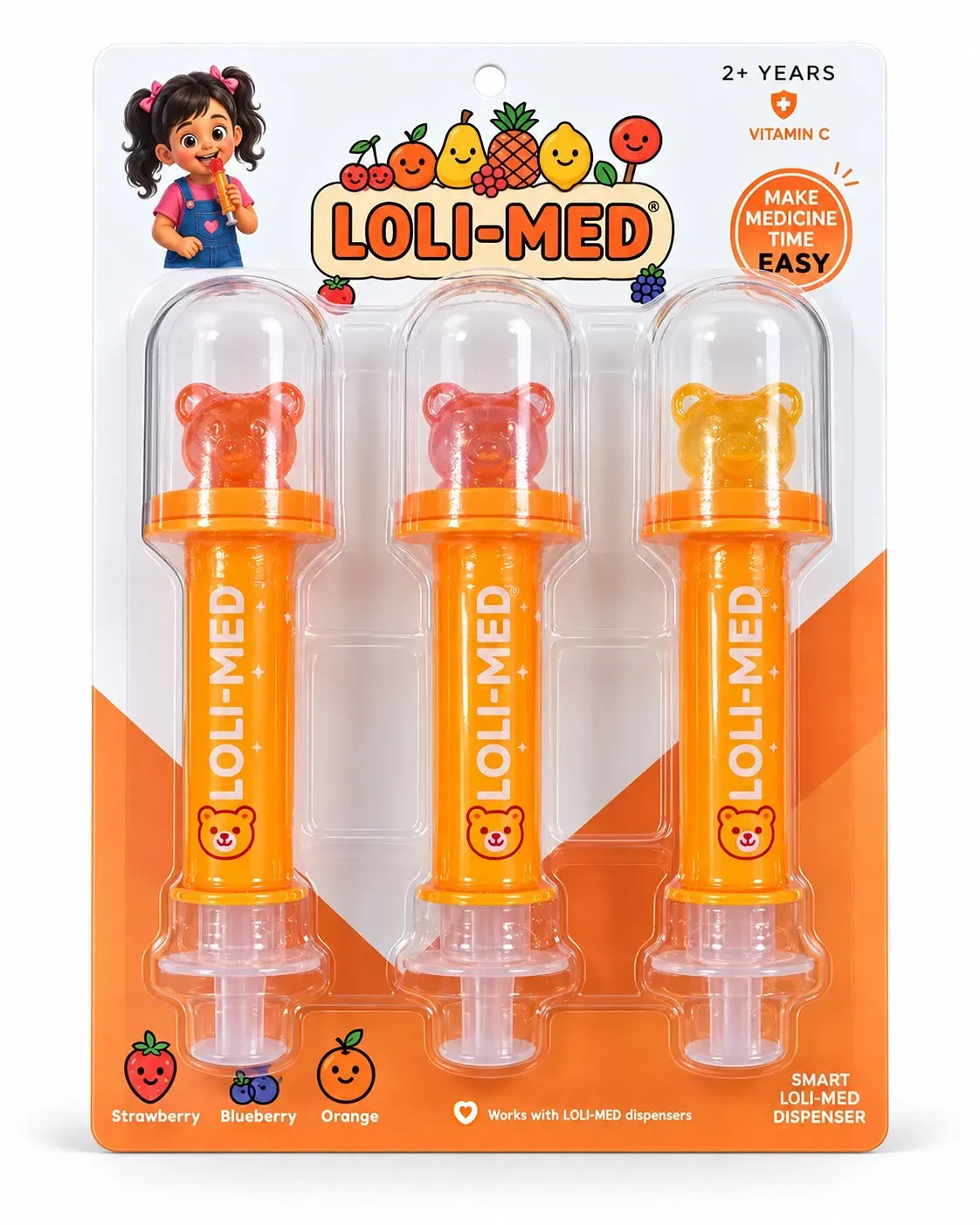
The retail three-pack. The company's website states that it is FDA registered as a medical device company. Photo: Courtesy Loli-Med
An oral liquid-medication dispenser falls under FDA product code KYX, a Class I device. Almost all Class I devices are exempt from premarket review. The manufacturer does not submit data to the FDA, the FDA does not evaluate the product, and no clearance or approval is issued. What the law requires is that the company register its facility and list the device, a largely administrative filing. Loli-Med has done that.
The FDA's own regulation, 21 CFR 807.39, is blunt about what registration signifies: registration "does not in any way denote approval of the establishment or its products," and any representation that creates an impression of official approval because of registration "is misleading and constitutes misbranding."
Loli-Med's wording stays on the right side of that line. The company has not claimed approval, clearance or endorsement, and nothing in our review suggests it has misbranded the product. The point is for parents: a registration number on a children's medical product is a filing receipt, not a safety review. The dosing accuracy, the material safety and the claim that the candy does not interfere with the medicine rest on the manufacturer and on the two pharmacists who designed it, not on an FDA evaluation.
There is one more question worth raising, and it is one pharmacists themselves raise routinely. Poison-control and paediatric guidance has long discouraged telling children that medicine is candy, because it can encourage them to seek out medicine when unsupervised. Loli-Med's entire design makes medicine look and taste like candy. The founders are better placed than almost anyone to think about that trade-off, and their packaging should make the "this is not a treat, this is for medicine time only" message unmistakable. Whether it does is something parents can judge from the box.
How Does Loli-Med Make Money?
| Business model element | Loli-Med's approach |
|---|---|
| Customers | Parents and caregivers of young children on liquid medication |
| Value proposition | Less stressful, more accurate dosing by turning the syringe into a lollipop |
| Revenue sources | Three-packs at $12.99 direct; pharmacy retail is the stated goal |
| Unit economics | Not disclosed; $66,000 profit on $92,000 sales implies very high early margin |
| Intellectual property | Utility patent pending covering edible medication dispensers; chocolate and gummy formats contemplated |
| Marketing | Shark Tank, ABC Kids Expo (May 2026), parenting creators |
| Advantages | Founder credibility, universal problem, strong margin, Lori Greiner's retail reach |
| Main risks | Class I device liability for a children's product, candy-medicine confusion, copycats once the format is proven, single-use cost per dose |
The retail logic is strong. Loli-Med belongs on the shelf next to the children's medicine it is used with, in exactly the pharmacies where both founders have worked. Greiner's relationships with mass retail are the reason they chose her offer.
What Happened After Shark Tank?
Latest update, November 6, 2026: Loli-Med is selling three-packs at $12.99 through its website and has been promoting the product through parenting creators since appearing at the ABC Kids Expo in May 2026. The company has not released post-show sales figures, and neither Loli-Med nor Lori Greiner has publicly confirmed that the deal has closed. A version with replaceable candy heads is reported to be in development, which would address the per-dose cost.
2018–2024
Naoum and Khalaf work as pharmacists at CVS, Walgreens, Denver Health and others
Late 2025
Loli-Med launches direct-to-consumer
April 2026
Naoum leaves her compounding-pharmacy role to focus on Loli-Med
May 2026
Company exhibits at ABC Kids Expo
Mid-2026
About $92,000 in sales and $66,000 in profit at time of taping
October 14, 2026
Shark Tank Season 18, Episode 4 airs
$150,000 for 10% plus a capped royalty from Lori Greiner.
November 2026
Selling at $12.99 per three-pack; deal closing not yet confirmed
| Area | Evidence | Assessment |
|---|---|---|
| Website | Active; three-pack on sale | Verified |
| Sales and profit | $92K / $66K at taping | Founder-reported |
| FDA status | Establishment registration No. 10095359; Class I device, premarket-exempt | Verified against FDA classification rules |
| Patent | Application pending | Company-stated |
| Deal closing | No public confirmation | Unknown |
| Retail distribution | Pharmacy chains targeted; none announced | Pending |
| Business status | Early, profitable, strong founder fit | Promising |
Lessons From Loli-Med's Journey
Founder-problem fit is worth a valuation premium
Greiner doubled the founders' own number. She was paying for two pharmacists who had watched the problem thousands of times and could walk into any pharmacy buyer's office with credibility.
A royalty cap is a negotiation lever, and the founders used it
Accepting a per-unit royalty on a $4.33 item is painful. Negotiating the cap down meant the founders defined exactly how much of their early margin Greiner could take before the deal becomes pure equity.
Say exactly what your regulatory status is
Loli-Med uses "registered," not "approved," and that precision matters legally. It would matter even more commercially if the packaging explained the difference in plain language, because a parent who later learns that "FDA registered" meant a filing, not a review, is a parent who feels misled, however unfairly.
Design against the misuse you can foresee
The pharmacist founders know the candy-medicine confusion issue better than any reviewer. Making the anti-confusion message prominent on the box is the cheapest insurance the company can buy.
Final Take
Loli-Med is one of the better founder-product matches of Season 18: a universal parenting problem, solved by the people who see it most, with a margin that let it turn a profit in its first year and a Shark whose retail reach is exactly what it needs.
The things to watch are a confirmed closing, the first pharmacy-chain placement, and how the packaging handles two messages that matter more for this product than most: that "FDA registered" is not a safety review, and that a lollipop full of medicine is never a treat.
We will update this piece as the retail rollout and deal status become clear.
Frequently Asked Questions
Did Loli-Med get a deal on Shark Tank?
Yes. Lori Greiner agreed to invest $150,000 for 10% plus a $2.25 per unit royalty until $50,000 is repaid, in Season 18, Episode 4.
What is Loli-Med?
A lollipop-shaped head that attaches to an oral syringe so liquid medicine can be given to a child through the candy. The device contains no medicine; it is a dispenser.
Is Loli-Med FDA approved?
No. Loli-Med holds an FDA establishment registration, which is a required administrative filing for device makers. Oral liquid-medication dispensers are Class I devices exempt from FDA premarket review, so no approval or clearance exists for this category.
How much does Loli-Med cost?
$12.99 for a three-pack in strawberry, orange and blueberry.
Who founded Loli-Med?
Pharmacists Crystal Naoum and Ekhlas Khalaf, both Doctors of Pharmacy, based in Aurora, Colorado.
How much has Loli-Med sold?
About $92,000 in sales and roughly $66,000 in profit at the time of the Shark Tank taping.
Has the Lori Greiner deal closed?
As of November 2026, neither party has publicly confirmed that the deal has closed.
More Shark Tank Season 18 Case Files
- ZALT: the nicotine-free pouch three Sharks refused to touch
- Ball 2: the 55% deal MrBeast took on the Season 18 premiere
- Fundelivered: the $600K mystery-box deal
- Nutcase: Ninja's cashew milk and the $10M-to-$500K valuation gap
- Donna's Pickle Beer: no deal at a $10M valuation
More Shark Tank Updates
Sources: ABC, Season 18 Episode 4; Shark Tank Index, Season 18 and Loli-Med product page; Shark Tank Insights; Shark Tank Companies; Tonboriday; loli-med.com; 21 CFR 807.39; FDA product classification database (product code KYX, liquid medication dispenser, Class I). Sales figures are founder-reported.
The weekly question
From obsession to clarity — one original question every week.
We answer one noisy topic at a time, in full. No daily roundup, no thread bait — just the question, the principles, and the system.
More from shark-tank-usa-season-18
All season pitches
Shark Tank USA
ZALT After Shark Tank: Kevin O'Leary's Deal, the Zyn Lookalike Problem, and 2026 Update

Shark Tank USA
Fundelivered After Shark Tank: The $600K MrBeast Deal, What's Really in the Box, and 2026 Update

Shark Tank USA