
Nutcase After Shark Tank: Ninja's Cashew Milk, the $10M-to-$500K Valuation Gap, and 2026 Update
Nutcase had raised $1.8 million at a $10 million valuation, then walked into Shark Tank with Tyler "Ninja" Blevins and asked for half that. The Sharks said it was worth a tenth. Here is what the numbers showed, and where the brand stands in November 2026.
Most founders walk into the Tank hoping a Shark will value their company higher than anyone has before. Nutcase walked in asking for less than its own investors had already paid.
The cashew-milk brand co-founded by restaurateur Jo Weinand and gaming star Tyler "Ninja" Blevins had raised about $1.8 million, most recently at a $10 million valuation. On Shark Tank Season 18, Episode 3, Weinand and Blevins asked for $250,000 for 5%, a $5 million valuation, half the last round. Daniel Lubetzky, the one Shark who liked the founders enough to think out loud about terms, said the business was worth about $500,000.
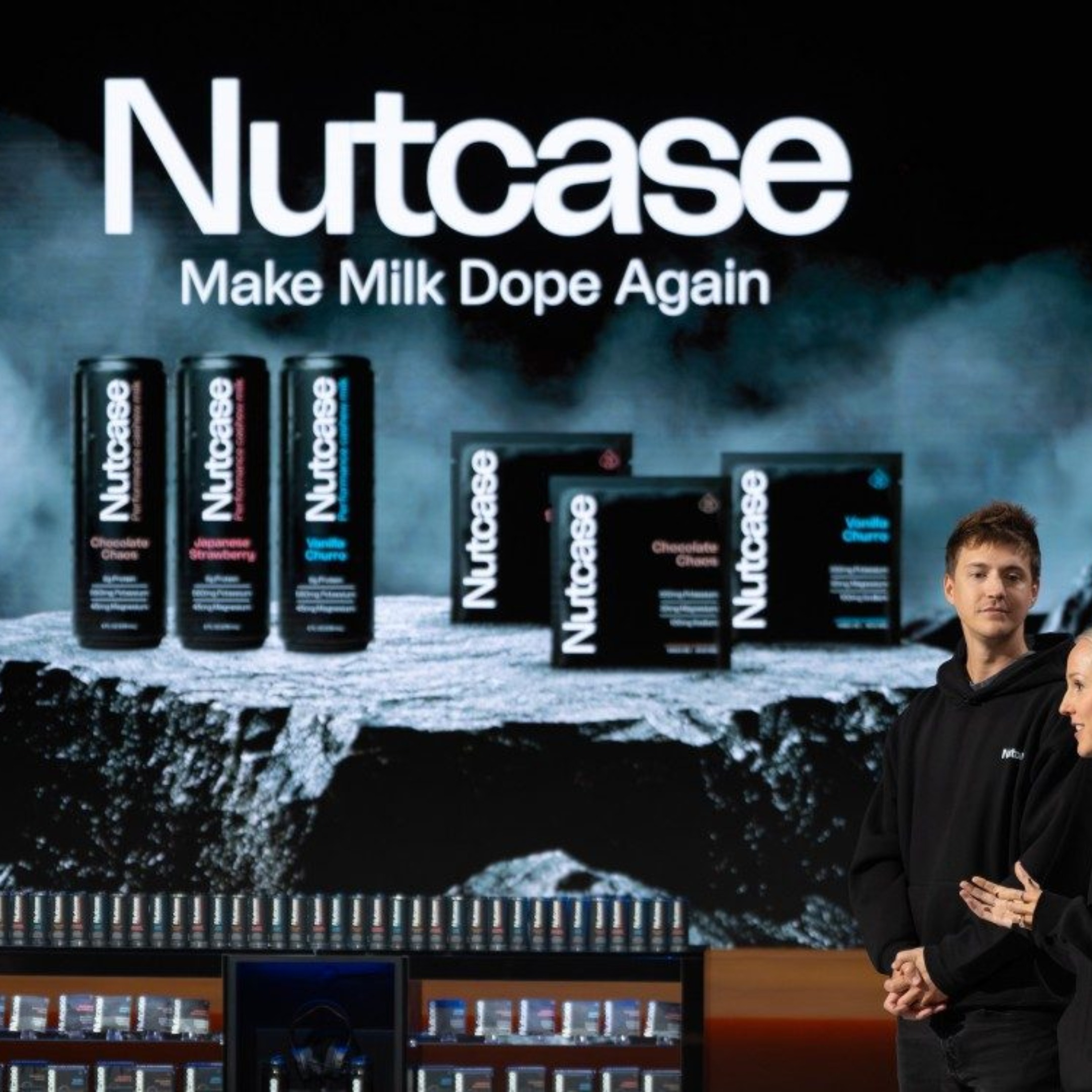
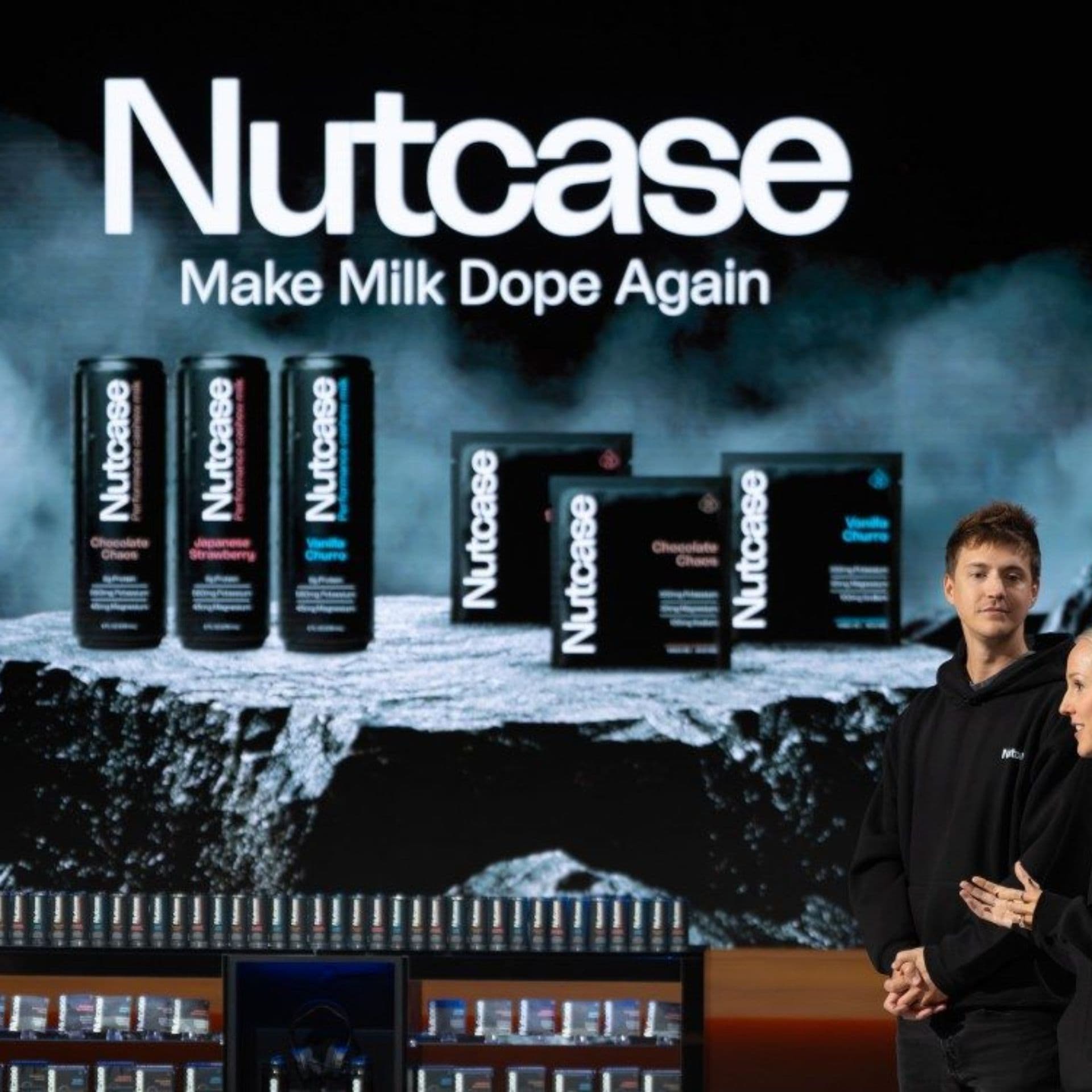
Nutcase's set on Shark Tank: three canned flavors and the powder line under the brand's slogan. Photo: ABC
Nobody made an offer. Here is why, what the pitch revealed about the economics of celebrity beverage brands, and what has happened since.
Nutcase After Shark Tank: Quick Answer
Short on time? Here is what happened to Nutcase after Shark Tank.
Pitch result: Jo Weinand and Tyler "Ninja" Blevins asked for $250,000 for 5% of Nutcase. The company disclosed about $70,000 in prior-year sales, about $65,000 year to date, a roughly $300,000 loss for the year, a $58 customer acquisition cost, and $1.8 million already raised. Every Shark passed. No offer was made.
Current status: Active. Nutcase sells cans and powder through its website, Amazon and Instacart, and is stocked in about 28 Whole Foods stores across California, Arizona and Nevada. Post-show it has added ambassadors including Steve Aoki and Mike Tyson and launched a creator commission program. No post-show revenue figures have been released.
| Nutcase at a glance | Details |
|---|---|
| Company | Nutcase (Nutcase Milk) |
| Founders | Jo Weinand (founder, CEO) and Tyler "Ninja" Blevins (co-founder) |
| Based in | Las Vegas, Nevada |
| Product | Flavored cashew milk with electrolytes and protein, in cans and powder; flavors include Chocolate Chaos, Japanese Strawberry and Vanilla Churro |
| Shark Tank appearance | Season 18, Episode 3 ("Diary of a Shark"), October 7, 2026 |
| Ask | $250,000 for 5% ($5 million valuation) |
| Result | No deal |
| Prior funding | About $1.8 million raised, most recently at a $10 million valuation |
| Website | drinknutcase.com |
What Is Nutcase?
Nutcase is a dairy-free, lactose-free chocolate milk made from cashews, with added electrolytes and protein. The founding idea was nostalgia: the chocolate milk Weinand drank as a child, rebuilt without dairy or refined sugar. The first version was cashews, cocoa, dates and water, blended at home in Canada during the 2020 lockdowns and later sold at Weinand's Las Vegas restaurant, Wolf Down.
The product now comes in 12-can packs and a powder, with a shaker-bottle format aimed at the gym crowd. At the time of the pitch a 12-pack sold for $35 plus shipping; the official store now lists cans from $49 for twelve and powder at $30 for 15 servings.
$1.8M
Raised from investors
Most recent round at a $10M valuation
$65K
Sales, year to date
About $70K the prior year
$300K
Loss, year to date
$58
Customer acquisition cost
First 12-pack earns about $20 over cost
$190
Stated customer lifetime value
Source: Shark Tank Season 18, Episode 3, as reported by Shark Tank Success and Shark Tank Companies
Read those together and the problem is obvious. A 12-pack costs about $15 to make and sold for $35, so the first order clears about $20. Acquiring that customer cost $58. Nutcase lost money on every new buyer and needed them to come back several times to break even. By Weinand's own account in a February 2026 interview, repeat purchases fell short, and the team paused to reformulate the drink.
Who Founded Nutcase?
Jo Weinand is a restaurateur whose Las Vegas restaurant, Wolf Down, was the first place Nutcase was sold. A chance brunch conversation in Las Vegas connected her to a consumer-brands fund, which led to introductions in food production, including Mezcla co-founder Griffin Spolansky. Her husband, Shopify co-founder Daniel Weinand, is also listed among the brand's backers.
Poker professional Phil Hellmuth tried the drink, invested, and suggested Weinand send it to Tyler Blevins, whom he had met at a creator poker game. Blevins, known as Ninja, built one of the largest audiences in gaming through Fortnite streaming and was the first streamer to pass 10 million Twitch followers. He tried Nutcase and joined as a co-founder rather than a paid promoter. His stated role is taste testing and marketing; his equity stake has not been disclosed.
Early backers reportedly put in $500,000 at a $5 million cap before a prototype existed. Later money came in at $10 million.
What Happened to Nutcase on Shark Tank?
Nutcase appeared in Season 18, Episode 3, the episode that introduced Dragons' Den investor Steven Bartlett as a guest Shark. The panel was Bartlett, Kevin O'Leary, Lori Greiner, Daniel Lubetzky and Kendra Scott.
Weinand opened alone, then brought out Blevins as her co-founder. Kendra Scott said her children would flip out that Ninja had come to Shark Tank. Several Sharks praised the taste, particularly the Chocolate Chaos flavor, and the packaging.
Then the numbers came out, and the room changed.
Why every Shark passed
Steven Bartlett said he could not tell whether Nutcase was a nostalgic treat, a milk alternative or a performance drink, and that a crowded beverage market needs a much sharper reason to buy. Kendra Scott and Lori Greiner shared the positioning concern. Kevin O'Leary rejected the $5 million valuation outright.
Daniel Lubetzky, founder of KIND Snacks and the panel's consumer-packaged-goods specialist, was the most revealing. He liked the founders but said the rebuild the business needed put its value at about $500,000, which would mean $250,000 for 50%. He did not turn that into an offer.
Graphic: Geeks Around Globe
| Three prices for the same company | |
|---|---|
| Last investor round | $10,000,000 |
| Shark Tank ask | $5,000,000 |
| Lubetzky's estimate | $500,000 |
Source: Shark Tank Season 18, Episode 3; investor round as reported by Shark Tank Blog
| Nutcase Shark Tank deal snapshot | Details |
|---|---|
| Ask | $250,000 for 5% |
| Implied valuation | $5,000,000 |
| Most recent prior round | About $10,000,000 valuation |
| Cash and inventory disclosed | About $200,000 cash, about $200,000 inventory |
| Sharks present | Steven Bartlett, Kevin O'Leary, Lori Greiner, Daniel Lubetzky, Kendra Scott |
| Offers | None |
| Final result | No deal |
The down round nobody named
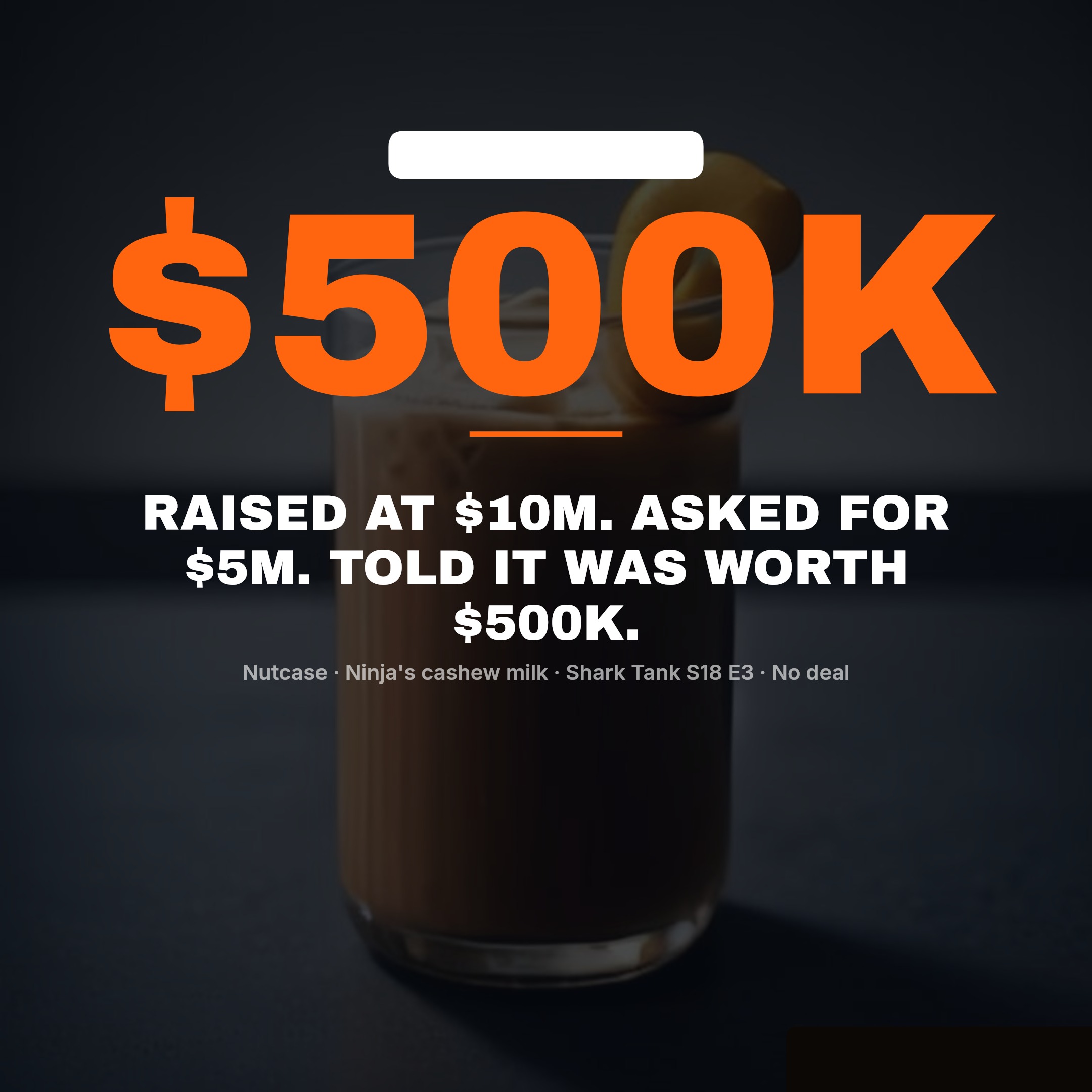
The detail that makes Nutcase more than a routine no-deal is the gap between the three prices. Investors paid at $10 million. The founders asked the Sharks for $5 million, a 50% discount to their own last round. The only Shark to put a number on it said $500,000, a 95% discount.
If Lubetzky is right, the $1.8 million Nutcase raised has bought a company worth less than a third of that, and the people who invested at $10 million are holding paper marked down by 95%. Nutcase has not disclosed how much of the $1.8 million remains; on air, the company said it had about $200,000 in cash and $200,000 in inventory.
That is the story for anyone who has invested in, or is being pitched, a creator-backed consumer brand. A famous co-founder can get a product into Whole Foods and onto national television. It cannot change a $58 acquisition cost on a $20 first-order margin.
Nutcase shared the episode with Pup Stack, which took a deal with Kendra Scott, UnderWarmer, and ZALT, the nicotine-free pouch that got a deal from Kevin O'Leary despite three Sharks objecting to how it looked.
Only on GAG: The Runway Arithmetic the Sharks Did in Their Heads
Nobody on the panel said the word "runway." Put the disclosed figures together and you can see why none of them needed to.
7.5¢
Lifetime revenue per dollar raised
~$135,000 in sales on $1.8M of capital
~4 months
Cash runway at taping
$200,000 cash against a ~$50,000-a-month loss
2.9
Orders needed to recover one customer's $58 CAC
At $20 margin per 12-pack
5.4
Orders implied by the $190 LTV claim
At a $35 average order
4.6x
Loss-to-revenue ratio this year
$300,000 lost on $65,000 sold
72%
Investors' write-down at Lubetzky's $500K vs the $1.8M put in
Not just the 95% drop from the $10M round
Source: GAG analysis of figures disclosed on air
Connect the dots:
- Seven and a half cents. Nutcase has booked roughly $135,000 of lifetime revenue ($70,000 last year plus $65,000 year to date) on $1.8 million of investor money. That is 7.5 cents of sales for every dollar raised — before any of it is profit. Celebrity reach got the brand into Whole Foods; it did not turn capital into customers.
- About four months of cash. A $300,000 year-to-date loss at a mid-year taping is roughly $50,000 a month. Against $200,000 in the bank, that is around four months of runway on the day they pitched. The $250,000 ask would have bought five more. Every Shark could do that sum, which is why the conversation was about a rebuild rather than a cheque.
- The LTV claim requires 5.4 orders; the founder says repeat purchase fell short. $190 of lifetime value at a $35 order is 5.4 purchases per customer. Break-even on the $58 acquisition cost needs 2.9. Weinand's own February 2026 admission that repeat rates disappointed means the business was living below the break-even line, not just below the claim.
- Lubetzky's $500,000 is a 72% loss on cost, not a 95% markdown. The 95% figure compares his number to the $10 million round. Compared to the $1.8 million investors actually put in, $500,000 is a 72% write-down of their cash — the number that matters to the people who wrote the cheques.
How Does Nutcase Make Money?
| Business model element | Nutcase's approach |
|---|---|
| Customers | Lactose-intolerant and dairy-avoiding adults, nostalgic chocolate-milk drinkers, gym-goers (powder) |
| Value proposition | A childhood flavor without dairy or refined sugar, with electrolytes and protein |
| Revenue sources | Direct-to-consumer cans and powder, subscriptions, Amazon and Instacart, Whole Foods wholesale, merchandise |
| Unit economics at pitch | 12-pack: $15 to make, $35 retail; $58 CAC; $190 stated LTV |
| Marketing | Ninja's audience, celebrity ambassadors (Steve Aoki, Mike Tyson), a 15%-commission creator program, a social docuseries |
| Advantages | Memorable flavor, strong packaging, celebrity reach, Whole Foods placement |
| Main risks | Negative first-order economics, unclear positioning, heavy competition in alt-milk and protein drinks, investor overhang from the $10M round |
The shift toward powder is the most important post-pitch move. Powder is lighter to ship, has a longer shelf life and lands at about $2 a serving versus roughly $4 for cans. If repeat purchase was the problem, a cheaper, lighter format is the obvious fix.
What Happened After Shark Tank?
Latest update, November 6, 2026: Nutcase is still selling. Its store locator lists about 28 Whole Foods stores in California, Arizona and Nevada, and the brand sells online, on Amazon and via Instacart. Since the episode it has added Steve Aoki and Mike Tyson as ambassadors, launched a creator program paying 15% commission on its starter tier, and produced a social docuseries, "The Nutcase Study." The company has not released post-show sales, repeat-purchase or funding figures.
2020
Jo Weinand blends the first cashew chocolate milk at home during lockdown
2021–2023
Sold at Weinand's Las Vegas restaurant; early backers invest $500,000 at a $5M cap
2024
Phil Hellmuth invests and introduces Weinand to Tyler 'Ninja' Blevins, who joins as co-founder
2025
Raises to about $1.8M total, most recently at a $10M valuation; enters Whole Foods in three states
February 2026
Weinand says repeat purchases fell short; product reformulated
October 7, 2026
Shark Tank Season 18, Episode 3 airs
Ask of $250,000 for 5%; no offers.
October–November 2026
Adds Aoki and Tyson as ambassadors, launches creator program and docuseries
| Area | Evidence | Assessment |
|---|---|---|
| Website and online sales | Active; cans and powder listed | Verified |
| Retail | About 28 Whole Foods stores (store locator) | Company-reported |
| Celebrity backing | Ninja (co-founder), Aoki and Tyson (ambassadors), Hellmuth (investor) | Verified via company and press |
| Funding | About $1.8M raised, last at $10M | Reported on air; no filings reviewed |
| Profitability | About $300K loss disclosed for 2026 at taping | Founder-reported |
| Post-show revenue | Not disclosed | Unknown |
| Business status | Operating, loss-making, repositioning around powder | Fragile |
Lessons From Nutcase's Journey
A famous co-founder is a distribution channel, not a business model
Ninja got Nutcase into Whole Foods and onto Shark Tank. He could not make the first order profitable. Investors pricing celebrity brands should separate the reach from the economics.
Raising high early makes every later conversation a down round
The $10 million round was a vote of confidence that became a liability. Asking the Sharks for $5 million was already a public markdown; Lubetzky's $500,000 made the gap impossible to ignore.
Positioning is a number, too
Bartlett's question, treat or milk or sports drink, is not a branding nicety. Each answer implies a different customer, price point and repeat frequency. A product that is a little of all three has a $58 acquisition cost because it is advertising to everyone.
Fix repeat purchase before raising again
Weinand's February 2026 admission that repeat purchases fell short is the most honest line in the Nutcase story. The powder pivot addresses it directly. If the next round of numbers shows improving repeat rates, the brand has a path; if not, the $1.8 million is gone.
Final Take
Nutcase is a good-tasting product with a celebrity on the cap table and the economics of a company that has not yet found its customer. The Sharks did not reject the drink. They rejected the idea that $1.8 million and a famous co-founder had produced something worth $5 million when it was losing $300,000 a year on $65,000 of sales.
The question for 2027 is whether the powder format and the ambassador push fix repeat purchase, or whether Nutcase becomes a case study in how creator fame inflates early valuations that the business cannot grow into. The company's own investors have the most riding on the answer.
We will update this piece as new figures emerge.
Frequently Asked Questions
Did Nutcase get a deal on Shark Tank?
No. Jo Weinand and Tyler "Ninja" Blevins asked for $250,000 for 5% and received no offers in Season 18, Episode 3.
Is Ninja a co-founder of Nutcase?
Yes. Tyler Blevins joined Nutcase as a co-founder after poker pro Phil Hellmuth introduced him to founder Jo Weinand. His equity stake has not been disclosed.
How much money has Nutcase raised?
About $1.8 million, most recently at a $10 million valuation, according to figures disclosed on the show.
How much revenue does Nutcase make?
About $70,000 in the year before the pitch and about $65,000 year to date at taping, with a roughly $300,000 loss for the year.
Is Nutcase still in business?
Yes. As of November 2026 it sells online, on Amazon and Instacart, and in about 28 Whole Foods stores in California, Arizona and Nevada.
What did the Sharks say Nutcase was worth?
Daniel Lubetzky said the rebuild required put the company at about $500,000, implying $250,000 should buy 50%. He did not make an offer.
How much does Nutcase cost?
The official store lists 12 cans from $49 and a 15-serving powder at $30, with subscription discounts.
More Shark Tank Season 18 Case Files
- Shark Tank Season 18 episode guide and the GAG Dilution Index
- ZALT: the nicotine-free pouch three Sharks refused to touch
- Donna's Pickle Beer: no deal at a $10M valuation
- Ball 2: the 55% deal MrBeast took on the Season 18 premiere
- Fundelivered: the $600K mystery-box deal
- Loli-Med: Lori Greiner's deal and what "FDA registered" really means
More Shark Tank Updates
- Bon AppéSweet: the deal, growth and 2026 update
- Shark Tank Season 17 products, deals and episode guide
Sources: Shark Tank Season 18, Episode 3 (ABC, Oct 7, 2026); Shark Tank Success; Shark Tank Companies; Shark Tank Blog; All Shark Tank Products; Filmifeed Week 2 recap; Entrepreneur (May 2025); The Cinemaholic; drinknutcase.com. Funding figures are as disclosed on air and have not been verified against filings.
The weekly question
From obsession to clarity — one original question every week.
We answer one noisy topic at a time, in full. No daily roundup, no thread bait — just the question, the principles, and the system.
More from shark-tank-usa-season-18
All season pitches
Shark Tank USA
Neat Shark Tank Update: Why Lori Greiner's Royalty Was the Cheapest Offer in the Room
Shark Tank USA
Moonrise Bagels Shark Tank: The Stuffed Bagel Walking Into Lori Greiner's $34 Million Memory
Shark Tank USA