
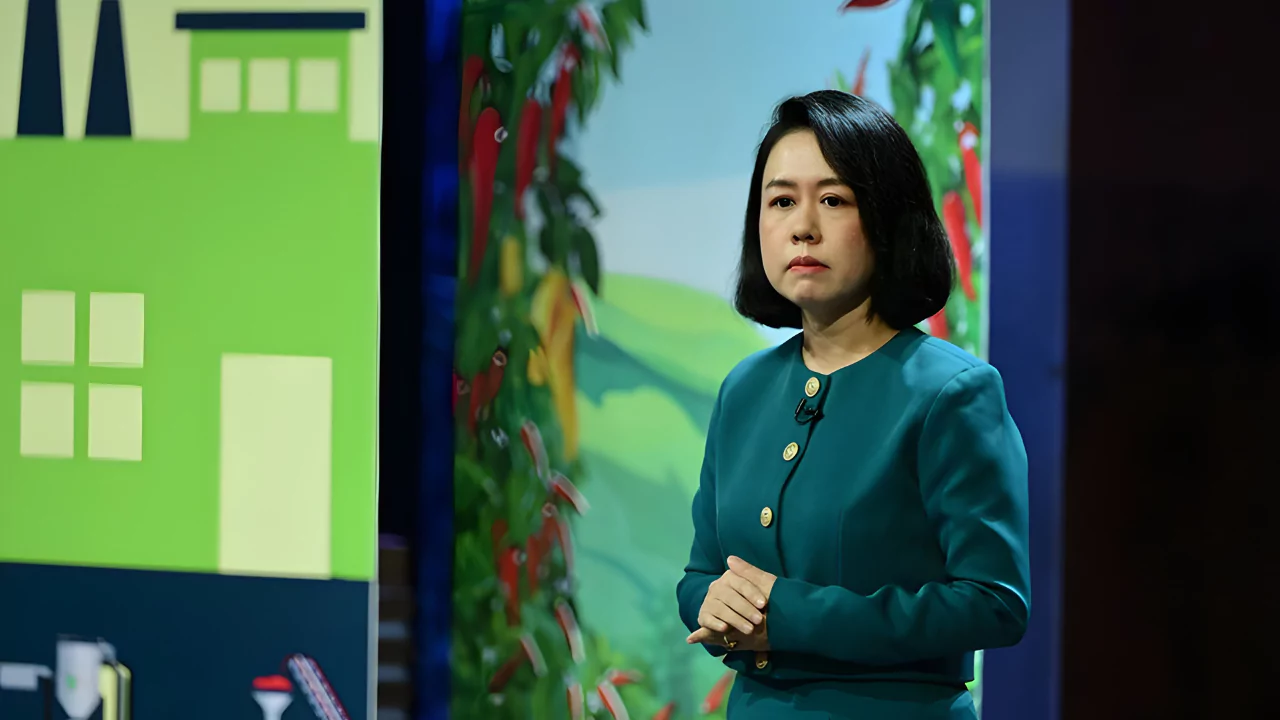
When Nguyen Thi Van Anh stepped onto the Shark Tank Vietnam stage, few could have predicted just how far her food-tech company would go. Armed with confidence, numbers, and a clear mission, Van Anh left the tank with one of the biggest investment deals of Season 6. But the real story begins after the cameras stopped rolling.
Founded in 2012 with limited capital, Tri Viet Phat has grown into a trusted and scalable food-tech brand. While many startups focus on hypergrowth, Van Anh took a different path by emphasizing quality, sustainability, and brand equity. That strategy paid off. The company has since launched several successful products, entered national retail chains, and gained the attention of both local and global partners.
Here’s the in-depth journey of how Tri Viet Phat transformed from a small food business into a standout brand in Vietnam’s growing food-tech ecosystem.
Who Is Nguyen Thi Van Anh?
Nguyen Thi Van Anh is a first-generation entrepreneur with a strong passion for Vietnamese cuisine, innovation, and sustainable business development. When she launched Tri Viet Phat in 2012, she had no flashy funding, no celebrity backers, and no massive infrastructure. But what she did have was a clear vision and relentless discipline.
Her career began with a focus on functional foods and beverages that combine convenience with health benefits—a rare balance in today’s fast-paced food industry. She also believed in putting people first, starting with her internal team. Over the years, she built a culture rooted in accountability, long-term thinking, and high production standards.
Van Anh’s ability to balance product innovation with operational discipline eventually caught the attention of major Vietnamese retailers and, later, the Shark Tank Vietnam panel.
Tri Viet Phat’s Shark Tank Vietnam Pitch
In her Shark Tank Vietnam Season 6 pitch, Van Anh asked for VND 22 billion (about USD 880,000) in exchange for 5% equity, valuing her company at approximately VND 440 billion. She backed her valuation with hard numbers, highlighting consistent annual revenue growth of 40 to 46 percent, a 10% net profit margin, and a loyal customer base that kept coming back.
The pitch impressed all the Sharks, but it was Shark Hùng Anh, the founder of Techcombank, who showed the most interest. After a compelling negotiation, he agreed to invest VND 24 billion for 15% equity, effectively giving Van Anh more capital than she asked for in exchange for a bigger stake. It was one of the largest deals of the season and a defining moment for the brand.
The deal brought not just funding but also strategic mentorship, expanded networks, and increased media visibility.
What Makes Tri Viet Phat Different?
While many startups focus on speed to market, Tri Viet Phat follows a principle Van Anh calls “Standard Before Speed.” This philosophy emphasizes building internal strength, maintaining product quality, and ensuring customer satisfaction before scaling operations aggressively.
The company’s strategy is structured around six key sustainability pillars that guide every decision and investment:
- Human Resources: Tri Viet Phat prioritizes staff development, providing ongoing training, fair wages, and a stable working environment. Employees are seen as long-term assets, not just labor inputs. This helps ensure low turnover rates and high productivity.
- Production: All production processes meet stringent quality and hygiene standards. The company uses automated systems and modern food processing techniques to ensure consistency. Every product that leaves their facility undergoes strict quality control.
- Products: Instead of launching countless products, the company focuses on creating a few high-quality items that solve real customer needs. Each product is formulated with both taste and health in mind, especially considering the fast-paced lifestyle of Vietnam’s younger generation.
- Partnerships: Strategic collaboration is core to their model. Van Anh believes in forming long-term, win-win partnerships rather than one-time contracts. These relationships allow the brand to maintain consistent supply chains and boost market credibility.
- Growth: The company resists the temptation to grow recklessly. Instead, it evaluates every expansion opportunity through the lens of sustainability and profitability. Growth is measured not only in revenue but also in impact and stability.
- Environmental & Community Responsibility: Tri Viet Phat actively works to reduce its carbon footprint through sustainable packaging and responsible sourcing. The company also engages in social initiatives, especially those supporting rural communities and local farmers.
This holistic approach allows Tri Viet Phat to compete not just on price or trendiness but on trust.
Post Shark Tank Success and Retail Expansion
After securing the deal on Shark Tank, Tri Viet Phat didn’t waste any time.
The company introduced Wil, a ready-to-drink instant tea brand crafted for young, health-conscious consumers. The product launched in record time and quickly gained traction in Vietnam’s largest supermarket chains and convenience stores such as Co.opmart, VinMart, Bách Hóa Xanh, and Circle K.
Wil’s success wasn’t just about taste—it also reflected a clever marketing strategy. The brand tapped into Vietnam’s growing demand for clean-label, easy-to-consume products with a wellness angle. Thanks to effective sampling campaigns, eye-catching packaging, and influencer-driven promotions, Wil often sells out daily, especially in urban centers like Ho Chi Minh City and Hanoi.
Alongside Wil, Tri Viet Phat also expanded its product lineup with:
- GUNGON – A ginger-based health drink designed to aid digestion and immunity.
- GUYUMI – A modern twist on traditional snacks, made with natural ingredients and fewer preservatives.
These product lines helped diversify the company’s portfolio and allowed them to cater to both B2B and B2C markets. Today, Tri Viet Phat supplies its products to restaurants, cafés, retail chains, and direct-to-consumer channels, both online and offline.
Manufacturing and Certifications
To support the surge in demand, Tri Viet Phat operates a state-of-the-art 6,000 m² production facility on the outskirts of Ho Chi Minh City. This facility is equipped with high-capacity machinery, automated processing lines, and cold storage systems.
But what really sets the company apart is its commitment to international food safety standards. Their facility is certified by:
- FSSC 22000 (Food Safety System Certification) – ensuring full traceability and safety in the supply chain.
- ISO 22000 – covering all food safety hazards and control measures.
- FDA – indicating that products are eligible for U.S. market access if desired.
- Halal Certification – opening doors to Muslim-majority markets in Southeast Asia and the Middle East.
These certifications serve not just as quality assurance but also as strategic tools to prepare for future export readiness.
Net Worth and Business Growth Figures
By 2022, Tri Viet Phat had achieved VND 157 billion in revenue, with a healthy net profit of 10%. This translates to around USD 6.4 million in annual sales. Given its consistent year-on-year growth between 40% and 46%, the company is now projected to be worth between VND 240 and 300 billion (roughly USD 9.6 to 12 million), depending on valuation models.
This places Tri Viet Phat among the top-performing food startups in Vietnam, especially those that haven’t raised aggressive rounds of venture capital.
The valuation reflects not only revenue but also the company’s brand equity, IP assets, certifications, partnerships, and customer loyalty.
Why Van Anh Rejected International Investment Offers
In the wake of Shark Tank fame, Tri Viet Phat began receiving attention from global investors and food conglomerates. Some offered capital, others proposed distribution rights and cross-border expansion deals.
Yet Van Anh turned most of them down.
Her reasoning was grounded in long-term strategy: She wanted to build the internal backbone of the company—its people, systems, and supply chain—before entering global markets. Rushing expansion, she believed, would dilute the company’s values and lead to potential product inconsistency.
“We grow based on value, not valuation,” she said in a post Shark Tank interview.
This cautious yet confident mindset is one reason Tri Viet Phat remains both profitable and resilient in a volatile market.
What’s Next for Tri Viet Phat?
Tri Viet Phat has no plans to slow down.
Looking ahead, the company aims to expand into new functional beverage categories, such as probiotic drinks and adaptogenic teas. There are also plans to launch a flagship direct-to-consumer e-commerce platform, giving customers across Vietnam easier access to its growing range of products.
Additionally, Van Anh is exploring cross-border pilot exports to countries like Singapore and Japan—markets that value high-quality Vietnamese goods but demand strict compliance with global food standards.
Strategically, the company is also increasing its investment in R&D, smart farming collaborations, and sustainable packaging technologies, signaling a future that is tech-driven and environmentally conscious.
Final Takeaways: Lessons from Tri Viet Phat’s Growth Story
Nguyen Thi Van Anh’s journey with Tri Viet Phat teaches a powerful lesson: building a resilient, values-driven business can be just as rewarding, if not more, than chasing unicorn status.
By prioritizing people, quality, and community impact over hypergrowth, Tri Viet Phat has carved out a sustainable niche in Vietnam’s food sector. This success wasn’t built overnight. It was earned—one certified batch, one sold-out shelf, and one loyal customer at a time.
If you’re an aspiring entrepreneur, Tri Viet Phat is a reminder that slow, steady, and smart can win the race.
TL;DR (Too Long; Didn’t Read)
After appearing on Shark Tank Vietnam, Tri Viet Phat—founded by Nguyen Thi Van Anh—secured one of the season’s biggest deals and grew into a leading Vietnamese food-tech company. With strategic retail expansion, sustainable values, and smart brand building, it now stands as a standout success story in Vietnam’s startup ecosystem.
FAQs
Is Tri Viet Phat still in business in 2025?
Yes, Tri Viet Phat continues to operate and expand. The company has strengthened its market presence through retail growth, international certifications, and a focus on sustainability.
Did Tri Viet Phat get a deal on Shark Tank Vietnam?
Yes, founder Nguyen Thi Van Anh secured a deal with Shark Hùng Anh for VND 24 billion in exchange for 15% equity—one of the largest deals of Season 6.
What is the current net worth of Tri Viet Phat?
While the exact 2025 valuation is undisclosed, the company earned VND 157 billion in revenue in 2022 and has maintained 40–46% annual growth since, indicating strong financial health.
Who is the founder of Tri Viet Phat?
Nguyen Thi Van Anh is the founder and CEO of Tri Viet Phat. Her leadership and commitment to sustainable business values have driven the company’s long-term success.
Where can I buy Wil instant tea and other Tri Viet Phat products?
Wil tea and other branded products like GUNGON and GUYUMI are available in major supermarkets and convenience stores across Vietnam. Some products may also be available through online retail platforms.
Why did Tri Viet Phat reject international investors?
Founder Van Anh declined multiple international investment offers to focus on building internal strength, local brand equity, and sustainable growth, aligning with her long-term vision.