

You Might Be Speaking Like ChatGPT Without Knowing It
When you say things like “delve deeper” or “take a meticulous approach,” are you expressing yourself, or echoing an AI?
A groundbreaking study from the Max Planck Institute just analyzed over 740,000 hours of transcribed podcasts and academic talks. The finding? A clear rise in certain words after the release of ChatGPT. These are words the AI often favors when editing or generating polished text.
These so-called “GPT words” include terms like delve, swift, meticulous, and comprehend. They sound thoughtful and refined, which is exactly how ChatGPT tends to sound. Now, those same words are showing up more often in natural, unscripted human speech, especially in science, education, and business conversations.
This isn’t just a language shift. It’s what researchers are calling a cultural feedback loop where humans train the AI, and the AI starts to retrain us.
Fast Facts
- Study Size: 740,249 hours of podcasts and YouTube talks analyzed
- Key Finding: Words like “delve” and “meticulous” surged in spoken language post-ChatGPT
- Source: Max Planck Institute for Human Development
- Impact: ChatGPT’s vocabulary is shaping real-world conversation across science, education, and business
- Concern: Risk of cultural homogenization and language flattening
What Are “GPT Words”?
To identify the shift, the researchers created a “GPT score.” They asked ChatGPT to rewrite real human texts such as scientific papers, essays, and emails. Then they compared word frequencies before and after editing.
They found ChatGPT had strong preferences. It regularly chose delve over explore, swift over quick, and comprehend over understand. Words like boast, underscore, inquiry, bolster, and meticulous appeared far more often in AI-edited versions than in the original texts.
The team then tracked how often those same words appeared in real-world speech using YouTube videos and podcasts recorded before and after ChatGPT launched in November 2022.
The Data Speaks: Our Language Is Shifting
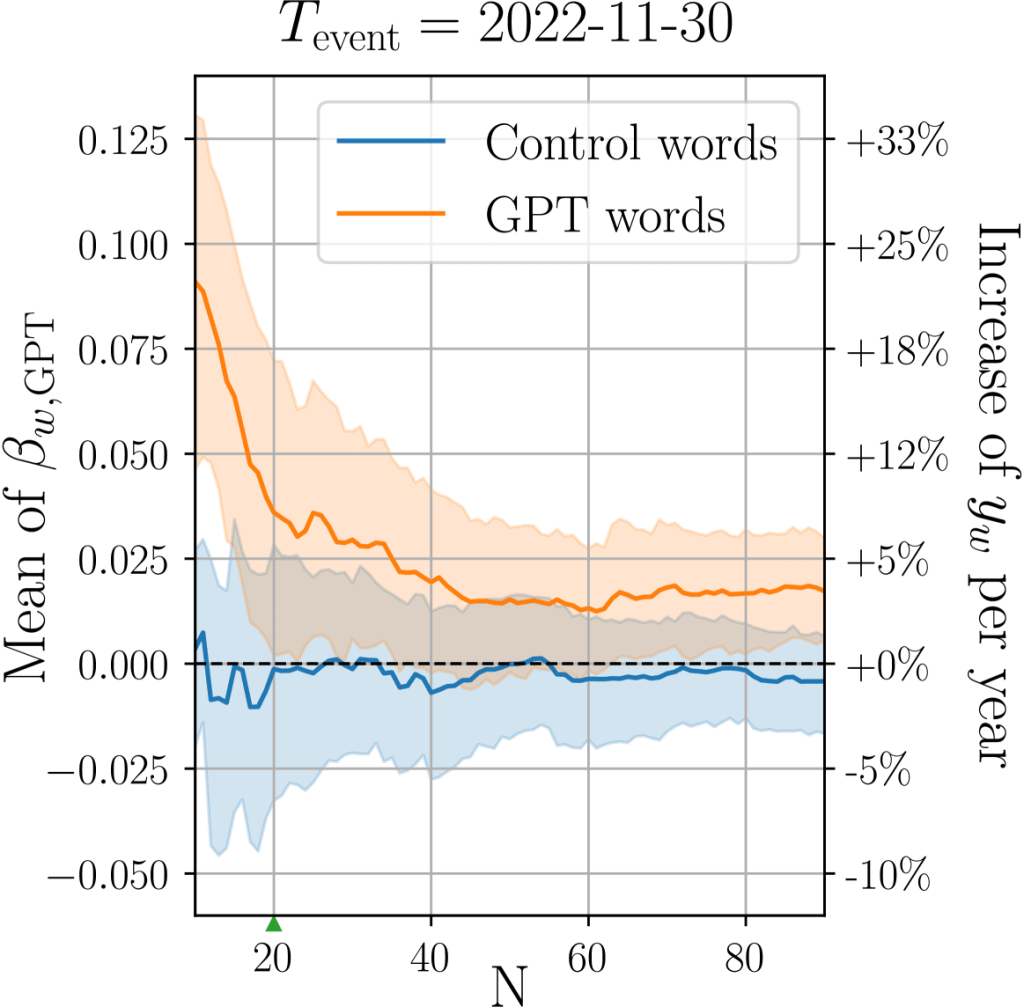
The most dramatic spike was for the word delve. It showed a statistically significant rise in frequency, especially in academic YouTube talks and podcasts focused on business, science, and education.
But it wasn’t just delve. Other GPT-favored words like swift, boast, and meticulous also saw clear upticks.
In some fields, usage of these words rose by 25% to 50% per year. That kind of jump is unusual for everyday language. And it wasn’t limited to scripted talks. It was spontaneous, conversational speech. That’s the real shock: people aren’t reading from ChatGPT scripts. They’re internalizing its style and speaking that way naturally.
What Is a Cultural Feedback Loop?
The researchers describe this phenomenon as a closed cultural loop.
Here’s how it works:
- ChatGPT is trained on human writing (books, forums, Wikipedia).
- It learns which words sound polished or smart and uses them more often.
- Humans interact with ChatGPT and start copying its patterns, even unconsciously.
- That style spreads into podcasts, talks, meetings, and conversations.
- The next wave of AI models trains on that new data and the loop continues.
In other words, humans are shaping the AI, and then the AI is shaping us right back.
Why It Matters
At first glance, it seems harmless. What’s wrong with using better vocabulary?
But language isn’t just words. It shapes how we think, how we connect, and how we see the world.
If ChatGPT encourages a certain tone such as polished, cautious, or formal, and we begin to adopt it, we may slowly lose linguistic diversity. The way we argue, joke, or tell stories could become flatter and more uniform.
Worse, researchers warn that cultural homogenization could occur. When one style dominates, it erases others, especially local, cultural, or emotional variations in language.
And because AI models feed on new human data, they could get trapped in a loop, learning from themselves over and over again, which might reduce the quality and creativity of both AI and human culture.

Which Words Are Spreading?
Here are just a few top GPT words that surged after ChatGPT’s release:
- Delve (instead of explore)
- Meticulous (instead of careful or detailed)
- Swift (instead of quick or fast)
- Comprehend (instead of understand)
- Boast (instead of say proudly)
- Underscore (instead of emphasize)
- Also: bolster, inquiry, groundbreaking, necessity
Most of these sound intelligent and polished, which is the tone ChatGPT favors when refining text.

Not All Fields Are Affected Equally
Interestingly, the study found that the AI’s influence wasn’t uniform across all topics.
Words like delve and meticulous rose sharply in:
- Science and Technology podcasts
- Education talks
- Business interviews
But not so much in:
- Sports shows
- Religious podcasts
This suggests a two-phase spread:
- GPT words start in formal or technical environments where people often use AI tools.
- Over time, they filter into everyday speech through social media, streaming, or conversations.
What You Can Do: Check Your Voice
Think about the last time you used phrases like:
- “Let’s delve into that topic.”
- “We need a more meticulous strategy.”
- “That was a swift response.”
Were those words your natural go-to? Or have they subtly entered your vocabulary after months of chatting with ChatGPT or reading AI-polished content?
The researchers aren’t saying this is bad, but they are saying it’s real. And worth being aware of.
Final Thought: Is Your Language Still Yours?
This study opens up a strange and fascinating idea: AI is becoming a cultural influencer. Not just in what we write, but in how we speak, think, and express ourselves.
The team behind the research writes:
“Machines trained on human culture are now generating cultural traits that humans adopt.”
If that doesn’t make you pause, consider this: many people who now use “GPT words” in speech have never used ChatGPT directly. The influence is that viral.
So next time you catch yourself saying delve into or a swift solution, you might want to ask:
Was that you? Or was that ChatGPT talking through you?