
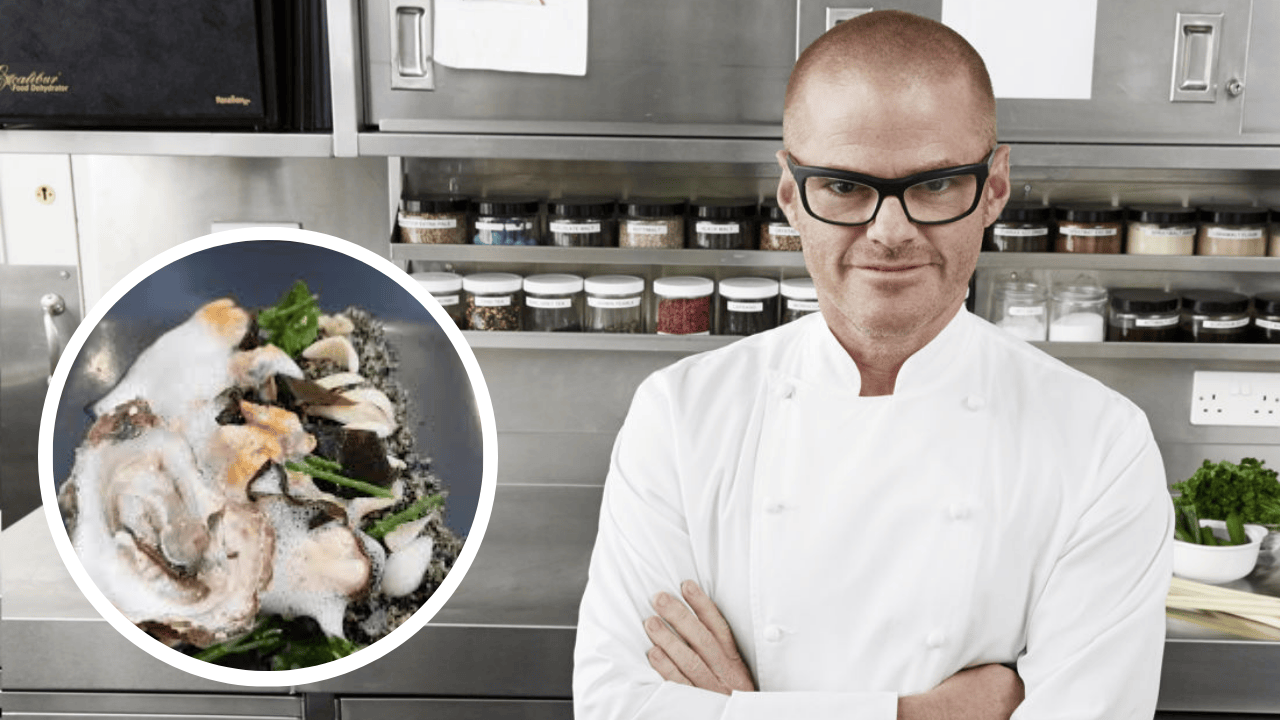
Imagine sitting down in a Michelin-starred restaurant. A waiter places a plate of seafood in front of you. Then, instead of handing you wine, they give you a seashell with an iPod tucked inside. The headphones play the sound of crashing waves while you eat.
This is not a prank. It is Heston Blumenthal’s famous dish “Sound of the Sea” at The Fat Duck. Years after it was first created, videos of the dish are still going viral on TikTok, YouTube, and Instagram. Millions are fascinated. Some call it genius. Others laugh and say it looks ridiculous. Either way, people cannot stop sharing it.
Fast Facts
- Dish: Sound of the Sea with seafood, edible sand, and a seashell audio player.
- Concept: Uses ocean sounds to enhance flavor perception through multisensory cues.
- Creator: Heston Blumenthal, chef at The Fat Duck in Bray, England.
- Why It Went Viral: Surprising presentation that blends food, tech, and psychology.
- Try It: Pair seafood with recorded ocean waves for a simple home experiment.
The Viral Dish: What is “Sound of the Sea”?
The dish looks like a tiny beach scene on a plate. There is sashimi-style seafood on top of “edible sand,” which is made from tapioca, breadcrumbs, and miso. A foam that looks like sea spray sits on the side. Diners put on headphones hidden in a seashell and hear the sound of ocean waves as they eat.
The idea is simple. The sound of waves tricks your brain into feeling like you are on the shore, making the seafood taste fresher and more powerful. It turns a meal into an immersive experience.
Meet the Geek Chef: Heston Blumenthal
Heston Blumenthal is a British chef, born in 1966, and the founder of The Fat Duck in Bray, England. The restaurant holds three Michelin stars and is famous for experiments that blend science, art, and food.
Blumenthal is often called the “mad scientist of cooking.” He is not just interested in flavor but in how sound, smell, and memory change the way we eat. This is why Sound of the Sea is not just food. It is part science experiment, part performance art.
The Science Behind It: Can Sound Change Taste?
Blumenthal worked with Oxford professor Charles Spence, who studies crossmodal perception. This is how different senses, like hearing and taste, interact with each other.
In one test, volunteers ate oysters while listening to different sounds. The same oyster tasted stronger and saltier when paired with ocean waves than when paired with farmyard noises.
Professor Spence explained,
“The brain’s interpretation of flavor is shaped not only by taste and smell but by sound, texture, and memory.”
This research gave scientific credibility to Blumenthal’s dish. It was not just a gimmick. It was evidence that the human brain eats with all five senses.
Public Reactions: Awe, Tears, and Criticism
Some diners describe the dish as deeply moving. A few have even been brought to tears because the sound of waves triggered childhood memories of family trips to the seaside.
Online reactions, however, are mixed. Many TikTok users call it beautiful and genius. Others on Reddit mock it, posting the clip under r/StupidFood and joking about “overpriced seafood with earbuds.”
The split reaction is exactly why it keeps spreading. People either share it because they are amazed or because they think it is ridiculous.
Can You Try This at Home?
Yes, but in a simple way. You can prepare any seafood dish and play ocean sounds from YouTube or Spotify. Some food bloggers have even recreated the edible sand using breadcrumbs and seaweed powder.
The Fat Duck’s full version requires advanced skills, but the basic idea is beginner-friendly. Anyone can test “sonic seasoning” by pairing sounds with foods. For example, sweet music can make chocolate taste richer, while high-pitched sounds can make it taste sharper.
Why It Keeps Going Viral Now
The dish first went public in 2007, but short-form video has given it new life. On TikTok and Instagram Reels, clips of diners pulling headphones out of seashells grab instant attention.
Food content today is less about recipes and more about experiences. People want food that feels immersive, strange, or shareable. Sound of the Sea checks all those boxes.
It also benefits from anniversaries and restaurant celebrations. In 2025, The Fat Duck’s 30th anniversary led to new videos of the dish, sparking another wave of online interest.
Genius or Gimmick?
The debate is ongoing. Supporters argue that the dish proves food can be art and science at the same time. Critics argue that it is elitist and inaccessible because only wealthy diners can experience it in person.
The truth may be somewhere in between. It is both playful theater and serious science. But that blend of wonder and controversy is what makes the dish timeless in internet culture.
The Chef Speaks
Blumenthal once said, “Diners have been brought to tears by Sound of the Sea… it is what’s happening in their memory.”
This captures his vision. For him, food is not just about flavor. It is about emotion, memory, and the stories we carry inside us.
What’s Next for Heston Blumenthal?
The Fat Duck continues to serve Sound of the Sea as part of its tasting menu called “The Journey.” Blumenthal also works on new ideas that explore creativity, neurodiversity, and how humans experience the world through their senses.
As technology and dining collide, it is likely that his work will inspire a new generation of chefs who see cooking as both science and storytelling.
Conclusion: More Than Just a Meal
This viral dish proves one thing. Food is not only about taste. It is about the brain, the heart, and the memories we carry. Whether you find it genius or pretentious, Blumenthal’s Sound of the Sea makes people talk, argue, and share. And that is exactly why it keeps making waves online.