Taylor Wilson Achieved Nuclear Fusion at 14
Taylor Wilson achieved controlled nuclear fusion at fourteen, then turned his attention toward radiation detection and advanced reactor design.
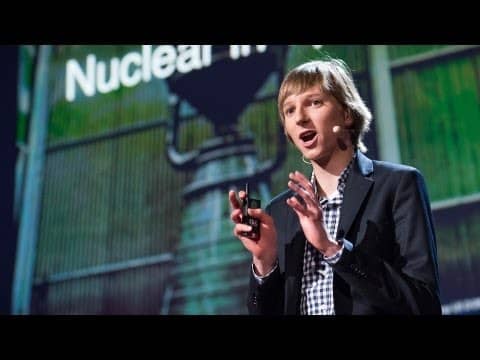
At fourteen, Taylor Wilson produced nuclear fusion with a device built from vacuum equipment, high voltage and relentless experimentation.
14
Age achieving fusion
2008
Fusion year
Fusor
Device type
What he actually built
Wilson built an inertial-electrostatic-confinement fusor. Electric fields accelerated deuterium ions until some fused, producing detectable neutrons.
This was real controlled fusion, but not a power-producing reactor: the machine consumed far more energy than the reactions released.
A childhood focused on nuclear science
Wilson shifted from rockets to nuclear physics around age ten. With family support and expert guidance, he acquired equipment, learned radiation safety and worked in a garage laboratory.
From spectacle to applications
He later developed ideas for radiation detection, medical-isotope production and compact nuclear systems. His interest moved beyond proving fusion was possible toward technologies that could solve practical problems.
Why precision matters
Calling the machine a garage “nuclear reactor” is understandable but incomplete. The achievement was producing and measuring fusion safely—not generating electricity. That distinction makes the science more impressive, not less.
Sources: Japan Atomic Industrial Forum interview, National Geographic profile
The weekly question
From obsession to clarity — one original question every week.
We answer one noisy topic at a time, in full. No daily roundup, no thread bait — just the question, the principles, and the system.