Swedish Startup Trains Wild Crows to Pick Up Cigarette Butts in Exchange for Food
In Sweden, a startup called Corvid Cleaning is turning wild crows into tiny street cleaners by teaching them to trade cigarette butts for food
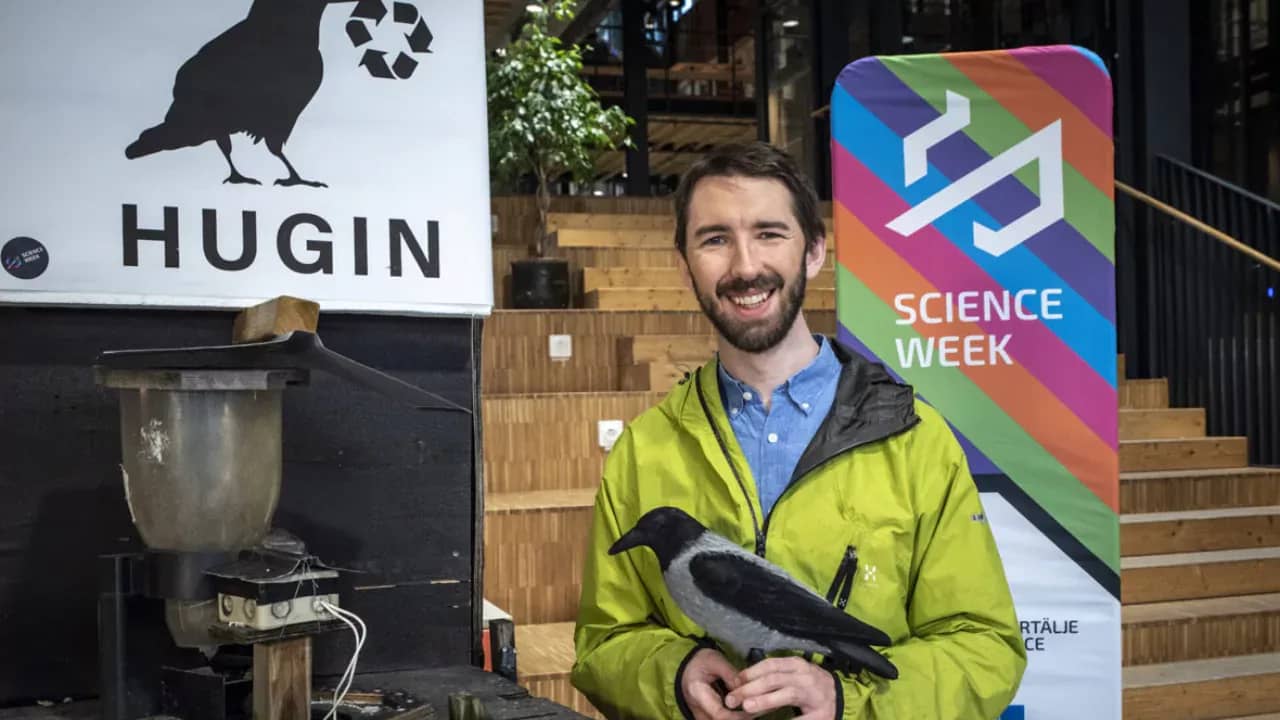
Imagine this. A crow swoops down from a tree, grabs a cigarette butt off the street, drops it into a small machine, and gets a peanut as a reward. Sounds like a scene from a cartoon, right? But this is real. It’s happening right now in a Swedish city called Södertälje.
A startup named Corvid Cleaning is teaching wild crows to clean up our mess. It’s a strange, geeky, and clever way to deal with a problem that people just can’t seem to fix.
Let’s explore how it works, who came up with the idea, and why it’s getting attention all over the world.
Fast Facts
- Project: Corvid Cleaning trains wild crows to pick up cigarette butts in Sweden.
- Founder: Christian Günther-Hanssen, expert in behavioral economics.
- Goal: Reduce litter and cut urban cleaning costs by up to 75%.
- How it works: Crows drop trash into a vending machine that rewards them with food.
- Started: Pilot launched in Södertälje, Sweden; first went viral in early 2022.
Why Are Crows Picking Up Trash?
Sweden has a litter problem, especially with cigarette butts. In fact, more than 1 billion cigarette butts end up on the streets every year. Teaching people to stop littering hasn’t worked very well. So Corvid Cleaning decided to try something new.
The company built a special vending machine. When a crow drops a cigarette butt into the machine, it releases a treat like a peanut. This reward system teaches crows that cleaning up earns them food. Over time, they learn to look for litter on the ground and bring it back to the machine.
These crows are wild and free. They’re not kept in cages or trained in labs. They choose to take part. That makes this idea even more amazing.
Who Started This Project?
The project was created by Christian Günther-Hanssen, the founder of Corvid Cleaning. He studied behavioral economics, which is the science of how people make choices. But instead of using this science on humans, Christian applied it to birds.
The idea came to him during a class on behaviorism. He was reading about a scientist named B.F. Skinner who trained birds in cages. At the same time, crows were cawing outside his window. Christian thought, “Why not train wild birds instead?”
He lives in Sweden, near Stockholm, and leads the crow training effort. While he doesn’t post much online himself, his company’s website shares some details and updates.
How Does the Crow Training Work?
The system uses a simple idea called positive reinforcement. When the crow does the right thing, it gets a reward. At first, crows are given easy tasks, like picking up small objects. Then the machine starts rewarding only specific items like cigarette butts. The birds quickly catch on.
The machine itself is smart. It can tell the difference between trash and things like sticks or leaves. Only when the right item goes in does the machine drop a peanut.
Crows are perfect for this kind of work. They are known for their intelligence. Scientists say their brains work about as well as a seven-year-old human child when it comes to solving problems.
What Did People Say About It?
When the news first broke in early 2022, the story spread quickly online. It was shared by major news outlets like Reuters, RT.com, and The Guardian. A video of a crow using the machine also appeared on YouTube.
Social media users had a mix of reactions.
Some found it hilarious. One joked, “Soon crows will be stealing cigarettes and investing in tobacco companies.” Others were impressed. One user said, “We can train crows to clean up our streets, but we still can’t get people to use a trash can.”
But not everyone cheered. Some experts warned that cigarette butts contain harmful chemicals like nicotine. While crows don’t eat them, they still handle them with their beaks. That could cause long-term health risks. Others worried that the birds might become dependent on the machines for food.
There was also a failed project in the Netherlands in 2017 called “Crowbar.” It tried a similar idea but was shut down because the results were unclear. That made some people question whether this Swedish version would really work.
What’s Happening Now?
Corvid Cleaning is still running the pilot program in Södertälje. The founder hopes to expand it to more cities in Sweden if the results stay positive.
Christian says the goal isn’t to replace human cleaning crews. He wants to reduce costs and support birds in cities by giving them healthier food than fast-food scraps. Cities in Sweden spend millions each year on street cleaning. If trained crows can cut those costs by even 50 to 75 percent, that would make a big difference.
So far, the company hasn’t launched a product for sale or received major funding. But interest from media and eco-friendly groups continues to grow. The company also invites people to sign up for updates through its website.
Why This Story Matters
This is more than a viral headline or a clever hack. It shows how science, nature, and creativity can come together in surprising ways.
When wild birds help clean up human messes, it makes us stop and think. Why can’t we do a better job ourselves? Why do we rely on animals to fix what we break?
At the same time, it gives us hope. If crows can learn to solve real-world problems, then maybe we can too.
Whether you’re a tech lover, an animal fan, or someone who just hates litter, the story of Corvid Cleaning is worth remembering.
The weekly question
From obsession to clarity — one original question every week.
We answer one noisy topic at a time, in full. No daily roundup, no thread bait — just the question, the principles, and the system.