
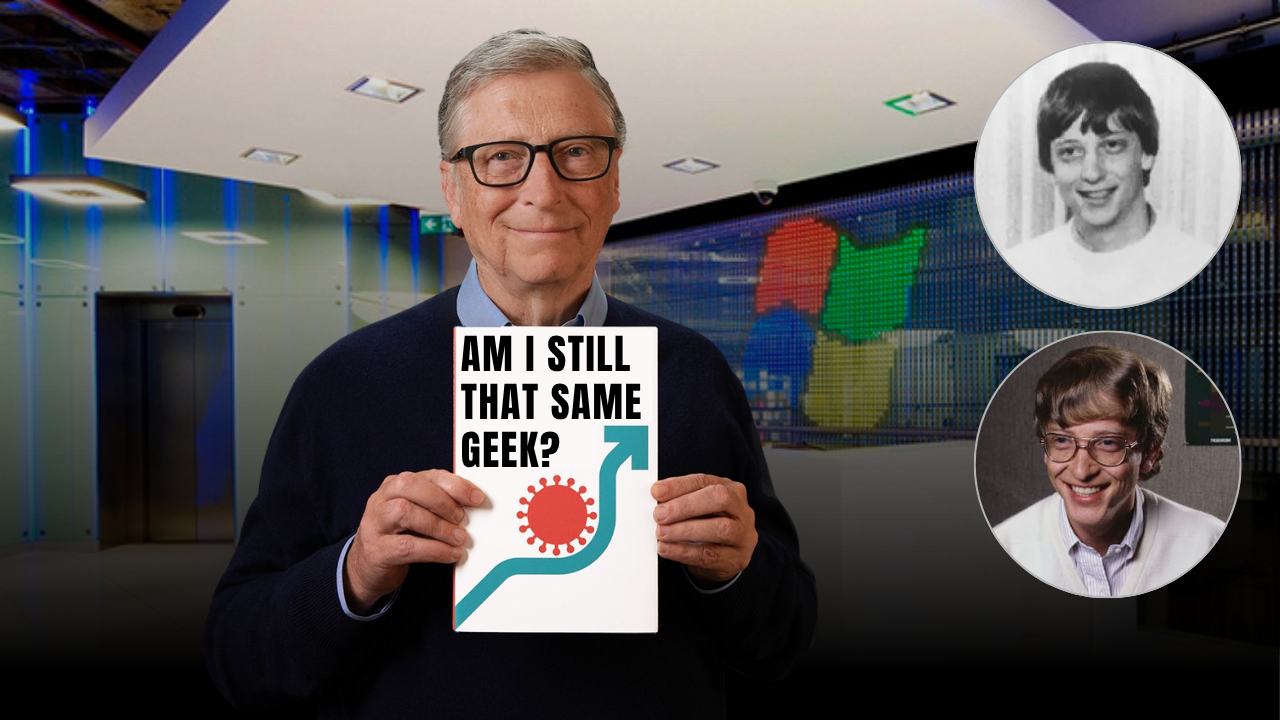
At age 13, Bill Gates wrote a Tic-Tac-Toe program on a school computer terminal while his classmates were still learning basic math. He wasn’t just playing games. He was discovering the power of code to solve problems. That moment sparked a lifelong obsession with technology. But nearly 60 years later, is he still that same curious kid who stayed late in the computer lab?
This article explores Gates’ geeky roots, how they shaped Microsoft, and whether that same mindset drives him today.
Fast Facts
- Subject: Bill Gates’ lifelong geek habits and evolution
- First Program: A tic-tac-toe game in BASIC at age 13
- Microsoft Origins: Co-founded Microsoft in 1975 by coding BASIC for the Altair 8800
- Still a Geek? Yes, now focused on AI, clean energy, and tech philanthropy
- Current Passions: Reading, bridge, science writing, and solving global problems with tech
What He Geeked On Back Then
Bill Gates’ childhood was shaped by his deep love of machines and logic. At Lakeside School in Seattle, a donation gave students access to a Teletype terminal connected to a General Electric mainframe. While most students used it casually, Gates dove in.
He quickly wrote his first program, a tic-tac-toe game in BASIC. Later, he recalled, “I was 13 years old when I fell in love with programming… My friends and I would spend hours creating new programs and plugging away in BASIC.”
His obsession grew stronger. Gates formed the Lakeside Programmers Club with friends, including Paul Allen, who would later become his co-founder. They even found bugs in commercial software just to earn more free computer time.
Gates also loved math and logic puzzles. He would skip social events to read encyclopedias or write code. His parents noticed his intense focus and social awkwardness. In his 2025 memoir Source Code, Gates reflected that he might be diagnosed on the autism spectrum today. That kind of tunnel vision, while isolating at times, helped him dive deeper than most kids his age.
What Made Him Successful
That childhood obsession turned into one of the most important tech companies in the world. At 19, Gates and Allen created a version of BASIC for the Altair 8800, an early microcomputer. This project became Microsoft’s first product in 1975.
Gates didn’t just enjoy programming, he mastered it. He often reviewed and edited code personally in Microsoft’s early days. His intense focus on quality and performance helped shape the company’s early success.
He later admitted, “My code no longer goes into shipping products so I am rusty. I do like to try the new tools to understand how they help.”
This shows how deeply involved he once was and how even now he wants to keep learning. His story lines up with Malcolm Gladwell’s “10,000 hours rule.” Gates didn’t just dip his toes in tech. He lived in it.
Is He Still That Same Geek? Let’s Look Closer
Gates stepped away from Microsoft’s board in 2020. But has he left his geeky roots behind? Not really.
Today, Gates is one of the most vocal public thinkers on the future of technology. In recent interviews, he talks often about artificial intelligence. He believes AI is the next big leap in education and healthcare. He’s especially excited about AI tutors and AI-powered medical tools.
He argues that understanding the basics of coding and math is still crucial. “Just because AI-powered computers are getting really good at coding does not mean humans don’t need the skill… It is kind of like saying, should you learn to multiply, just because computers are really good at it.”
Gates supports and funds many forward-looking tech projects, including clean energy through Breakthrough Energy. He’s helping lead the charge in finding solutions for climate change using advanced technology.
He also keeps up his geeky hobbies, like playing bridge in national tournaments and reading dozens of books each year. On his blog, Gates Notes, he regularly shares thoughtful reviews of titles on science, global health, and data, always curious, analytical, and eager to pass on what he learns.
Why His Geeky Mindset Still Matters Today
Bill Gates may not write software late into the night anymore. But he’s still very much a geek. He started as a kid obsessed with understanding machines. Today, he’s a man using that same mindset to solve massive global problems.
As he once said, “No algorithm can match the creative leap of a human coder.”
His passion for solving puzzles hasn’t gone away. It has simply evolved.
You don’t have to stop being a geek as you grow up. You just need to keep asking better questions. Gates shows us that the same habits that make you curious as a child can drive you to change the world.
The Evolution of Bill Gates’ Geekiness
| Aspect | Early Life | Current (2025) |
|---|---|---|
| Primary Focus | Hands-on programming and math | AI, clean energy, global tech innovation |
| Key Activities | Writing code, debugging systems | Leading tech initiatives, advising on AI and energy |
| Geeky Hobbies | Coding, math puzzles, encyclopedias | Bridge, deep reading, writing tech essays |
| Proof of Geekiness | Spent thousands of hours programming | Publicly discusses AI, writes science essays, funds tech |
Is Bill Gates Still That Same Geek? Here’s the Truth
Yes, completely.
Bill Gates still approaches the world with the mind of a geek. He may not be hunched over a keyboard anymore, but he’s thinking about how AI will teach kids, how clean energy will save the planet, and how science can prevent the next pandemic.
He hasn’t left the world of ideas. He’s just zoomed out to see the bigger picture.
The kid who wrote a tic-tac-toe game at 13? He never left. He just got wiser, broader, and more powerful.
Curious how another tech billionaire started young? Read how coding at 12 shaped Elon Musk’s rise →