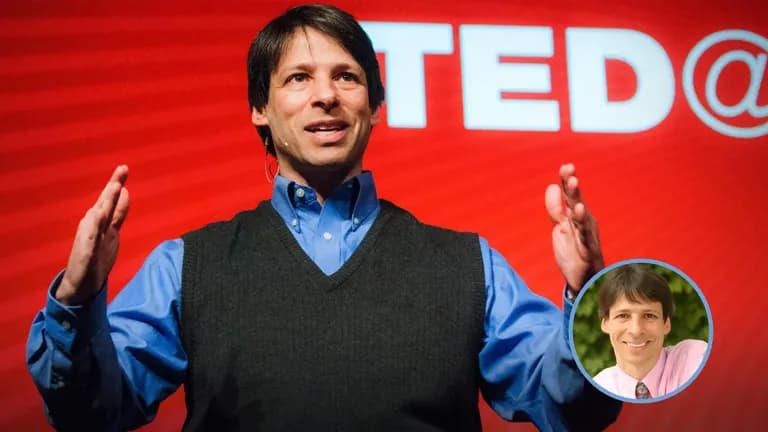
Suresh Kumar Sharma Recited 70,030 Digits of Pi for 17 Hours
Former vegetable vendor Suresh Kumar Sharma used image-based memory techniques to recite 70,030 digits of pi over 17 hours.
In October 2015, Suresh Kumar Sharma sat down in Jaipur and began reciting the digits of pi from memory.
He continued for more than 17 hours.
By the end, Sharma had delivered 70,030 decimal places—thirty more than the Guinness-recognized total Rajveer Meena had recalled earlier that year.
Sharma's feat belongs to a different record system, which matters when comparing claims. But the achievement itself is clear: a former vegetable vendor from Rajasthan turned a struggle with conventional education into one of the longest documented pi recitations.
The 17-Hour Recitation of 70,030 Digits
Sharma completed his performance on October 21, 2015, in Jaipur, India.
Accounts place the duration at about 17 hours and 14 minutes, with some contemporary reports rounding it to 17 or 17.5 hours.
70,030
Digits recited
17h 14m
Reported duration
2015
Year of the achievement
Source: Pi World Ranking List, Limca reporting and contemporary coverage
The scale is difficult to picture. At a little more than one digit per second, the performance demanded not only recall but also sustained concentration, pacing, and physical endurance.
A Pi World Ranking account summarized by Futurism placed Sharma at the top of its list after the attempt.
Why This Was Not the Guinness Record
Record claims involving pi can be confusing because different organizations apply different rules.
Rajveer Meena recalled 70,000 digits at VIT University in March 2015. Guinness World Records recognized that attempt.
Seven months later, Sharma recited 70,030 digits in Jaipur. His achievement was associated with the Pi World Ranking List and Indian record publications rather than a Guinness listing.
That means both statements can be true:
- Meena held the Guinness-recognized record.
- Sharma completed a separately documented 70,030-digit recitation.
Responsible reporting should name the record system instead of presenting all attempts as if they were judged by one authority.
From a Vegetable Stall to Memory Coaching
Before becoming known for memory, Sharma worked as a vegetable vendor and studied in a Hindi-medium government school.
A Times of India profile reported that he had been an average student and did not qualify for the highly competitive IIT entrance route.
That failure did not end his interest in learning. It changed its direction.
Sharma began exploring memory methods and eventually became a coach, teaching students and educators ways to remember formulas, reactions, paragraphs, and structured information.
His story is not one of effortlessly displaying a gift he always possessed. It is about building a system after conventional study methods had not worked for him.
How Vedic Learning Influenced His Method
Sharma said his grandfather, a Sanskrit scholar, told him about memory practices associated with older Indian learning traditions.
He combined that inspiration with modern mnemonic tools.
The result was not simple repetition. Sharma emphasized connecting information with images.
A digit or pair of digits could be assigned a person, object, color, or action. Long numerical sequences could then be converted into linked scenes.
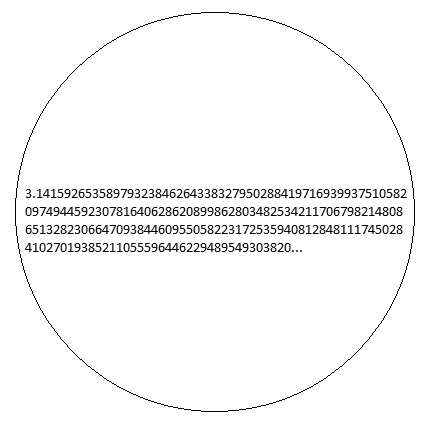
Two hundred digits of pi—a tiny fraction of the 70,030 digits Sharma recited. Source: Wikimedia Commons.
This distinction is important because Sharma is sometimes inaccurately described online as someone famous for reciting entire ancient epics. Reliable coverage instead connects him to pi memorization, memory coaching, and an interest in Vedic approaches to learning.
The ancient tradition influenced his thinking. The verified public achievement was his 70,030-digit pi recitation.
Why Images Help People Remember Numbers
Numbers are abstract. Images are concrete.
Memory systems exploit that difference by assigning a vivid image to information that would otherwise feel anonymous.
Suppose the number 27 always represents a bicycle and 41 represents a tiger. A sequence containing 2741 can become an impossible scene: a tiger riding a bicycle.
The stranger the image, the easier it may be to retrieve.
Elite memorizers expand this principle into large, stable coding systems. Training allows them to translate digits quickly and recover the images in order.
The method does not remove the work. It reorganizes the work into a form the brain can navigate more reliably.
The Human Cost Behind His Change of Direction
Sharma's decision to focus on memory education was also shaped by his experience in Kota, a center for competitive-exam preparation.
He told the Times of India that a student's suicide at his hostel deeply affected him. The incident made him think about the pressure faced by students who struggled to perform.
Sharma began to see memory training as more than a route to personal recognition.
If students could learn better ways to organize information, he believed they might approach difficult material with greater confidence.
That purpose gave his record a wider context. The 70,030 digits demonstrated what his method could do at an extreme level. His coaching aimed to make the principles useful in ordinary education.
What Suresh Kumar Sharma's Story Teaches About Memory
Suresh Kumar Sharma did not follow a smooth path from academic success to public recognition.
He struggled, changed direction, studied how memory works, and built a system around visual association.
Then he tested that system against 70,030 digits of pi for more than 17 hours.
School years
Studies in a Hindi-medium government school
After entrance-exam preparation
Turns toward memory research and coaching
October 21, 2015
Recites 70,030 digits of pi in Jaipur
After the record
Teaches image-based memory methods
His story offers a practical idea: difficulty remembering does not always mean a lack of ability. Sometimes the information needs a better structure.
Sharma's obsession was not memorizing ancient epics. It was learning how imagery, association, and deliberate practice could make an apparently impossible sequence retrievable.
Featured image: Suresh Kumar Sharma, via Futurism.
The weekly question
From obsession to clarity — one original question every week.
We answer one noisy topic at a time, in full. No daily roundup, no thread bait — just the question, the principles, and the system.