
STOMP Athletics After Shark Tank: Why Kevin O’Leary Wanted 15% of a Shoe-Cleaning Business
David Gonzales built a way to wipe dust off basketball shoes without leaving the court. The product reached schools and teams before Kevin O’Leary invested on air.
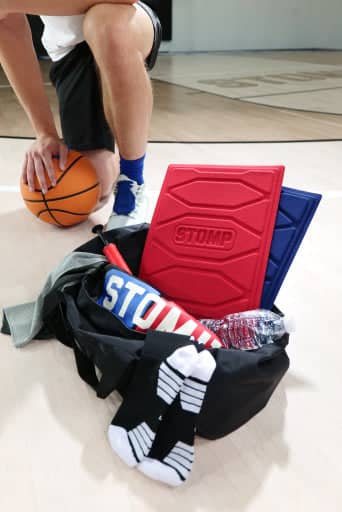
Basketball players know the quick swipe of a palm across the sole of a sneaker before the next possession. Dust on a gym floor can accumulate again almost immediately. David Gonzales designed STOMP Shoe Armor so a player could wipe the sole of one shoe against a washable surface attached to the other. The company later added mats for players and teams.
The distinctive part of STOMP Athletics’ Shark Tank case is that high schools, college programs and professional teams had already tried the idea. The founders were not asking Kevin O’Leary to imagine a first customer. They were asking him to decide whether a specialized problem on a hardwood court could support a business big enough to justify investment.
On-air deal
Pitch outcome
$50,000 for 15% with Kevin O’Leary.
$50,000 for 5%
Opening ask
Terms sought on Shark Tank.
2018
Product detail
Gonzales filed his first patent, according to local reporting.
Product snapshot
| Field | Details |
|---|---|
| Company | STOMP Athletics |
| Founder or founding team | Founder David Gonzales and business partner Michael Manoogian |
| Product | Reusable traction mats and lace-mounted Shoe Armor for wiping soles |
| Industry | Indoor court sports equipment |
| Shark Tank episode | Season 17, Episode 17 • April 15, 2026 |
| Current status | The official store lists Shoe Armor and traction mats. |
How does STOMP Athletics work?
The lace-mounted accessory provides a wiping surface on the shoe. A team mat does a similar job at the sideline, while a small portable mat can travel with a player. The company’s product catalog distinguishes those three use cases. The products remove dust and debris; they do not replace worn tread or repair a damaged playing surface.
The reuse claim matters to a team choosing between a washable product and a stack of disposable sticky sheets. A fair comparison includes how often the reusable surface must be cleaned, who will maintain it and whether athletes can reach it at the moment they need it.
Who built STOMP Athletics?
Gonzales developed the idea from his own experience playing pickup basketball. The Denver Gazette’s reporting from a viewing party dates his first patent filing to 2018 and the business launch to 2021. Former NBA player Bill Hanzlik was an early investor and helped with contacts. Those relationships predated the appearance and help explain how a small business reached organized teams.
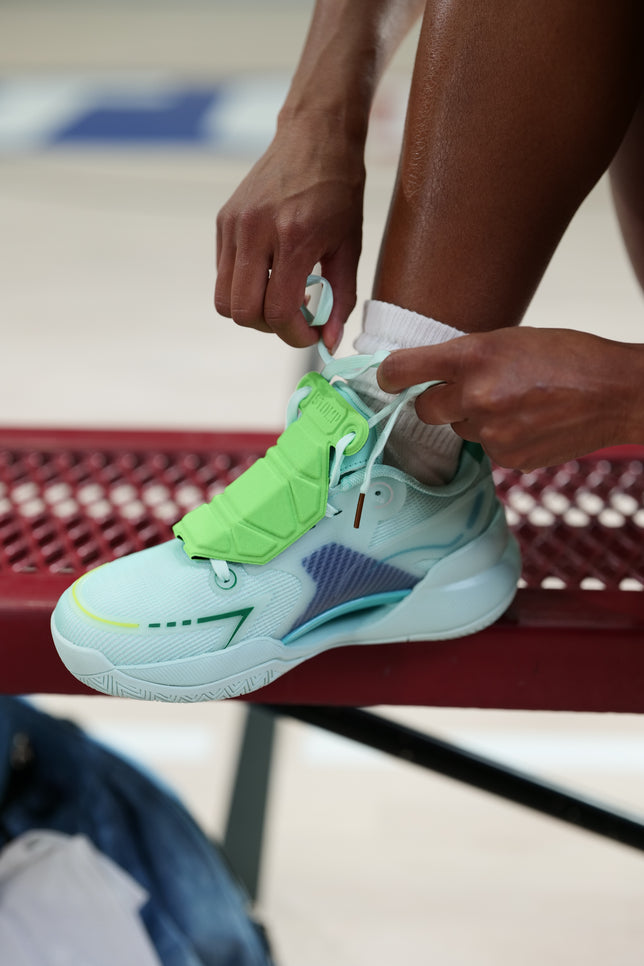
The Shoe Armor accessory pictured by STOMP Athletics.
“STOMP products are available on our website.” — STOMP Athletics’ customer FAQ.
What happened to STOMP Athletics on Shark Tank?
Gonzales and Manoogian asked for $50,000 for 5%, an implied $1 million post-money price. They demonstrated their washable alternatives to familiar shoe-wiping methods. Several Sharks questioned the size of the potential market and the effort required to expand a specialized accessory beyond its initial audience.
O’Leary offered the full check for 15%, and the partners accepted. That implied roughly $333,333 post-money on the agreed equity terms. The difference between those two values is negotiating arithmetic, not a fall in the company’s bank balance. The Denver Gazette independently reported the partners’ acceptance the next day. Episode reporting.
Deal snapshot
| Negotiation point | What the evidence supports |
|---|---|
| Asked | $50,000 for 5% |
| On-air outcome | $50,000 for 15% with Kevin O’Leary. |
| Key negotiating point | O’Leary asked for three times the percentage offered for the same check. |
A team purchase is different from selling to one player
A portable mat or shoe accessory can be bought by an individual. A larger team mat can serve many players and may be selected by a coach, school or equipment manager. The same piece of equipment can therefore reach many athletes while generating just one sale. That matters when interpreting a claim about how many people or programs have encountered the brand.
Local reporting identified more than 1,500 high schools and 75 Division I colleges among buyers, alongside professional teams. Those figures demonstrate a route into organized sports. They do not establish an exclusive supply contract with a league, or the value and frequency of orders from any one school.
Business model snapshot
| Business question | Answer |
|---|---|
| Product | Reusable traction mats and lace-mounted Shoe Armor for wiping soles |
| Sales channel | Individual buyers and institutional sports programs. |
| Buyer decision | Compare capacity, portability, cleaning and replacement costs. |
| Business question | Can adoption by teams generate repeat and referral sales beyond the first mat? |
What happened after Shark Tank?
Latest update — November 12, 2026. STOMP continues to offer individual and team products. April local reporting documented adoption by schools and professional basketball programs and described a 2026 sales target.
The wording of the financial update matters: the company was on pace to exceed $250,000 in 2026 according to the April account. That was a projection, not a completed full-year result. The product catalog is direct evidence of operations without requiring that forecast to be true.
Current status evidence
| Evidence | What it establishes |
|---|---|
| Official offering | The official store lists Shoe Armor and traction mats. |
| Pitch evidence | $50,000 for 15% with Kevin O’Leary. |
| What is still unknown | Final 2026 revenue, current team order sizes and private closing terms. |
Company timeline
| Date | Milestone |
|---|---|
| 2018 | Gonzales filed his first patent. |
| 2021 | STOMP began with the washable lace-mounted accessory. |
| April 15, 2026 | The team accepted O’Leary’s offer on Shark Tank. |
| November 2026 | The store continues to sell shoe accessories and mats. |
What should a buyer check?
A single player should decide whether a lace-mounted wipe or a portable mat is more convenient during the actual game. A coach should compare how many players can use the surface and who will maintain it between sessions. Follow the manufacturer’s directions and address worn shoes or unsuitable flooring separately; wiping dust off a sole cannot solve every traction problem.
What can founders learn from STOMP Athletics?
Team names can make a compelling pitch, but ask what the adoption figure counts. A school that bought one product, an athlete who uses it every day and a contract to equip an entire program are three different things. STOMP’s case shows the value of observing a specific sports habit and the importance of measuring how that habit turns into repeat orders.
The Season 17 episode guide lists the other pitches. Readers following the other investment decisions in this part of Season 17 can also find Crowned Skin, HiberTec Homes, 9 STRAP.
Frequently asked questions
Who presented STOMP Athletics on Shark Tank? Founder David Gonzales and business partner Michael Manoogian
What did the founders ask for? $50,000 for 5%.
What happened in the negotiation? $50,000 for 15% with Kevin O’Leary.
Is STOMP Athletics still operating? The official store lists Shoe Armor and traction mats.
Does STOMP replace the shoe sole? No. The products provide a surface for wiping dust from the sole.
The weekly question
From obsession to clarity — one original question every week.
We answer one noisy topic at a time, in full. No daily roundup, no thread bait — just the question, the principles, and the system.
More from Shark Tank USA Season 17
All season pitches
Shark Tank USA
The Christmas Carolers After Shark Tank: Barbara’s 60% Deal, Expansion and Current Status
Shark Tank USA
pi00a After Shark Tank: How the Stein Family Took Deaf-Owned Pizza From Restaurant to Freezer
Shark Tank USA