
Scientists Find Moss Can Act Like a Silent Witness at Crime Scenes
A new research study suggests moss could quietly help solve crimes by linking people, places, and timelines.
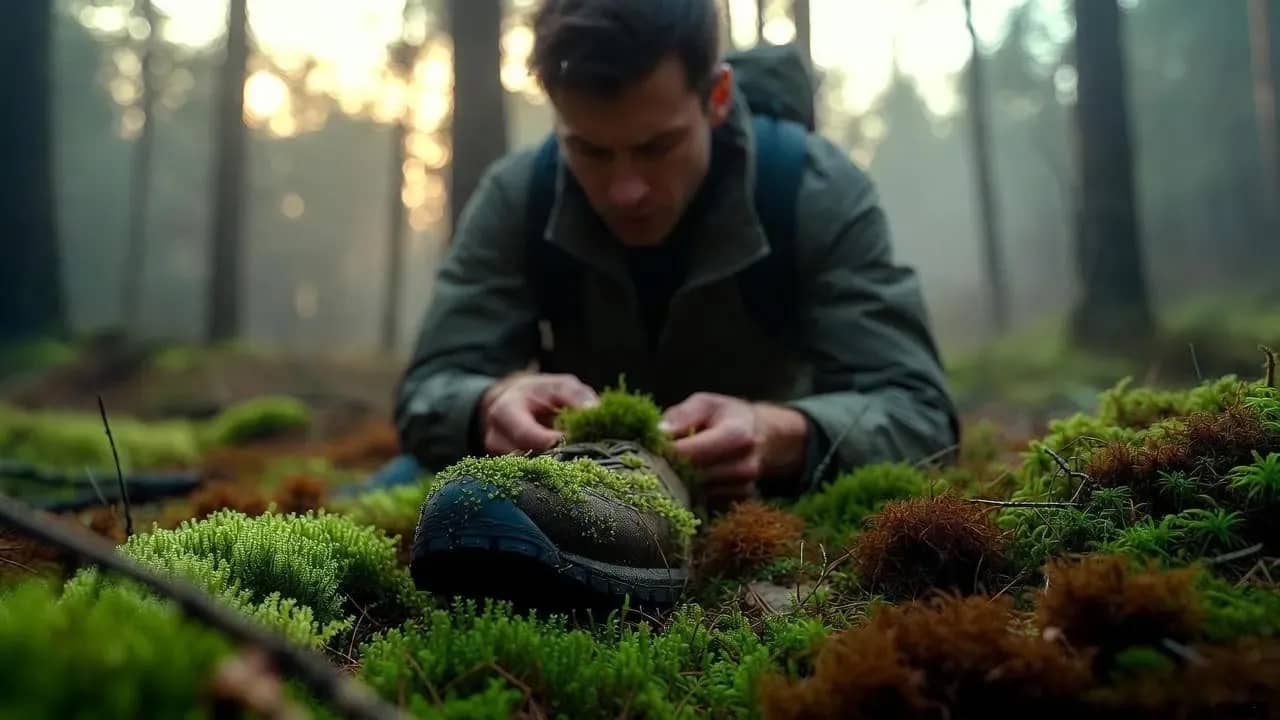
A thin green layer on a rock or shoe might look harmless. But scientists now say it can carry hidden clues about crimes. A newly published study shows that moss and other tiny plants can act like silent witnesses, helping investigators reconstruct events long after people leave a scene.
What was found: Researchers discovered that common moss can act as forensic evidence by linking people, places, and timelines. How it works: Moss fragments stick to shoes and clothing, grow in yearly segments, and retain DNA that can be traced to specific locations. Why it matters: This gives investigators a new way to estimate time since death and connect suspects to crime scenes when other evidence fails.
The research focuses on bryophytes, a group of small plants that includes mosses. These plants grow almost everywhere, from city sidewalks to deep forests. The study explains that their toughness, slow growth, and habit of sticking to shoes and clothes make them valuable forensic evidence. Until now, law enforcement has largely overlooked them .
Researchers reviewed decades of real criminal cases where moss helped answer key questions. In some cases, moss fragments linked suspects to specific locations. In others, the growth patterns of moss on bones or objects helped estimate how long a body had been exposed. This approach adds a new layer of evidence when fingerprints or DNA fail.
To understand how moss works as evidence, scientists examined its biology. Moss grows in clear yearly segments, similar to rings in a tree. By counting these segments, experts can estimate time. The team also reviewed studies where tiny moss fragments survived months or even years on shoes, vehicles, and clothing. DNA tests confirmed that these fragments can still be traced back to a single location.
This matters because estimating time since death remains one of forensic science’s hardest problems. Traditional methods rely on body temperature, insects, or decay stages. These can fail in cold, wet, or unusual environments. Moss growth offers an independent clock that keeps ticking quietly in the background, even when other clues fade.
Experts involved in the study say this tool fills a major gap. They point out that moss is common, resilient, and easy to miss. That combination makes it powerful. When investigators learn to notice and collect it, they gain a new way to connect suspects, victims, and crime scenes with physical evidence .
The findings also connect to broader issues beyond crime. Moss is already used to track air pollution and environmental change. Its ability to absorb chemicals and survive harsh conditions links forensic science with ecology and climate research. This crossover shows how environmental science can support public safety.
Researchers caution that moss evidence is not magic. Growth rates vary by species and environment. Proper identification requires trained experts. The study calls for better training, shared databases, and clear protocols so law enforcement can use this evidence responsibly.
Next, scientists want to expand DNA reference libraries and test moss evidence in controlled experiments. They also plan to explore how environmental DNA, known as eDNA, could strengthen plant based forensic analysis. These steps could make moss evidence faster and more reliable in real investigations.
The takeaway is simple but powerful. The study shows that ordinary plants can hold extraordinary stories. By paying attention to the smallest green traces, investigators may uncover truths that once stayed hidden in plain sight.
Story Source:
Materials provided by Insert Institution Here. Content may be edited for style and length.
Journal Reference:
Merkel J, von Konrat M, Stark L R, Laurence A, Briscoe L, Collings B, Carrington P, Kreider D, Larraín J, Lichamer A, Merrill G, Reznicek A, Stevenson R J, Telewski F W, Wells J B. Green clues unveiling the role of bryophytes in forensic science. Forensic Sciences Research, 2025. 10(3). DOI: 10.1093/fsr/owaf026
From obsession to clarity — one original question every week.
We answer one noisy topic at a time, in full. No daily roundup, no thread bait — just the question, the principles, and the system.