Ron White Memorized 2,300 Fallen Service Members' Names
Navy veteran and memory champion Ron White memorized more than 2,300 fallen service members' names for a traveling memorial wall.
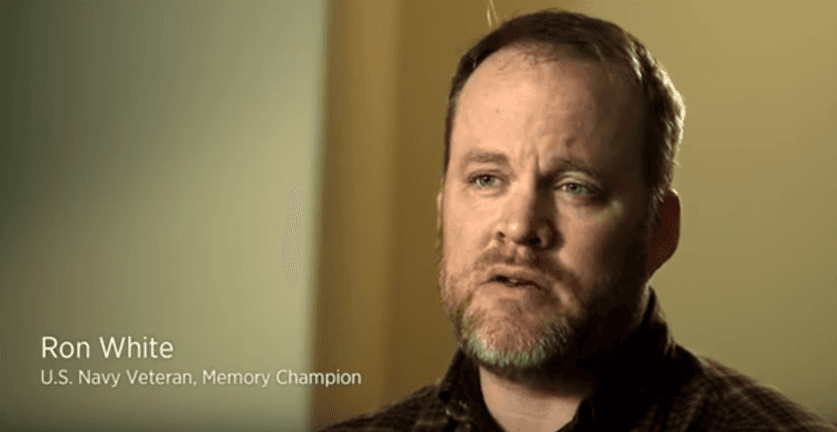
In 2012, Ron White began memorizing the name and rank of every American service member killed in the war in Afghanistan.
The list contained more than 2,300 people and over 7,000 words.
White spent about ten months learning it. Then he stood before a black memorial wall and wrote the names from memory, one after another, for roughly ten hours.
The project used the same techniques that had made him a two-time USA Memory Champion. But this time, memory was not a sport.
It was an act of remembrance.
From Navy Service to the Memory Wall
White joined the U.S. Navy Reserve after the September 11 attacks and served from 2002 to 2010.
In 2007, he deployed to Afghanistan as an intelligence specialist.
After returning home, he thought about the distance between military sacrifice and everyday public awareness. Many people knew that service members had died, but few understood the scale of the loss.
White decided to use the skill he knew best.
He would memorize the fallen by name and rank, then write those names on a portable wall in public.
The First Public Wall in Fort Worth
On February 28, 2013, White began writing at a black wall in downtown Fort Worth, Texas.
Early coverage counted about 2,200 names. As the project continued and the list was updated, accounts described more than 2,300.
White wrote without consulting a printed list.
ABC News reported that the first major performance lasted about 11 hours.
2,300+
Names and ranks memorized
7,000+
Words committed to memory
~10 months
Time spent learning the list
52 feet
Length of the traveling wall
Source: U.S. Army, ABC News and Ron White project accounts
The message behind the wall was simple: “You are not forgotten.”
How He Memorized Thousands of Names
White used the method of loci, often called a memory palace.
The system connects information to familiar physical locations.
For the wall project, White identified thousands of places around his hometown of Fort Worth: signs, trees, walls, restaurant booths, cash registers, and other fixed landmarks.
Each location became a mental hook for a service member's rank and name.
To retrieve the list, White could mentally travel through the route in order.
The technique gave structure to information that would otherwise be an overwhelming sequence of words.
Why a Name Is Harder Than a Number
Names are difficult to memorize because they often do not create an immediate mental image.
A memory athlete may convert a name into a sound-alike picture, then combine it with an image representing the person's rank.
That image is placed at a known location.
The process must remain precise. White was not memorizing anonymous practice data. Every entry represented a real person and a family that might see the wall.
Accuracy carried emotional weight.
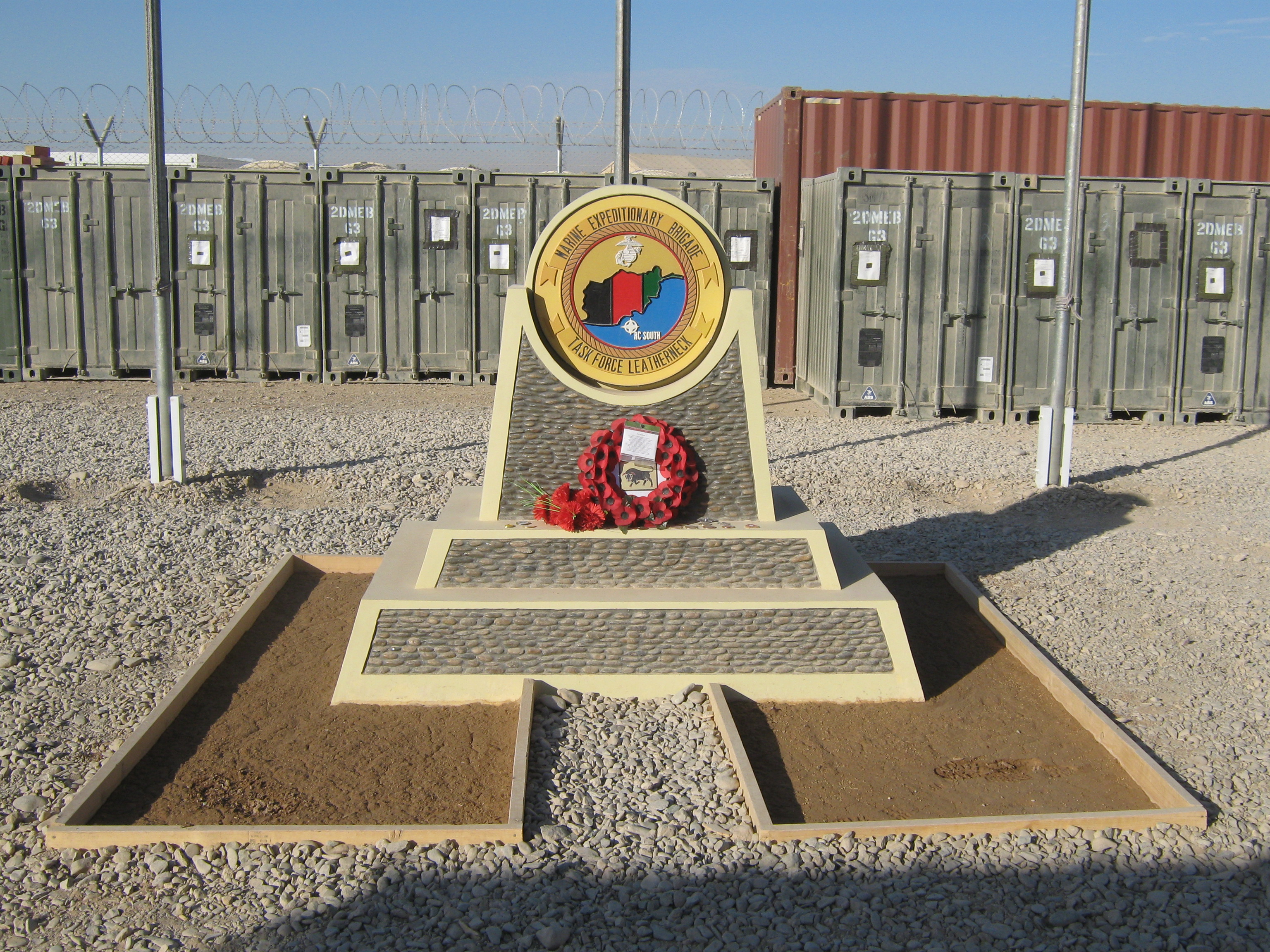
A memorial at Camp Leatherneck in Afghanistan. Source: Wikimedia Commons.
The Champion Behind the Tribute
Before the wall, White was already known in competitive memory.
He won the USA Memory Championship in 2009 and 2010.
Competition events tested names and faces, numbers, words, poetry, and shuffled playing cards. White also became known for memorizing a deck of cards at high speed.
Those achievements demonstrated his technique under pressure.
The wall asked something different. It replaced trophies and timing tables with names that families were still grieving.
White later described the project as the most meaningful and difficult memory challenge he had undertaken.
When Families Found a Name
The public performances became meeting places.
Relatives, friends, veterans, and service members waited while White moved through the list.
Some searched for one particular name. Others watched the wall fill and saw the scale of the loss emerge line by line.
A U.S. Army account described families and fellow service members locating people they knew on the wall.
Those encounters changed the meaning of the feat.
The audience was not only asking, “How can anyone remember so much?”
They were asking, “Who was this person, and who still carries their memory?”
A Traveling Memorial
White continued writing the names at locations around the United States.
The portable black wall stretched 52 feet and resembled the visual language of the Vietnam Veterans Memorial.
Performances took place at military installations, public squares, concerts, and national landmarks.
2007
White deploys to Afghanistan with the Navy Reserve
2012
Begins memorizing names and ranks
February 2013
Writes the wall publicly in Fort Worth
2013 onward
Takes the memorial to cities and military communities
Each rewriting renewed the act. The names were not stored once and forgotten. They had to be rehearsed, checked, and recalled again.
Memory Training as Education
White also teaches memory techniques.
His public work emphasizes that he does not possess a photographic memory. He uses learned systems that other people can practice.
The memory palace can support studying, speeches, names, professional knowledge, and everyday recall.
But the wall adds a moral dimension to the technique.
A method designed to make information memorable became a way to insist that individual lives should remain visible.
What Ron White's Story Teaches About Remembering
Ron White could have chosen a more conventional demonstration of memory.
Instead, he spent months learning thousands of names and ranks, then wrote them on a wall so that strangers could see the human scale of war.
The feat required the skills of a champion: imagery, location, order, concentration, and rehearsal.
Its meaning came from something beyond technique.
Memory can win a competition. It can help a student learn. It can also become a form of honor.
White's wall transformed “we will remember them” from a phrase into a demanding personal practice—one name at a time.
Featured image: Ron White, U.S. Navy veteran and two-time USA Memory Champion. Image via Ron White's official website.
The weekly question
From obsession to clarity — one original question every week.
We answer one noisy topic at a time, in full. No daily roundup, no thread bait — just the question, the principles, and the system.