Phineas Gage Survived an Iron Rod Through His Skull
Phineas Gage’s 1848 railway accident became one of neuroscience’s most famous—and most frequently oversimplified—cases.
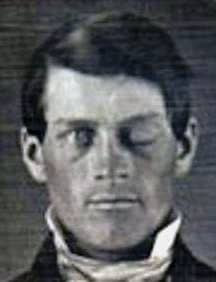
On 13 September 1848, railway foreman Phineas Gage was preparing a blasting charge near Cavendish, Vermont. An accidental explosion drove a tamping iron through his skull. He survived—and became one of the most discussed patients in the history of neuroscience.
The accident
The iron entered through Gage’s cheek and exited the top of his head, damaging the frontal region of his brain. Physician John Martyn Harlow treated him through infection and a difficult recovery.
Reports later described changes in Gage’s temperament and judgement. Those observations helped physicians consider whether particular brain regions contribute to personality and decision-making.
1848
Blasting accident in Vermont
1849
Harlow publishes an early account
1860
Gage dies in California
1868
Harlow publishes detailed follow-up
The myth versus the evidence
Popular retellings sometimes claim Gage became permanently violent or incapable of work. The historical evidence is more complicated. He later worked as a stagecoach driver in Chile, a demanding job requiring routine and responsibility. His functioning may have improved over time.
Why the case matters
Gage’s story did not single-handedly prove modern theories of brain localisation. It became important because it connected a documented injury with behavioural change and long-term adaptation. It also reminds researchers that famous cases can accumulate exaggerations.
Sources
The weekly question
From obsession to clarity — one original question every week.
We answer one noisy topic at a time, in full. No daily roundup, no thread bait — just the question, the principles, and the system.