
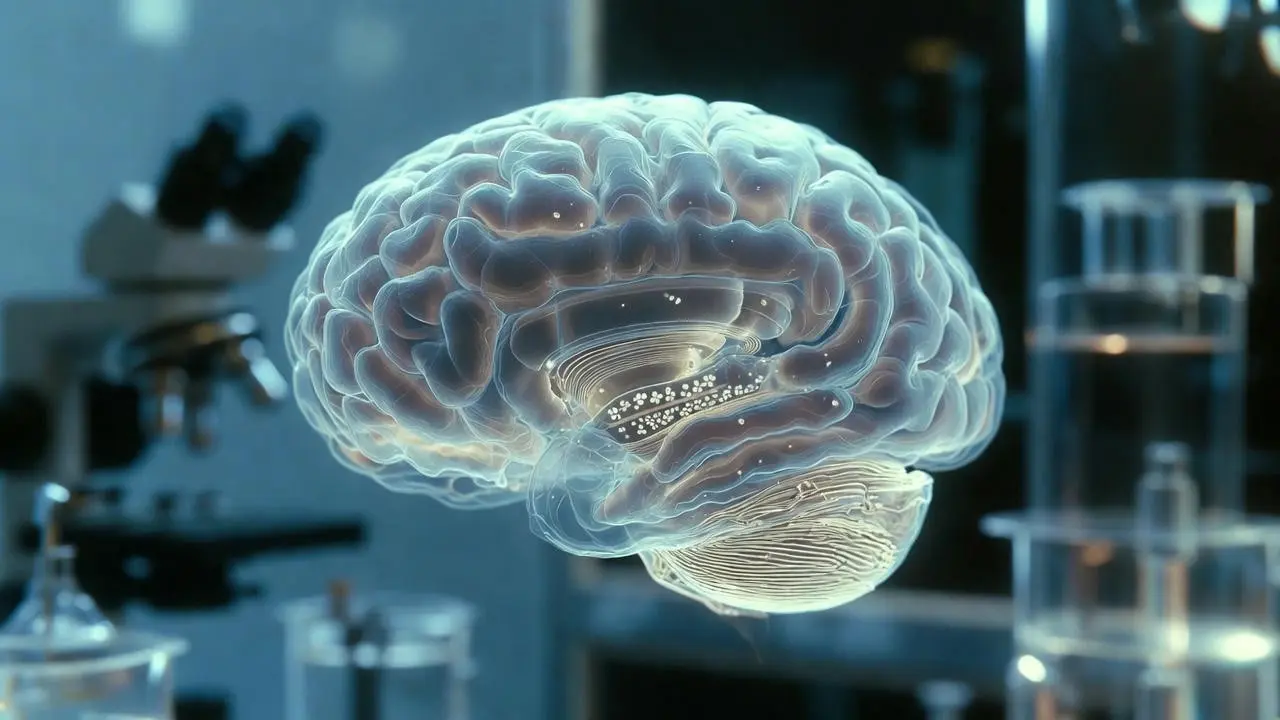
Scientists have uncovered a hidden cellular mistake that helps explain why some children are born with unusually small brains. The new microcephaly study shows that brain cells can divide in the wrong direction during early development, quietly reducing the brain’s growth before birth. This discovery matters now because it reveals a precise biological step where brain development can go off track.
Study Focus: Scientists used human brain organoids to uncover how actin gene mutations disrupt early brain growth. Key Finding: Mutated cells divide in the wrong direction, reducing vital brain stem cells. Why It Matters: This explains how microcephaly can begin before birth. Bigger Impact: The discovery pinpoints a critical step in human brain development that may guide future treatments.
The research focused on rare mutations in two actin genes, ACTB and ACTG1. Actin is a protein that works like scaffolding inside cells, helping them keep shape and divide correctly. The study found that when these actin genes carry harmful mutations, early brain cells stop multiplying as they should. Instead of building a larger brain, the cells shift too quickly toward making fewer specialized cells.
To uncover this, researchers grew tiny human brain models called cerebral organoids. These lab grown structures form from patient stem cells and mimic how the human brain develops in the womb. By comparing organoids from healthy donors with organoids carrying actin mutations, scientists could watch brain development unfold step by step in real time .
In healthy organoids, early brain stem cells divide vertically, like stacking blocks upward. This type of division creates two identical stem cells and expands the brain’s growth zone. In the mutated organoids, many cells divided horizontally instead. This sideways split reduces the number of stem cells and pushes cells to leave the growth zone too early. Over time, this leads to a smaller brain structure.
The team confirmed these changes using several tools. They measured organoid size, counted cell types using single cell RNA sequencing, and captured ultra detailed images with electron microscopy. Together, these methods showed fewer key brain progenitor cells, thinner growth regions, and visible structural problems inside the cells that guide division direction.
This finding matters because microcephaly affects brain size, learning ability, and lifelong health. Until now, doctors knew actin mutations were linked to the condition, but not how they caused it. The study connects a molecular change to a physical outcome. A small shift in cell division direction leads to fewer brain building cells, which limits brain growth early on.
Researchers say this discovery also explains why animal models often fail to mirror human microcephaly. Human brain development relies heavily on prolonged stem cell expansion. Even subtle changes in how cells divide can have much bigger effects in humans than in mice. Brain organoids bridge that gap by showing human specific development in the lab.
Beyond rare genetic disorders, the findings connect to broader questions in medicine and biotechnology. Understanding how cells decide their division direction could influence regenerative medicine, stem cell therapies, and brain repair research. It may also help scientists design better disease models for drug testing without relying on animal brains.
The researchers stress that this work does not point to an immediate treatment. However, it identifies a clear biological step where future therapies might intervene. Next studies will explore whether correcting cell structure or division signals could restore normal growth patterns in early brain cells.
The key takeaway is simple but powerful. Brain size can hinge on the direction of a single cell split. By revealing this hidden rule of development, the microcephaly study gives scientists a clearer map of how the human brain grows and how it sometimes grows too small.
Story Source:
Materials provided by Insert Institution Here. Content may be edited for style and length.
Journal Reference:
Indra Niehaus, Michaela Wilsch Bräuninger, Felipe Mora Bermúdez, Fabian Rost, Mihaela Bobic Rasonja, Velena Radosevic, Marija Milkovic Perisa, Pauline Wimberger, Mariasavina Severino, Alexandra Haase, Ulrich Martin, Karolina Kuenzel, Kaomei Guan, Katrin Neumann, Noreen Walker, Evelin Schröck, Natasa Jovanov Milosevic, Wieland B Huttner, Nataliya Di Donato, Michael Heide. Cerebral organoids expressing mutant actin genes reveal cellular mechanism underlying microcephaly. EMBO Reports, 2025. 1(1). DOI: 10.1038/s44319-025-00647-7