
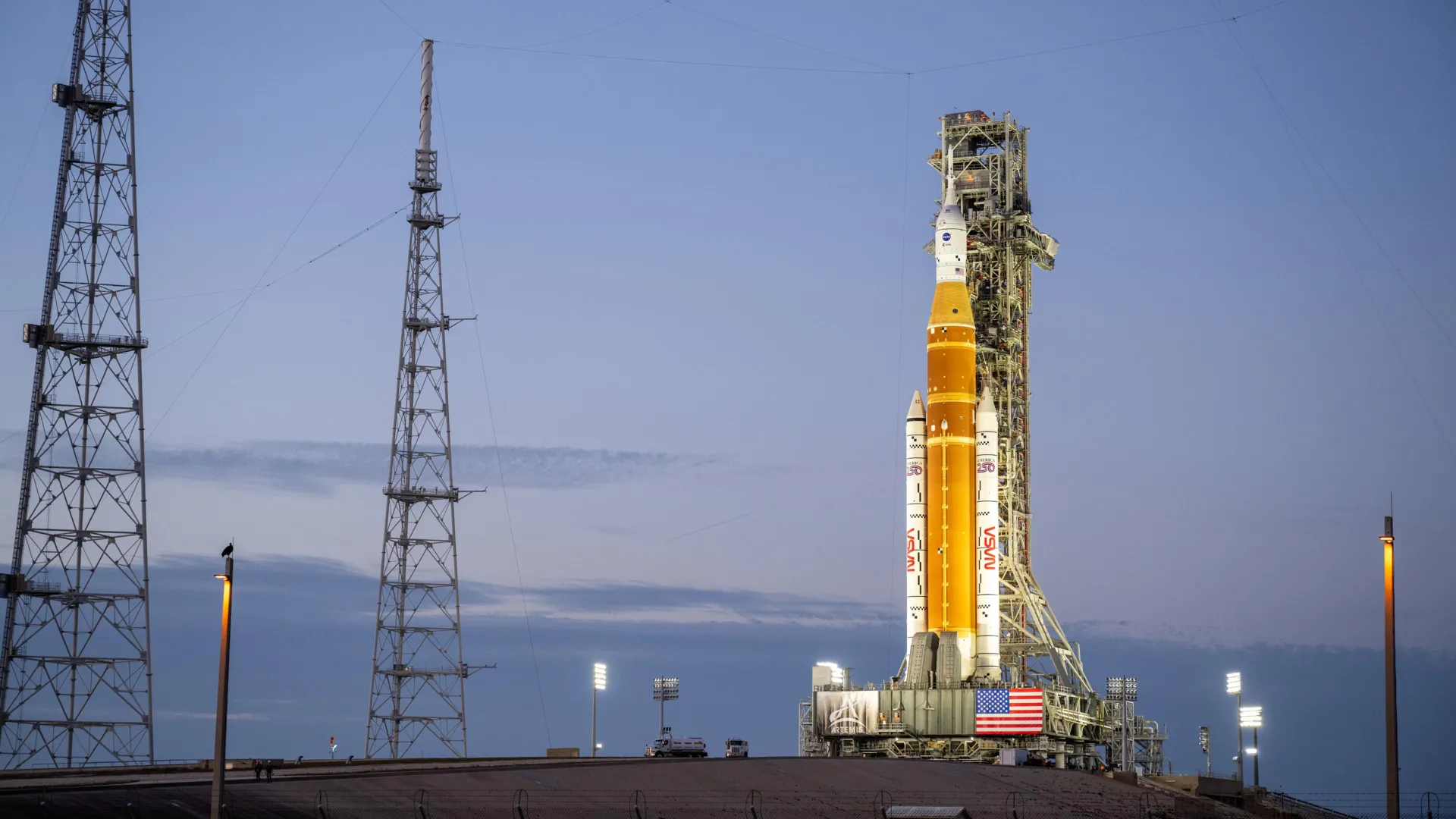
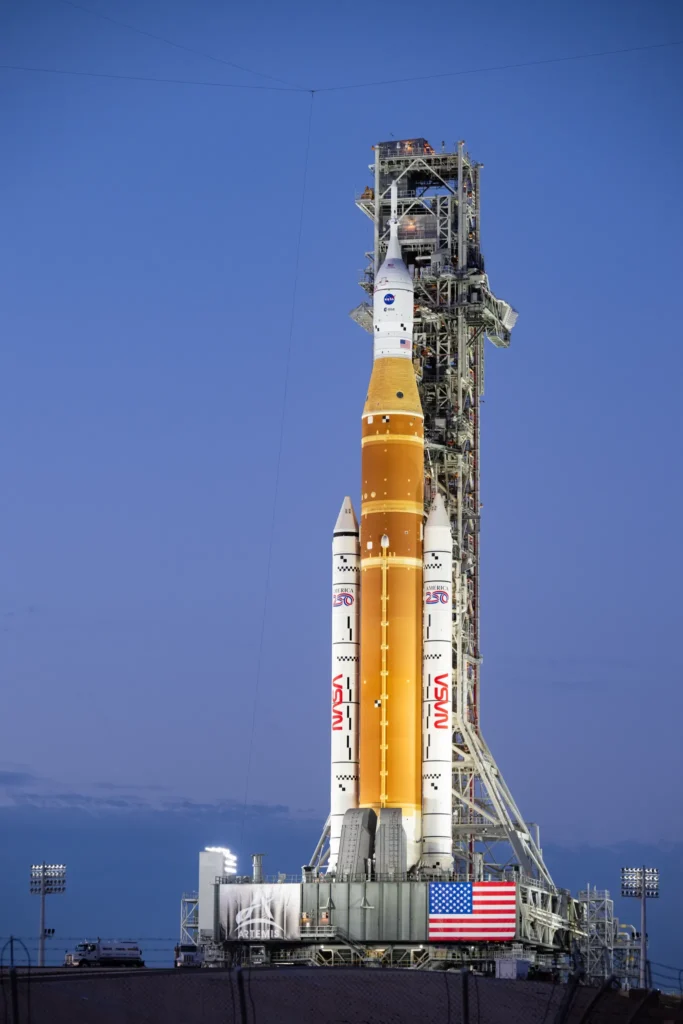
NASA’s towering Artemis II Space Launch System stood under floodlights at Kennedy Space Center on January 17 after a slow 12 hour rollout, starting the final phase of preparations for the first crewed lunar mission in more than 50 years.
The rollout happened just after sunset as the 4 mile journey began from the Vehicle Assembly Building. NASA’s crawler transporter carried the fully stacked SLS rocket and Orion spacecraft at less than 1 mile per hour. Engineers paused the move briefly to reposition the crew access arm, the bridge astronauts will use on launch day.
Now at Launch Pad 39B, teams are preparing for a critical round of tests that will determine when the rocket is cleared for flight.
Fast Facts
NASA rolled out Artemis II to Launch Pad 39B for critical fueling and countdown tests. This milestone brings the agency closer to sending astronauts around the Moon and preparing for long-term lunar exploration that will support future missions deeper into space.
Who Conducted the Work
The update comes from NASA’s Exploration Ground Systems and Artemis Program teams based at Kennedy Space Center, with mission details provided by NASA’s Johnson Space Center and the Canadian Space Agency. The milestone was announced January 19, 2026, following the rocket’s arrival at the pad two days earlier.
“We are going to fly when we are ready.”
NASA leadership
Before this rollout, the Artemis II hardware could not move forward to final flight readiness checks. Every crewed mission requires a full wet dress rehearsal, a test that validates fueling, countdown operations, and safe drain procedures. Without passing this test, NASA cannot authorize a launch attempt.
How the Artemis II System Works
Artemis II uses NASA’s Space Launch System, a two stage heavy lift rocket with solid boosters and a liquid hydrogen and oxygen core stage. At the top sits the Orion spacecraft, which will carry four astronauts on a ten day journey around the Moon.
The crawler transporter moves this entire stack from the assembly building to the pad. Crews then connect power, communications, and fueling lines needed for prelaunch operations. The wet dress rehearsal loads the rocket with super cold propellants, runs through a full countdown, and confirms that systems can safely handle and drain cryogenic fuel.
These steps replicate launch day without igniting the engines.
“The Orion spacecraft is humanity’s first lunar capable spacecraft in a very long time.”
Victor Glover, Artemis II Pilot
What Is New in This Milestone
This is the first time the fully assembled Artemis II vehicle has reached the pad. NASA has confirmed that the wet dress rehearsal is targeted for no later than February 2.
The test will verify:
- Safe fueling of the SLS core stage and upper stage
- Countdown sequences including automated checks
- Emergency drain procedures
- Ground system performance under cryogenic conditions
NASA noted that additional rehearsals may be required. If so, the rocket will roll back to the Vehicle Assembly Building for more work.
“We have used the lessons from Artemis I as our building blocks for Artemis II.”
Charlie Blackwell Thompson, Artemis Launch Director
Measured Progress So Far
Key milestones reached include:
- A 12 hour rollout completed on schedule
- Successful use of crawler transporter 2 at a maximum speed of 0.82 mph
- Proper positioning and operation of the crew access arm
- Hardware now fully connected to launch pad systems for testing
These steps confirm that all major launch infrastructure is functioning as expected.
More on NASA’s Artemis Program
Discover how Artemis II’s lunar flyby sets the foundation for future Mars exploration.Why This Matters Now
Artemis II is NASA’s first crewed mission beyond low Earth orbit since Apollo. The rocket reaching the pad signals that the mission is entering its final prelaunch phase.
This comes at a time when:
- NASA aims to establish a sustained human presence on the Moon
- International participation in lunar exploration is increasing
- The agency is preparing long duration human missions that will ultimately lead to Mars
The wet dress rehearsal is the last major hurdle before NASA sets a firm launch date.
“This is going to be our first step toward a sustained lunar presence.”
John Honeycutt, Artemis II Mission Management Team Chair
Real World Impact
The Artemis II flight will:
- Test life support systems for future Moon landings
- Validate mission operations for the upcoming Artemis III landing
- Provide new data on deep space travel for long missions
- Strengthen international partnerships through the participation of Canada
These missions will also help develop technologies for lunar infrastructure, including habitats, communication systems, and surface transportation.
“The Artemis II mission at its heart is a test mission of the Orion space capsule.”
Christina Koch, Artemis II Mission Specialist
Explore More Space Discoveries
Webb telescope captures real weather patterns on a distant alien world.
Expert Insight
NASA officials emphasized the importance of this milestone. Artemis leaders have consistently described the wet dress rehearsal as the most critical test before a crewed launch.
Their message is clear. The rocket must perform flawlessly before astronauts board Orion.
What Comes Next
Over the next few days, NASA teams will:
- Complete pad connections
- Begin fueling system tests
- Prepare for the wet dress rehearsal on or before February 2
If the rehearsal is successful, NASA will proceed with final launch preparations. If extra work is required, the rocket will return to the Vehicle Assembly Building for adjustments.
The Artemis II mission is scheduled to send astronauts Reid Wiseman, Victor Glover, Christina Koch, and Canadian astronaut Jeremy Hansen around the Moon no later than April 2026.
Clear Takeaway
NASA’s Artemis II rocket has reached the launch pad, moving the agency one major step closer to sending astronauts around the Moon for the first time in more than five decades. The upcoming wet dress rehearsal will determine when NASA can set a firm launch date and advance toward a sustained human presence on the lunar surface. The success of this milestone brings NASA closer to landing humans on the Moon again and preparing for future missions to Mars.