Why Artemis II Around the Moon Is NASA's Real Moon Mission — And the One That Matters Most
Under Kennedy Space Center floodlights, the Artemis II Orion rumbles to life, its four astronauts bracing for a ten-day lunar flyby that could redraw NASA’s future.
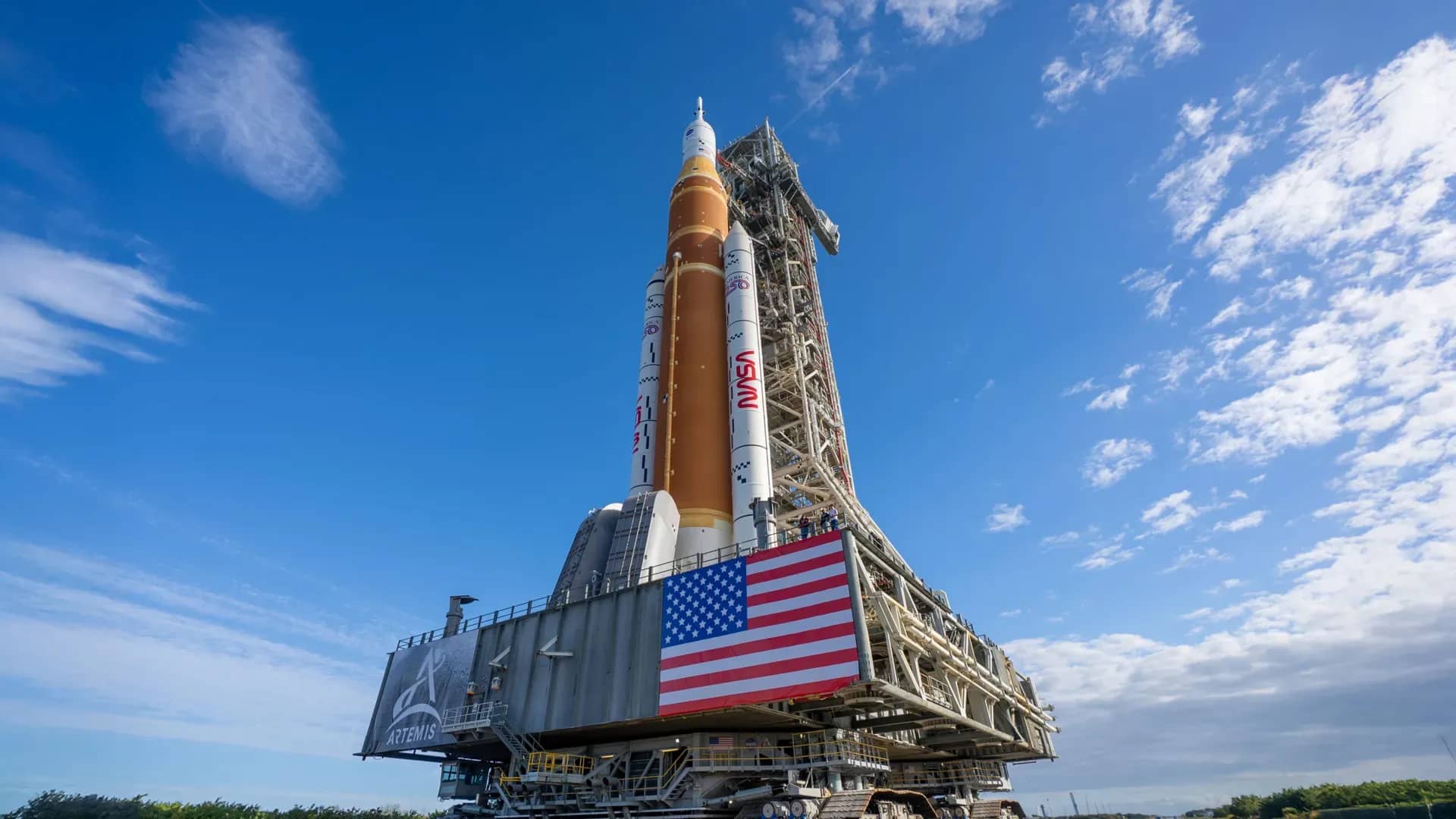
This mission is a testbed, not a spectacle: a 10-day loop around the Moon designed to stress test life-support systems, deep-space navigation, and mission operations that will underpin Artemis III’s lunar landing and future crewed Mars missions. The hardware—the Space Launch System (SLS) rocket and the Orion spacecraft—will carry a four-person crew and return with data that could redefine how NASA operates in deep space.
ScienceDaily frames the moment as a convergence of policy momentum and scientific rigor, a reminder that momentum in spaceflight is built as much by data as by headlines. NASA Artemis II — mission overview and What You Need to Know About NASA’s Artemis II Moon Mission translate that data into a public map for the next decade.
The Maverick and the Mechanism
The Maverick: Jared Isaacman, a vocal advocate for rapid, ambitious space programs, amplifies the push to move beyond cautious, incremental steps. The Team combines NASA leaders with the Artemis II crew—Reid Wiseman, Victor Glover, Christina Koch, and Canadian astronaut Jeremy Hansen—who will fly aboard Orion for the lunar flyby. This lineup underlines a core idea: you don\’t need a perfect plan to prove a bigger one works; you need a repeatable, safe loop in deep space.
What Artemis II Is Testing—and Why It Matters
Artemis II will orbit the Moon for roughly ten days, testing deep-space life support, propulsion, navigation, and mission-operations capabilities in environments far from Earth. No lunar landing is intended, but the mission will produce a data-rich report card that informs Artemis III\’s lunar descent and sets the stage for crewed Mars missions.
The work is spreading across institutions—from NASA\’s Johnson Space Center to industry partners at Lockheed Martin who built Orion, to international partners who share in the mission\’s governance and science goals.
The Payoff: From Flyby to a Living Moon, Then Mars
Beyond validating systems, Artemis II serves as a leadership signal: the United States is reasserting its role in space while broadening international collaboration as a necessity for deep-space exploration. The mission aligns with public momentum around #Moon2026, channels the appetite for a durable lunar presence, and accelerates the roadmap to Mars by proving that long-duration operations are safe, sustainable, and scalable.
As with all big bets, the payoff is not a single achievement but a durable capability that informs Artemis III\’s landing and the long road to human exploration of Mars. BBC — Artemis II Countdown to the Moon also tracks the public arc of that progress.
Key Takeaways
- Phase shift, not a footprint: Artemis II is a deep-space life-support and operations demonstration, not a Moon landing.
- Four-astronaut team: The crew includes Reid Wiseman, Victor Glover, Christina Koch, and Jeremy Hansen, with Jared Isaacman as a driving voice for rapid, ambitious spaceflight.
- Path to Artemis III & Mars: The data and operations validated by Artemis II enable Artemis III\’s lunar landing and future crewed missions to Mars.
- Public momentum and collaboration: The mission is embedded in a broader policy and international framework, helping sustain leadership in space and joint exploration.
- Timeline anchor: Launch window no earlier than February 2026, with an operating stretch through spring 2026.
The era of the Moon as a simple proving ground is ending; Artemis II signals the start of a durable, shared, interplanetary program that points to a human era on the Moon—and a pathway to Mars.
Related Reading
Astronaut Sunita Williams has now spent more than 608 days in space. This article explores her long-duration missions and what they reveal about future human spaceflight.
Read the Full StoryThe weekly question
From obsession to clarity — one original question every week.
We answer one noisy topic at a time, in full. No daily roundup, no thread bait — just the question, the principles, and the system.