Miso Media After Shark Tank: Why the Music Startup Shut Down
Miso Media accepted Mark Cuban’s offer but later ran out of money and shut down. Here is the verified timeline of Aviv Grill’s music-software startup.

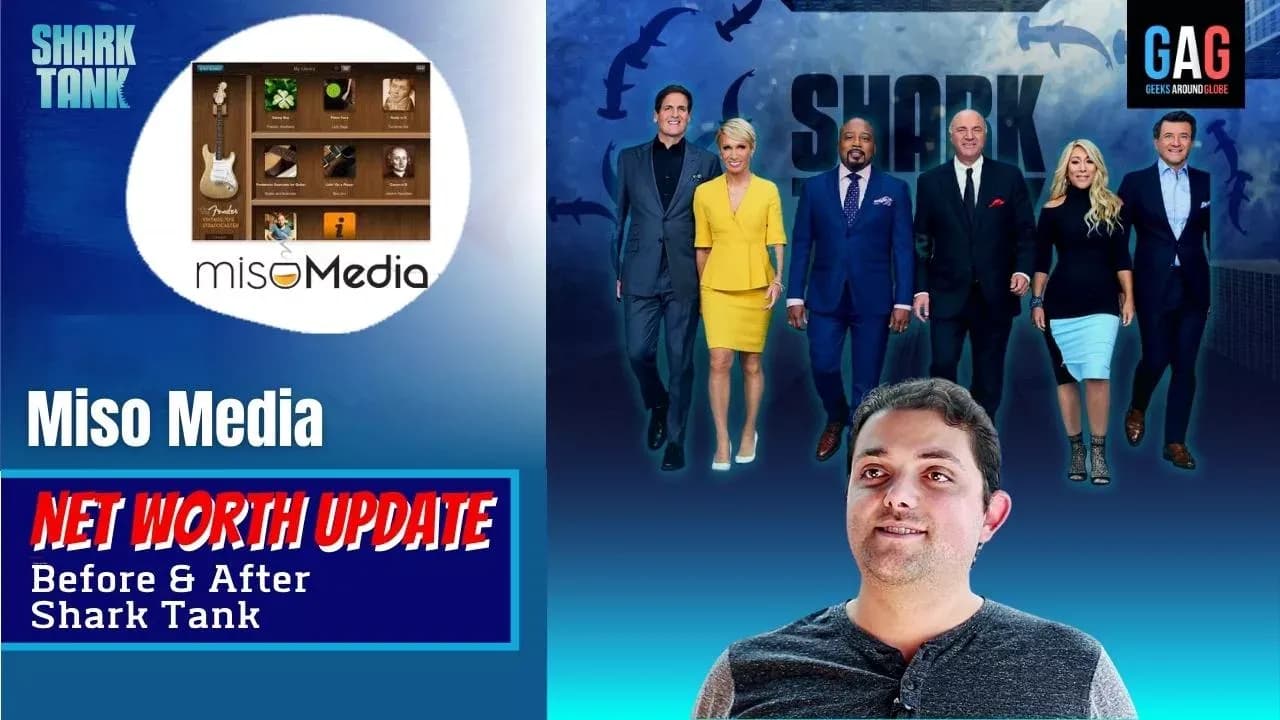
Aviv Grill pitched Miso Media as music-learning and digital sheet-music software and accepted Mark Cuban's $300,000 offer. The startup later ran out of money and shut down, an outcome Grill discussed publicly in a postmortem interview.
Quick answer: Miso Media accepted $300,000 for 8% from Mark Cuban on television. Later coverage describes the offer as an investment, although final funding documents were not retrieved for this review. The company reportedly shut down in 2013 after exhausting its capital.
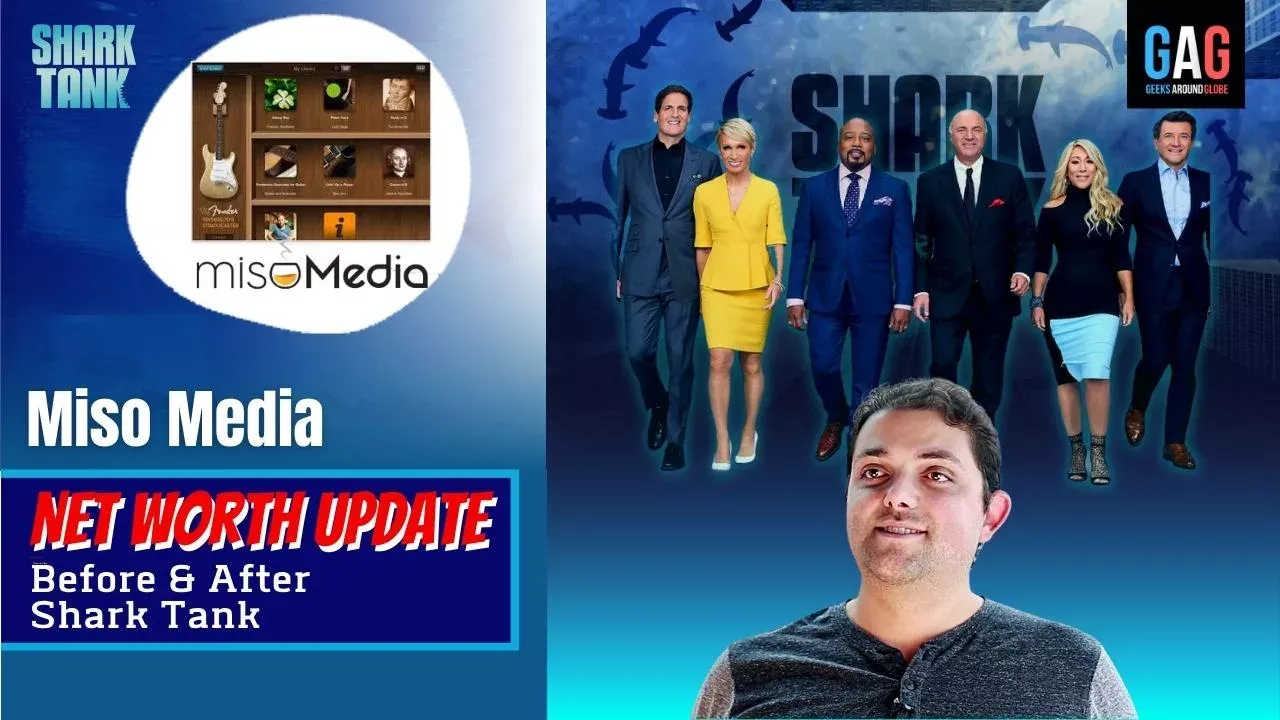
Aviv Grill and Miso Media’s music-learning software. Photo: ABC/GAG
Miso Media at a glance
| Detail | Verified information |
|---|---|
| Cofounder and presenter | Aviv Grill |
| Product | Music-learning and digital sheet-music software |
| Shark Tank season | Season 3 |
| Ask | $300,000 for 5% equity |
| Accepted offer | $300,000 for 8% |
| Shark | Mark Cuban |
| Reported shutdown | 2013 |
| Current status | Defunct |
The ask implied a $6 million valuation, while the accepted offer implied $3.75 million. Neither figure is current net worth or evidence that the company held that value when it closed.
Read the complete season in our Shark Tank Season 3 products, deals and updates guide.
What was Miso Media?
Miso Media developed software intended to help people learn music and interact with digital sheet music.
The product aimed to combine instruments, lessons and a software interface, serving musicians who wanted technology-assisted practice.
The company should not be confused with the unrelated social-TV app called Miso or with Miso Robotics. Similar names do not indicate shared ownership or technology.
As a software startup, Miso Media needed continuing investment to pay developers, license or prepare content, support users and refine its product before revenue could cover its costs.
What happened during the Shark Tank pitch?
Grill asked for $300,000 in exchange for 5% equity, implying a $6 million valuation.
Mark Cuban offered $300,000 for 8%, and Grill accepted. The accepted terms implied a $3.75 million valuation.
A contemporary Sony producer release confirms the offer and broadcast timing.
| Pitch figure | On-air result |
|---|---|
| Amount requested | $300,000 |
| Equity initially offered | 5% |
| Accepted offer | $300,000 for 8% |
| Shark | Mark Cuban |
| Implied valuation of accepted offer | $3.75 million |
The same episode featured Tower Paddle Boards, Instant Lifts/Skinnies and Vinamor.
Did Mark Cuban's deal close?
Subsequent business coverage describes Cuban as an investor, but this review did not retrieve the final signed funding documents or a direct portfolio listing comparable to Tower Paddle Boards.
The producer release verifies the on-air offer. Later reports and the founder's business postmortem are consistent with continued investor involvement.
The careful conclusion is that Miso Media accepted Cuban's offer and is widely reported as having received investment, while the exact final closing terms are not independently documented here.
This distinction does not change the later outcome: the company exhausted its funding and became defunct.
What happened after Shark Tank?
Miso Media had raised venture funding before and around its television appearance. The chronology requires care because the show was filmed before the March 2012 broadcast.
A funding round associated with the company should not automatically be described as occurring after viewers saw the episode simply because it became widely discussed later.
Despite the capital and national exposure, Miso Media struggled to build a sustainable business before its money ran out.
Secondary sources report a March 2013 shutdown. In a 2014 Inc interview, Grill discussed the company's failure and depleted funds.
Why did Miso Media shut down?
The most reliable broad explanation is that the company ran out of money before achieving a sustainable operation.
Software startups can consume capital quickly through engineering, content, product changes and customer acquisition. Investor backing does not guarantee that a product will find enough paying users before funds are exhausted.
Grill's public postmortem is important because it moves the story beyond speculation. The company did not disappear merely because a website changed; its founder discussed the financial failure.
The evidence does not support reducing the outcome to one simple cause or blaming a single investor.
Is Miso Media still in business?
No. Miso Media is defunct, with secondary reports placing its shutdown in 2013 and a founder interview confirming that it ran out of funds.
Old apps, screenshots or articles may remain online, but they do not indicate an active service.
The closure should not be dated to 2014 simply because the Inc interview appeared then. The interview was a retrospective discussion after the reported shutdown.
Miso Media valuation and net worth
The original ask implied $6 million, and Cuban's accepted on-air offer implied $3.75 million.
Those figures were negotiation values at the time of the pitch. They do not establish:
- cash in the bank;
- annual revenue or profit;
- value at shutdown;
- recovery for investors;
- or Aviv Grill's personal net worth.
A startup can carry a multimillion-dollar implied valuation and still fail if it cannot finance operations or build sustainable revenue.
What founders can learn from Miso Media
Miso Media demonstrates that fundraising is not the same as product-market fit.
Capital buys time to build and test a product. It does not guarantee that customer revenue will arrive before the money is gone.
The story also shows why founders need clear milestones tied to runway: product completion, user retention, paid conversion and the next financing window.
For editors, filming, broadcast, funding and closure dates must remain separate. Rearranging them can create a misleading story about what caused what.
Frequently asked questions
Who founded Miso Media?
Aviv Grill was a cofounder and the presenter on Shark Tank.
What did Miso Media make?
It developed music-learning and digital sheet-music software.
How much did Miso Media ask for?
Grill asked for $300,000 for 5% equity, implying a $6 million valuation.
What deal did Mark Cuban offer?
Cuban offered $300,000 for 8%, and Grill accepted on television.
Did the Mark Cuban deal close?
Later coverage describes Cuban as an investor, but the final funding documents were not retrieved for this review.
When did Miso Media close?
Secondary accounts report a March 2013 shutdown. Grill discussed running out of money in a 2014 interview.
Is Miso Media related to Miso Robotics?
No. It was a music-software company and should not be confused with other businesses sharing the Miso name.
What is Miso Media worth today?
The company is defunct, and no reliable evidence supports a current valuation or founder net worth.
The weekly question
From obsession to clarity — one original question every week.
We answer one noisy topic at a time, in full. No daily roundup, no thread bait — just the question, the principles, and the system.