Michael Johnson’s Golden Shoes Carried a Radical Sprinting Form
Michael Johnson’s upright running style and golden shoes became symbols of his historic 200m–400m double at the 1996 Olympics.

Michael Johnson ran with a high torso, short stride and piston-like cadence that coaches once considered unconventional. Instead of rebuilding the style, he refined it into one of sprinting’s most efficient systems.
The golden double
At Atlanta 1996, Johnson became the first man to win both the Olympic 200 and 400 metres at the same Games. Wearing custom gold shoes, he ran 19.32 in the 200, a world record that stood for 12 years.
19.32 sec
200m world record in 1996
43.18 sec
400m world record in 1999
4
Olympic gold medals
8
World Championship golds
Source: World Athletics and Team USA
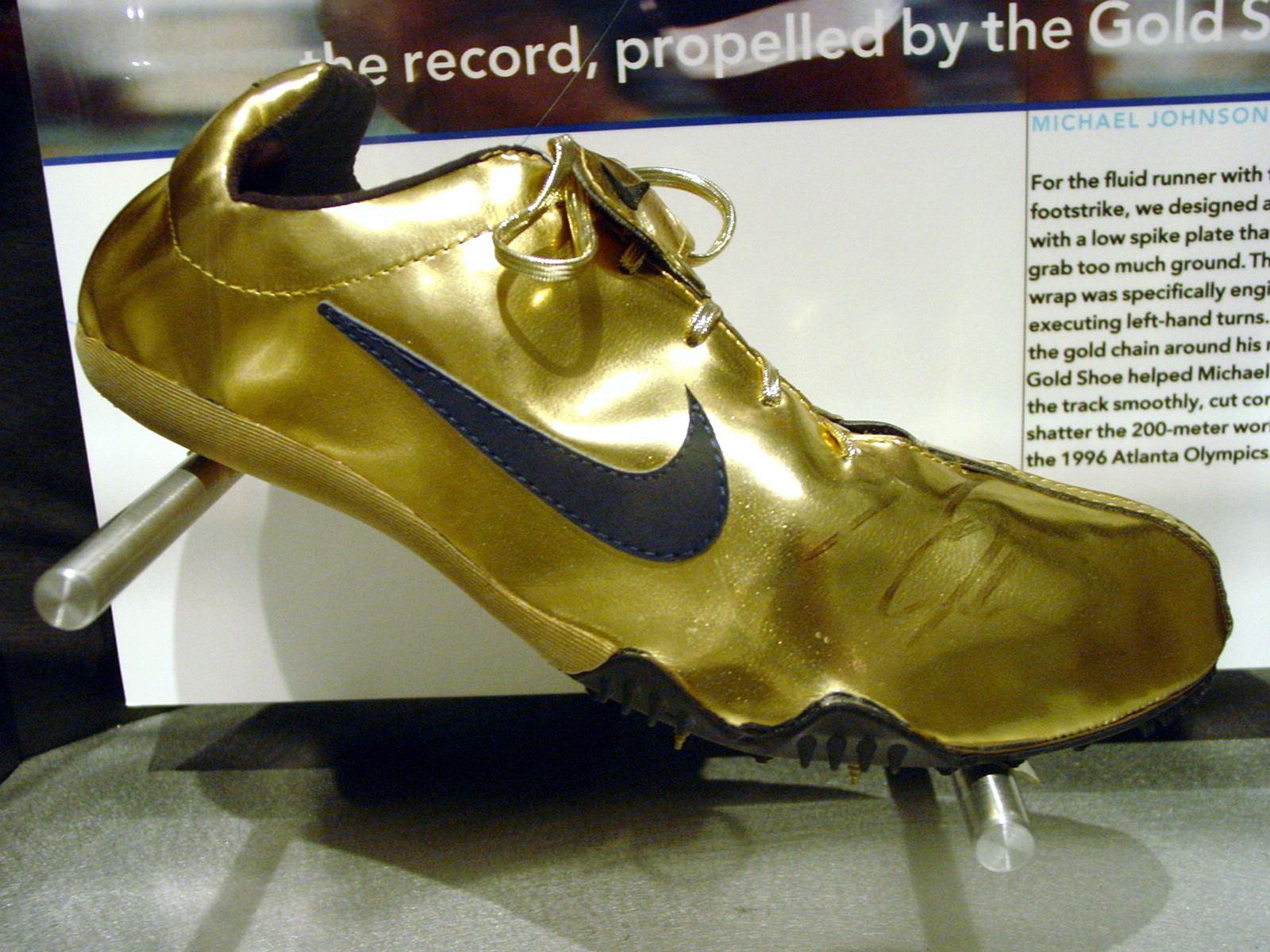
The shoes became an icon, but Johnson’s repeatable mechanics delivered the medals.
Why the form worked
Johnson’s upright posture reduced dramatic vertical motion. His feet landed rapidly under his centre of mass, while compact arm action supported a remarkably consistent rhythm.
The style was especially effective over 400 metres, where efficiency under fatigue is decisive. Johnson could distribute effort around the lap and preserve mechanics when other runners began to tighten.
Precision before spectacle
The gold shoes were intentionally visible, but the preparation behind them was methodical. Johnson and coach Clyde Hart emphasised controlled training, race modelling and repeatable execution rather than simply running every session at maximum effort.
That approach helped him dominate across seasons. His 43.18 world record from 1999 lasted until Wayde van Niekerk ran 43.03 in 2016.
The geek lesson
There is no single perfect technique independent of the athlete. Johnson’s team studied what his body did naturally, removed inefficiencies and reinforced the useful pattern. His career is a case study in optimising an individual system instead of copying a textbook model.
The weekly question
From obsession to clarity — one original question every week.
We answer one noisy topic at a time, in full. No daily roundup, no thread bait — just the question, the principles, and the system.