Michael Collins Flew Alone Around the Moon During Apollo 11
Michael Collins transformed an obsession with command module operations into a defining chapter of human spaceflight.
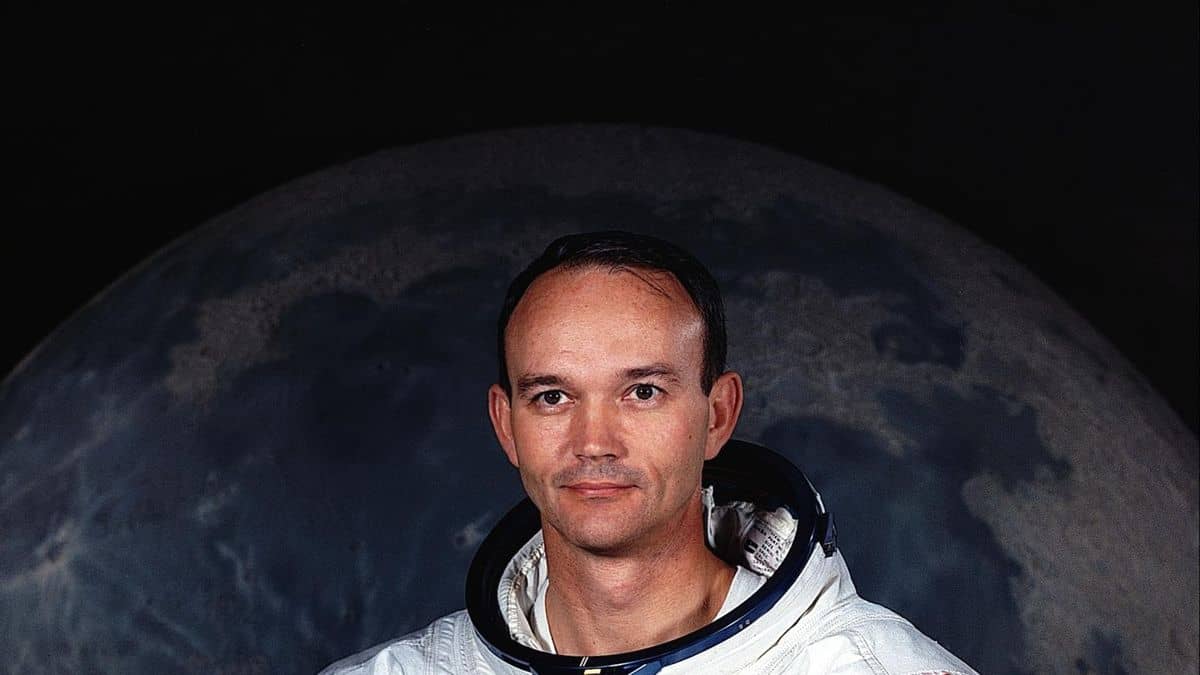
While Neil Armstrong and Buzz Aldrin explored the lunar surface, Michael Collins piloted Columbia alone around the far side of the Moon.
The achievement was built on years of training and a deep obsession with command module operations. It required technical knowledge, physical preparation, and the ability to make careful decisions when there was little room for error.
The preparation behind the mission
Before becoming internationally known, Michael Collins graduated from West Point, became a fighter and test pilot, and joined NASA's third astronaut group.
That experience created the discipline needed for a spacecraft. Crews had to understand propulsion, navigation, communications, life support, and emergency procedures, then perform under public attention and genuine danger.
The flight that defined the career
The central missions were Gemini 10 and Apollo 11. Across those assignments, Michael Collins kept the Apollo 11 command module operating in lunar orbit and completed the rendezvous that brought the crew home.
1963
Selected as a NASA astronaut
1966
Flew Gemini 10
1969
Piloted Apollo 11's command module
1971
Became director of the National Air and Space Museum
Every celebrated moment depended on a much larger team. Engineers, flight controllers, technicians, scientists, and fellow crew members made the achievement possible.
What the record does not show
Records simplify a career into one sentence, but spaceflight is a chain of responsibilities. A crew member may be monitoring systems, operating equipment, testing procedures, or preparing for a failure that never appears in photographs.
His work made the lunar landing possible. The mission depended on his precise navigation, systems knowledge, and readiness to return alone if the lunar module could not launch.
This is why the story remains more useful than a simple “first.” It reveals how exploration advances: one carefully executed task makes a more ambitious mission possible.
The obsession behind the achievement
For Michael Collins, command module operations was not a passing interest. It became a framework for learning and service.
The preparation demanded repetition. Procedures were practiced until they could be performed under stress. Technical details had to become familiar enough that attention could shift quickly when conditions changed.
That disciplined curiosity is the thread connecting the early training, the historic mission, and the work that followed.
Why Michael Collins still matters
Michael Collins's career expanded the public idea of who could participate in space exploration and what astronauts could accomplish.
The lasting lesson is not only that a record was set. It is that the record rested on preparation, teamwork, and the willingness to accept responsibility far from Earth.
As new crews prepare for longer missions to the Moon and eventually Mars, those qualities remain just as important.
Primary reference: Official biography and mission information.
Featured image: official portrait with the complete face retained in the composition.
The weekly question
From obsession to clarity — one original question every week.
We answer one noisy topic at a time, in full. No daily roundup, no thread bait — just the question, the principles, and the system.