M. C. Escher Drew Worlds Where Geometry Refused to Behave
M. C. Escher used tessellations, perspective and impossible architecture to turn mathematical structures into visual puzzles.
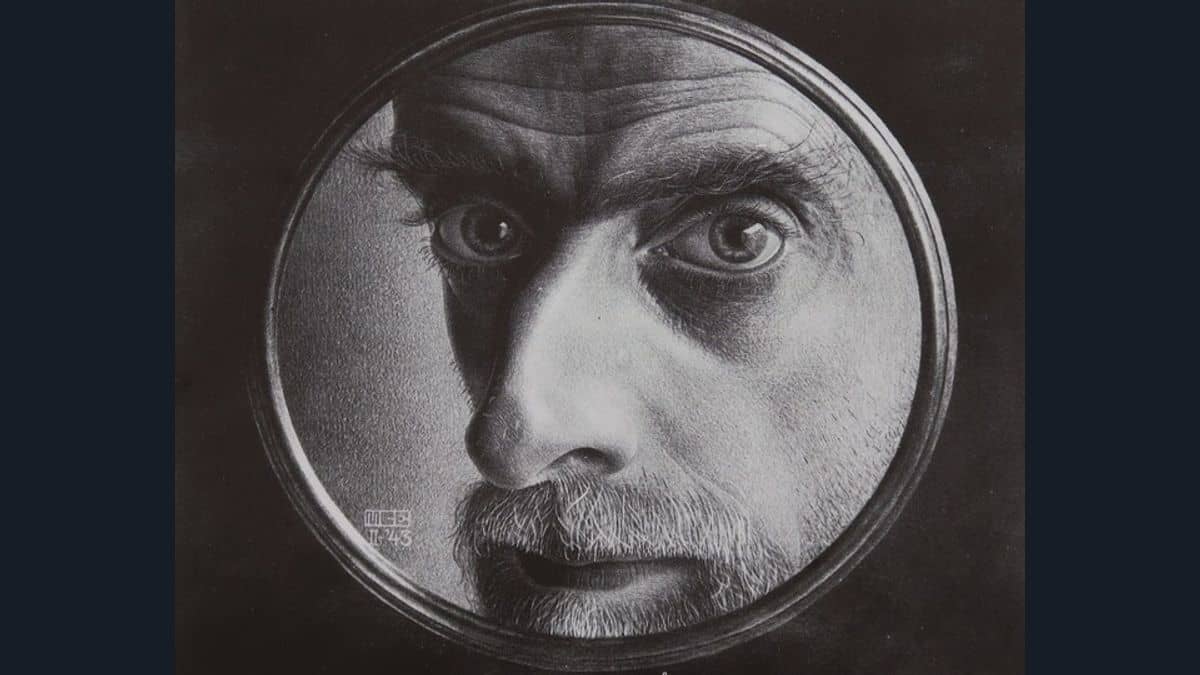
M. C. Escher used tessellations, perspective and impossible architecture to turn mathematical structures into visual puzzles.
The obsession
Inspired partly by the Alhambra, Escher investigated symmetry, infinity and transformation without being a professional mathematician. He made rigorous visual experiments through lithographs, woodcuts and drawings.
1953
Relativity created
3
Gravity directions in Relativity
Lithograph
Major medium
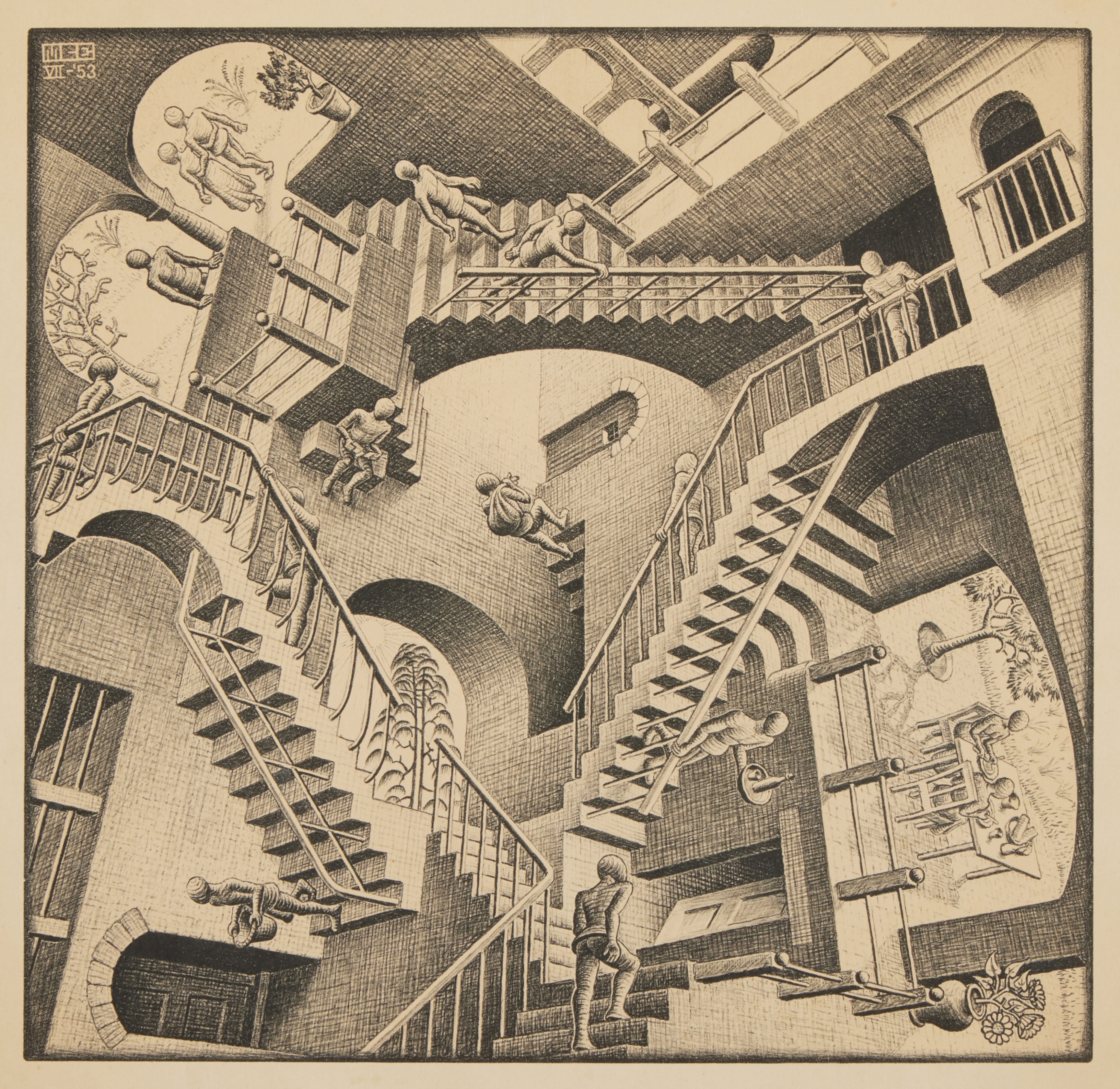
Relativity makes several internally logical directions of gravity coexist in one building.
How the method works
Relativity joins locally believable stairways into a globally impossible structure. Precise perspective persuades the eye before logic catches the contradiction.
Why the work matters
Escher gave visual form to ideas that mathematicians recognised in symmetry groups, topology and infinity. His prints became a bridge between popular visual culture and mathematical thought.
The geek lesson
A paradox succeeds when every small part follows clear rules. Escher created wonder by making incompatible systems individually convincing.
The weekly question
From obsession to clarity — one original question every week.
We answer one noisy topic at a time, in full. No daily roundup, no thread bait — just the question, the principles, and the system.