Mae Jemison Became the First Black Woman to Travel in Space
Mae Jemison transformed an obsession with space, medicine, and science education into a defining achievement in human spaceflight.
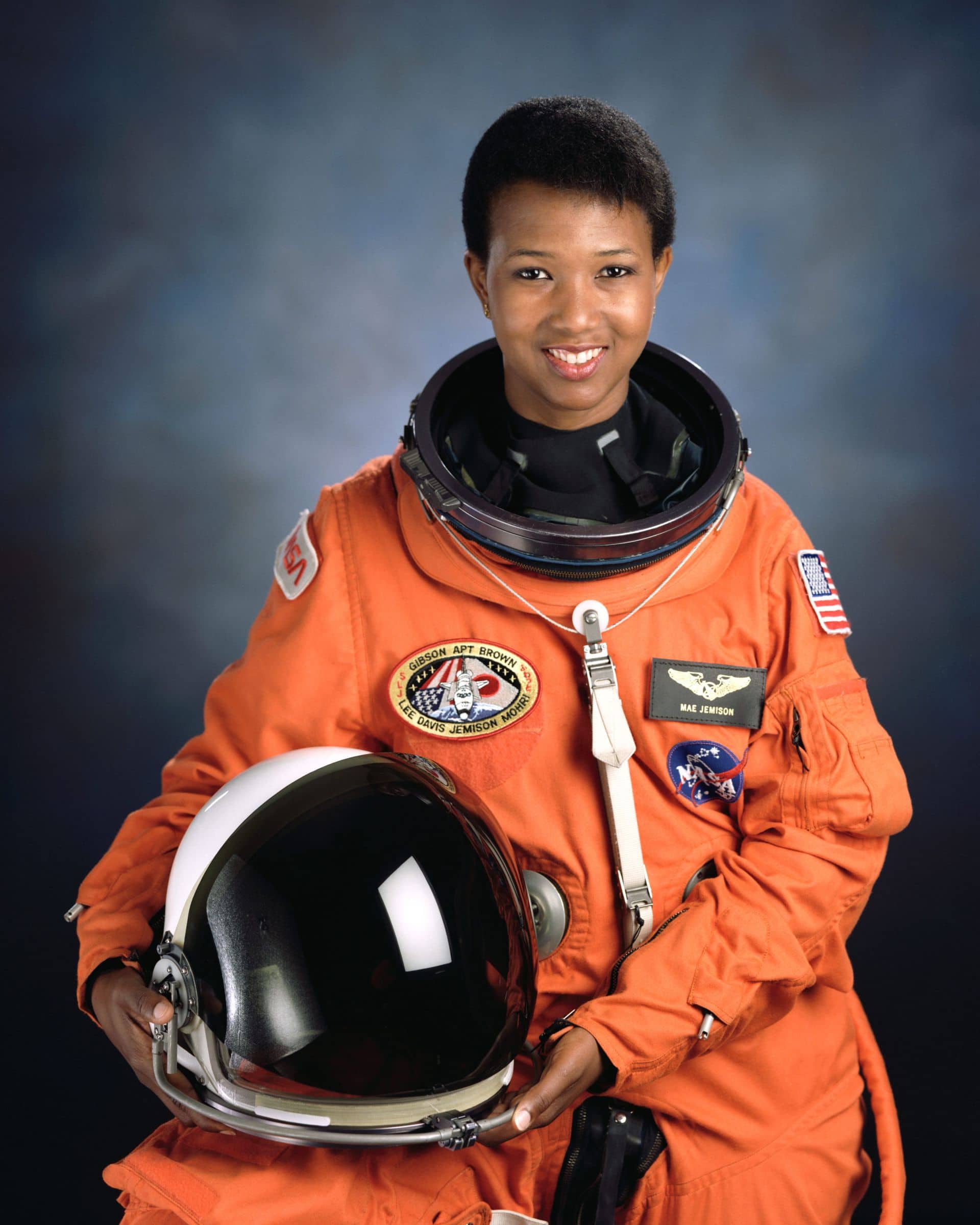
Physician and engineer Mae Jemison launched aboard Endeavour in 1992, becoming the first Black woman to travel in space.
The record grew from an obsession with space, medicine, and science education. It demanded technical training, physical endurance, and the ability to keep working when isolation and routine became challenges of their own.
How Mae Jemison prepared for space
Before the mission, Mae Jemison trained as a physician, served in the Peace Corps, and worked in medicine before NASA selected her in 1987.
Spaceflight rewards broad preparation. Crew members must understand spacecraft systems, scientific procedures, communication protocols, and emergency responses. They must also work closely with people from different professional and national backgrounds.
The mission that defined the career
The defining assignment was STS-47 Spacelab-J. During that chapter, Mae Jemison served as a science mission specialist during a cooperative U.S.-Japanese research mission.
1981
Earned her medical degree
1987
Selected by NASA
12 September 1992
Launched on STS-47
After NASA
Founded technology and science-education initiatives
The visible achievement depended on teams on Earth as well as the crew in orbit. Mission planners, engineers, doctors, trainers, and controllers all contributed to the result.
What made this achievement important
Her career joined medicine, engineering, social responsibility, and spaceflight while expanding representation in science and technology.
The mission therefore mattered beyond a headline or record. It contributed experience that later crews could use when preparing for longer, more complicated work away from Earth.
The human side of space operations
Life in orbit combines extraordinary views with strict routines. Exercise, maintenance, experiments, communications, and basic housekeeping compete for limited time.
The obsession with space, medicine, and science education helped Mae Jemison make this unfamiliar environment understandable and productive. The same quality also helped the public see astronauts as skilled workers rather than distant symbols.
Why Mae Jemison still matters
Mae Jemison's career shows that exploration advances when personal curiosity is joined to disciplined teamwork.
The milestone remains memorable, but the deeper lesson is preparation: learn the systems, respect the team, practice for failure, and keep a clear purpose during difficult work.
Those lessons will remain essential as humans prepare for longer missions around the Moon and toward Mars.
Primary reference: Official biography and mission information.
Featured image: person-specific portrait selected with the complete face safely inside the frame.
The weekly question
From obsession to clarity — one original question every week.
We answer one noisy topic at a time, in full. No daily roundup, no thread bait — just the question, the principles, and the system.