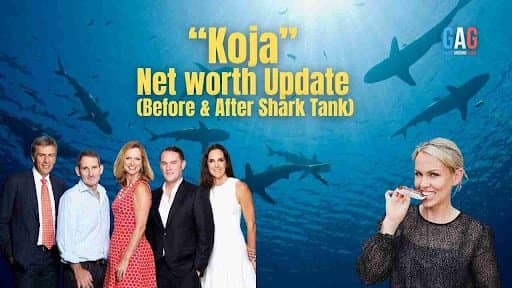
Koja Net Worth Update: The Shark Tank Deal Kate Johansson Walked Away From — And Built Anyway
Kate Johansson pitched Koja on Shark Tank Australia in 2015 and accepted John McGrath’s on-air offer — then turned it down to keep 100% ownership. Sales spiked after the show, Coles and Woolworths followed, and Koja Health remains active in 2026. Here is the full net worth update.

Quick answer: Koja Health is still in business in 2026. Founder Kate Johansson accepted an on-air deal from John McGrath on Shark Tank Australia Season 1, Episode 12 — but the deal never closed. She walked away to keep 100% ownership, funded growth from a post-show sales spike, and expanded into Coles and Woolworths nationally. Koja’s exact net worth is not officially disclosed; claims of $76 million online appear to confuse year-one revenue of about $75,000 with company value.
| Company | Koja Health — healthy snack bars & plant-based food products |
| Founder | Kate Johansson |
| Founded | 2014, Melbourne area, Victoria |
| Show | Shark Tank Australia, Season 1, Episode 12 (2015) |
| The ask | $150,000 for 25% (on air) |
| On-air deal | $50,000 for 45% + $100,000 loan — John McGrath |
| Did the deal close? | No — Johansson declined after filming |
| Ownership | 100% founder-owned |
| Year-one revenue | About $75,000 (verified) |
| Estimated net worth | Not publicly confirmed |
| Where to buy | koja.com.au, Coles, Woolworths & other stockists |
What is Koja’s net worth?
Koja Health does not publish audited financials or an official valuation in 2026. The old $76 million figure repeated on some pages is not supported and likely stems from confusing the brand’s year-one revenue of about $75,000 with net worth.
What we can state with confidence:
- Year one (2014–2015): about $75,000 in revenue.
- After Shark Tank: online sales jumped to roughly $200,000 in one month, with Johansson citing more than $100,000 profit from that spike.
- Retail scale: national Coles rollout, nationwide Woolworths, and expansion into Woolworths New Zealand (2025).
That makes Koja a real, growing Australian FMCG brand — but without disclosed revenue or valuation, we do not assign a precise net worth number.
Is Koja still in business?
Yes. Koja Health Pty Ltd remains an active registered company in Australia as of 2026. Products sell through koja.com.au, Coles, Woolworths, and other retail partners. Kate Johansson continues to lead the brand as CEO.
Did the Koja Shark Tank deal close?
No. On air, Johansson accepted John McGrath’s counter of $50,000 for 45% equity plus a $100,000 loan. After filming, she decided not to proceed, saying she needed more hands-on support than the Sydney-based investor could provide from a distance. She kept 100% equity and later described McGrath as a mentor rather than a business partner. For another Australian story where TV exposure mattered more than shark money, see Hoo Haa Headphones.
The Koja Shark Tank pitch recap
Johansson pitched Koja on the Season 1 finale stretch, presenting healthy snack products as an alternative to sugary processed bars. She sought $150,000 for 25% on air. McGrath countered with $50,000 for 45% plus a $100,000 loan, and she accepted on TV. The episode became a sales catalyst even without the investment closing.
What happened to Koja after Shark Tank?
The show delivered demand, not debt. Johansson has said products sold out within about 15 minutes of the episode airing, and the business used post-show profits to fund growth without bank or investor capital.
- Sales spike: roughly $200,000 in online sales within a month of airing.
- Retail expansion: from a handful of stores to hundreds, then national grocery chains.
- Coles: national rollout after strong performance in Coles Local stores.
- Woolworths: nationwide stocking; later launch in Woolworths New Zealand.
- Ownership: still 100% founder-owned, bootstrapped from about $20,000 in personal savings.
Who founded Koja?
Kate Johansson, who started Koja in 2014 while still working a day job. She built early traction through Instagram and word of mouth before Shark Tank amplified the brand. Founder personal net worth figures tied to the bogus $76 million number should be ignored; no verified source supports that claim.
Where can you buy Koja?
Yes, it is available. Koja products sell through koja.com.au, Coles, Woolworths, and other Australian retail stockists. The range includes oat bars, protein bars, peanut butter bars, and related snack lines.
Koja timeline
| Year | Milestone |
|---|---|
| 2014 | Kate Johansson founds Koja; year-one revenue about $75,000 |
| 2015 | Shark Tank Australia S1 E12; accepts McGrath deal on air, later walks away |
| Post-show | Sales spike (~$200k in one month); retains 100% ownership |
| 2020+ | National Coles rollout; Woolworths distribution expands |
| 2025 | Launch in Woolworths New Zealand |
| 2026 | Koja Health Pty Ltd still active; net worth not publicly disclosed |
Frequently asked questions
What is Koja’s net worth?
Not officially disclosed. Claims of $76 million are unsupported and likely confuse year-one revenue (~$75,000) with company value.
Did Koja get a deal on Shark Tank Australia?
On air, yes — John McGrath offered $50,000 for 45% plus a $100,000 loan and Johansson accepted. The deal did not close after filming.
Is Koja still in business?
Yes. Koja Health remains active in 2026 and sells through Coles, Woolworths, and koja.com.au.
Who founded Koja?
Kate Johansson, who launched the brand in 2014.
Who invested in Koja on Shark Tank?
John McGrath accepted the on-air deal, but Johansson ultimately declined the investment and kept 100% ownership.
Where can I buy Koja products?
Through koja.com.au, Coles, Woolworths, and other Australian retail stockists.
The bottom line
Koja is a Shark Tank Australia story where the founder said no to giving up nearly half the company — and still won. Johansson kept 100% ownership, turned TV exposure into a sales surge, and built grocery-scale distribution. For net worth, stay honest: Koja is a real operating brand, but its valuation is not publicly confirmed, and the viral $76 million figure is a red flag, not a fact.
How we verified this update
This update is based on Koja’s Shark Tank Australia appearance (Season 1, Episode 12, 2015), the on-air John McGrath offer ($50,000 for 45% plus a $100,000 loan), Kate Johansson’s own statements that she declined the investment to retain 100% ownership, verified year-one revenue of about $75,000, post-show sales of roughly $200,000 within a month, national Coles and Woolworths distribution, Koja Health Pty Ltd’s active ABN status as of 2026, and the brand’s continued retail presence. We do not publish an exact net worth because no official valuation or audited revenue figure is publicly available. We refresh this page when new verified facts emerge.
RELATED: QPay net worth update · Zeppee net worth update · Hoo Haa Headphones net worth update · Shark Tank Australia millionaire club
The weekly question
From obsession to clarity — one original question every week.
We answer one noisy topic at a time, in full. No daily roundup, no thread bait — just the question, the principles, and the system.