Katherine Johnson Calculated the Paths That Carried Astronauts Into Orbit
Katherine Johnson reshaped technology through work that continues to influence how modern systems are built and understood.
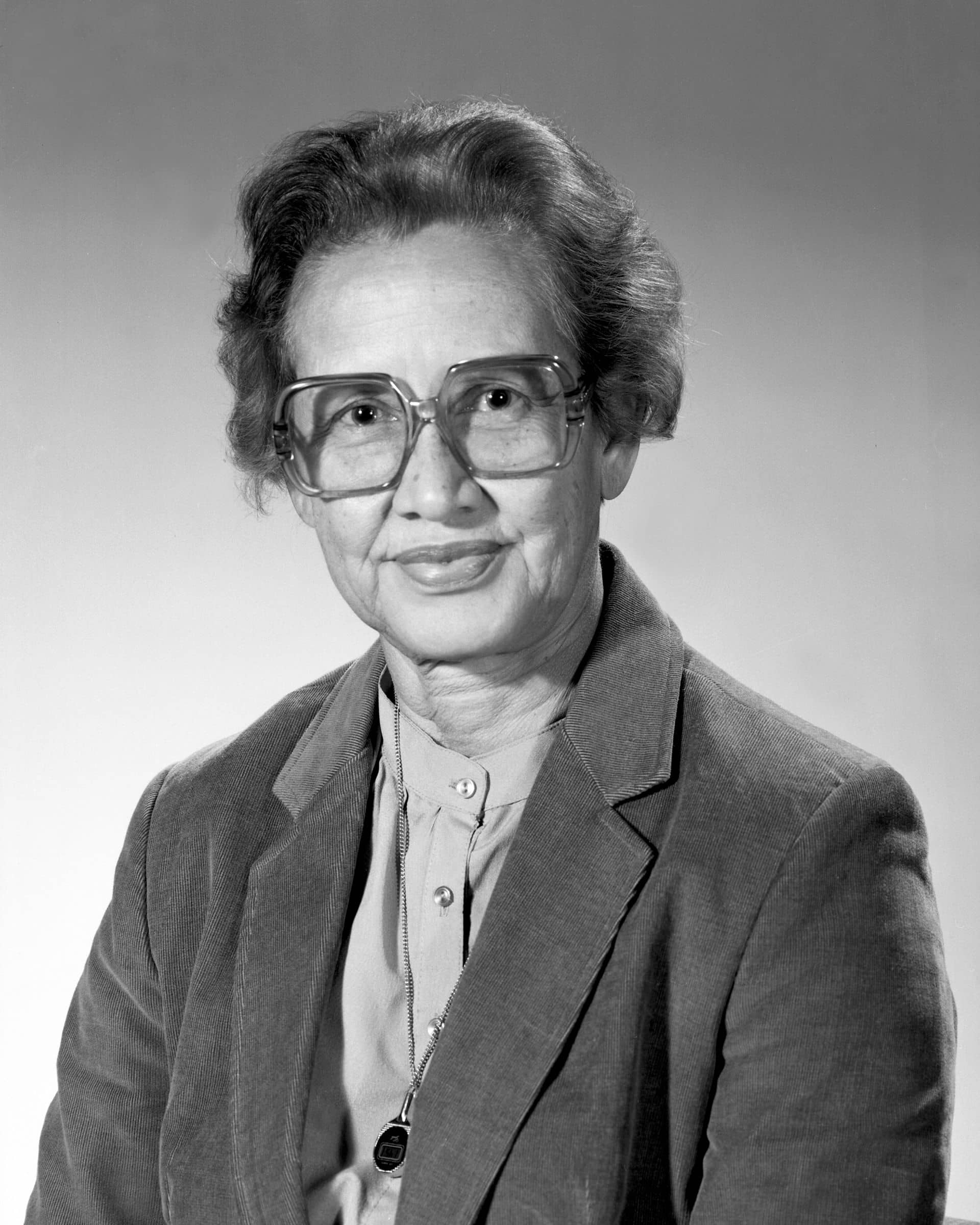
Katherine Johnson turned orbital mechanics into exact flight paths at a moment when human spaceflight had almost no margin for error.
1918–2020
Life
Orbital mechanics
Field
Mercury and Apollo
Defining milestone
A human computer at Langley
Johnson joined the segregated West Area Computing unit at NACA’s Langley laboratory in 1953. Her skill in analytic geometry soon moved her into flight-research teams where women—and Black women especially—were rarely included.
Trusting the numbers
She calculated the trajectory for Alan Shepard’s 1961 mission and helped determine John Glenn’s 1962 orbital flight path. Before Glenn launched, he asked Johnson to verify the electronic computer’s numbers by hand.
From Earth orbit to the Moon
Johnson contributed to Apollo trajectories and later work on the Space Shuttle and Earth-resources satellites. Her 33-year career helped NASA move from hand calculations to digital systems without losing mathematical rigor.
Why Katherine Johnson still matters
Katherine Johnson changed what researchers, engineers or the public expected from technology. The influence is visible both in today’s tools and in the questions society still has to answer.
Source: Authoritative profile.
The weekly question
From obsession to clarity — one original question every week.
We answer one noisy topic at a time, in full. No daily roundup, no thread bait — just the question, the principles, and the system.