Jürgen Schmidhuber Helped Give Neural Networks a Long-Term Memory
Jürgen Schmidhuber reshaped technology through work that continues to influence how modern systems are built and understood.
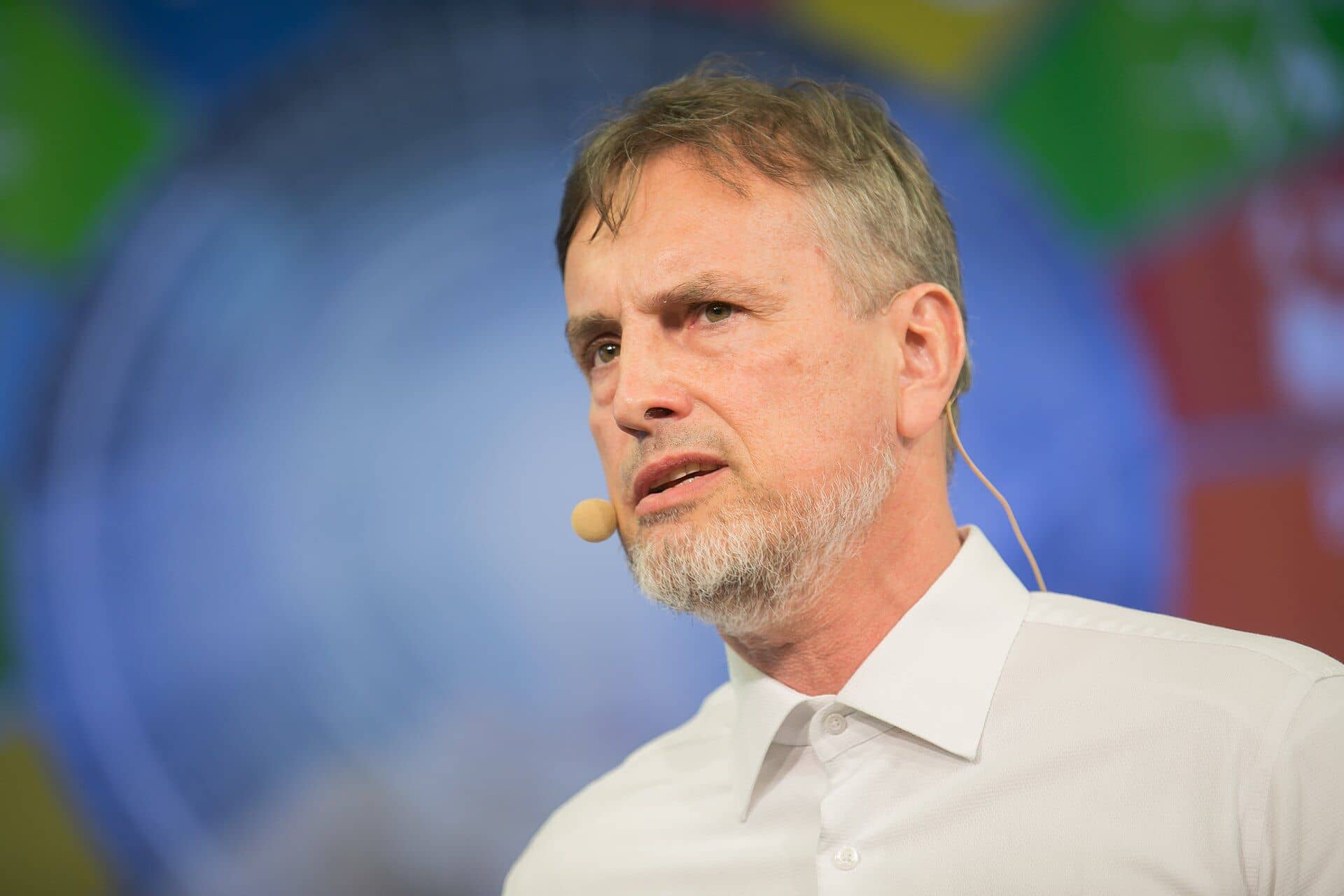
Jürgen Schmidhuber has spent decades exploring neural networks that learn sequences, compress experience and eventually improve their own learning processes.
Born 1963
Life
Neural networks
Field
LSTM co-developer
Defining milestone
Solving the long-dependency problem
In 1997, Sepp Hochreiter and Schmidhuber introduced long short-term memory, or LSTM. Its gated memory cells helped recurrent neural networks preserve useful information across long sequences while reducing unstable gradients.
A workhorse for sequential data
LSTMs became widely used in handwriting recognition, speech recognition, translation and other sequence tasks. Newer transformer architectures now dominate many applications, but LSTM remains a foundational deep-learning design.
A broader search for general intelligence
Schmidhuber’s research also spans algorithmic information theory, curiosity-driven learning, reinforcement learning and self-improving systems. The connecting obsession is an artificial learner that discovers compact explanations and better ways to solve problems.
Why Jürgen Schmidhuber still matters
Jürgen Schmidhuber changed what researchers, engineers or the public expected from technology. The influence is visible both in today’s tools and in the questions society still has to answer.
Source: Authoritative profile.
The weekly question
From obsession to clarity — one original question every week.
We answer one noisy topic at a time, in full. No daily roundup, no thread bait — just the question, the principles, and the system.