Jack Andraka Built an Experimental Cancer Sensor at 15
At fifteen, Jack Andraka won the Intel ISEF top prize for an experimental paper sensor aimed at detecting a pancreatic-cancer biomarker.
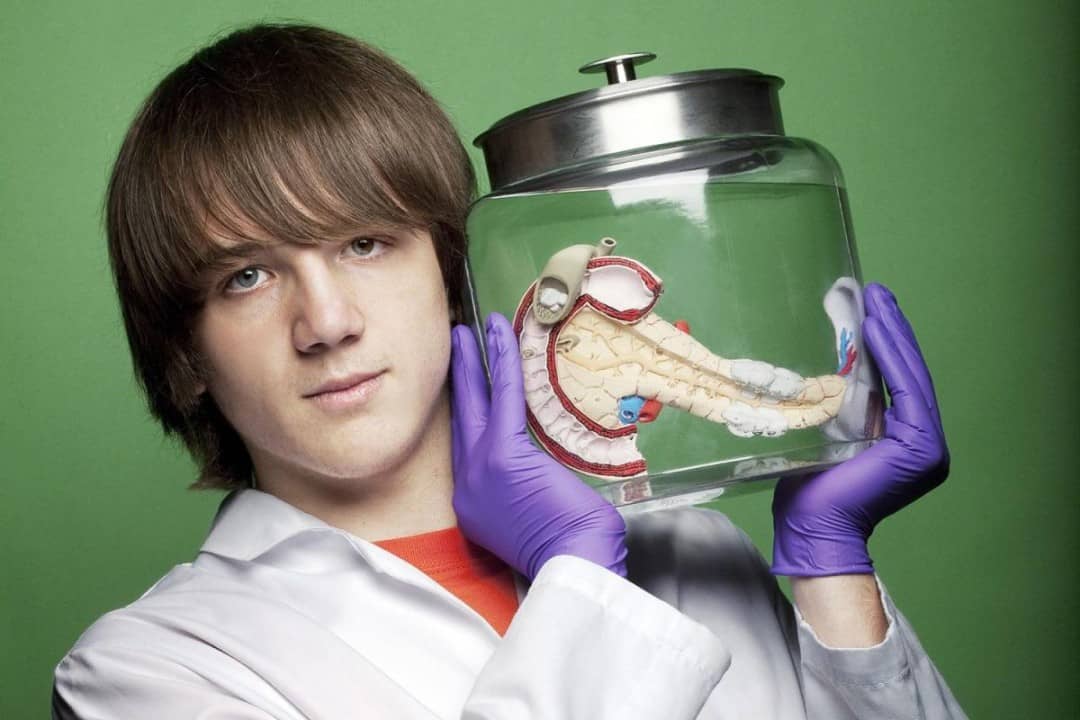
Jack Andraka’s teenage project began with a difficult question: could a cheap paper sensor detect a cancer-associated protein?
15
Age at Intel ISEF
2012
Top-prize year
Mesothelin
Target biomarker
The project
Andraka combined filter paper, carbon nanotubes and antibodies to build an experimental sensor for mesothelin, a biomarker associated with pancreatic and other cancers.
After contacting many laboratories, he found mentorship at Johns Hopkins and spent months developing the prototype.
Winning the fair
In 2012 he won the Gordon E. Moore Award at the Intel International Science and Engineering Fair. The project attracted attention because it aimed for fast, inexpensive detection using accessible materials.
Prototype is not clinical test
Headlines often said Andraka had “invented a pancreatic-cancer test.” More precisely, he created an early-stage research sensor. A screening test must prove accuracy and clinical usefulness in large, independent patient studies before doctors can rely on it.
The lasting lesson
Andraka’s achievement was not a finished medical product. It was demonstrating that a teenager could formulate a research question, find mentorship and produce promising experimental work worthy of serious evaluation.
Sources: Intel’s ISEF announcement, Society for Science
The weekly question
From obsession to clarity — one original question every week.
We answer one noisy topic at a time, in full. No daily roundup, no thread bait — just the question, the principles, and the system.