Hot Mama Gowns After Shark Tank: Why Barbara’s Offer Didn’t Become a Deal
What happened to Hot Mama Gowns? Explore Deidrea Haysel’s pitch, Barbara’s offer, evidence of later activity and the reported closure.

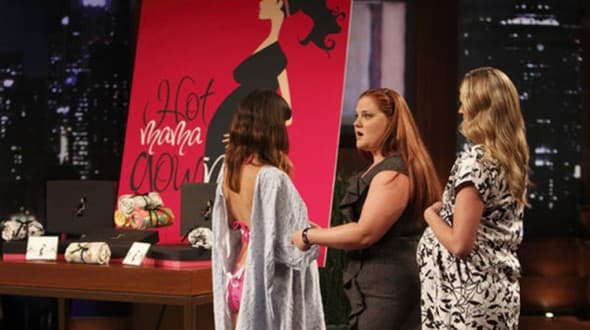
A hospital gown needs to give staff access, but the person wearing it also wants coverage and comfort. Deidrea Haysel saw room to improve that experience for new mothers. Hot Mama Gowns was her attempt to offer a more personal option for a hospital stay and nursing afterward.
The idea was rooted in a specific customer need. Turning that need into an investable clothing business introduced other questions: how many sizes to make, how to reach buyers and whether a premium price could support production.
Those questions became the center of Haysel’s Shark Tank appearance. Barbara Corcoran offered an investment, but the two did not agree on terms. The business continued after the broadcast before later reports described its closure.
For viewers finding the episode today, the important distinction is between a product that once sold and one that can still be ordered. This case file examines the pitch, evidence of actual garment development and the limits of the post-show record. Hot Mama Gowns is one of the 36 businesses covered in our Shark Tank Season 2 guide.
Hot Mama Gowns After Shark Tank: Quick Answer
Deidrea Haysel asked for $30,000 for 20% of Hot Mama Gowns. Barbara Corcoran proposed $30,000 for 40%, with a simpler size offering. They did not reach an agreement, and Haysel left without a deal.
The business continued after the show. A contemporary September 2011 report described Haysel working on it full time, and a designer’s professional record documents gown work through 2012. Later coverage reports a 2013 closure, although a primary closure announcement was not verified.
Current status: Hot Mama Gowns is reported closed. We could not authenticate a current store for the original brand as of November 19, 2026. Its present company valuation and the founder’s personal net worth are not established.
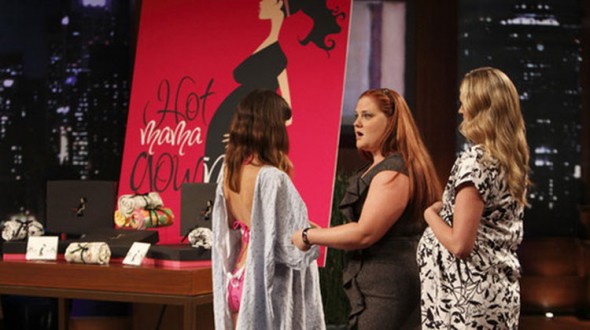
Deidrea Haysel demonstrates the difference between a standard gown and Hot Mama Gowns. Image: ABC/Shark Tank, via Shark Tank Blog.
What Were Hot Mama Gowns?
Hot Mama Gowns were maternity hospital gowns designed around fit, coverage and nursing access. The pitch presented them as an alternative to the standard gown a patient might otherwise wear.
A 2025 retrospective from Glam describes organic-cotton fabric, a snap-down back, short sleeves and breastfeeding panels. These are garment features, not evidence of improved medical outcomes.
The business focused on an emotionally significant but relatively short period in a customer’s life. A buyer could value feeling covered and comfortable during that period even if she would not use the gown as often as everyday clothing.
That creates a particular commercial challenge. The brand needs to reach shoppers near the moment when the product is useful. It cannot assume the same buying cycle as a wardrobe staple.
Evidence of Real Product Development
A useful source outside the usual television recaps is designer Roberta “Bobbi” Smith’s résumé. It lists work with Hot Mama Gowns from March 2008 through 2012.
Smith describes helping design the hospital gown, refining sizing, grading patterns and manufacturing for customer orders. Her record also mentions work on additional items in response to customer demand.
This supports a history of practical garment development. It does not reveal the company’s total sales or prove an exact founding date. The end of a designer’s involvement also should not be treated as the date the entire business closed.
Why Didn’t Hot Mama Gowns Get a Deal?
Haysel and Barbara Corcoran did not agree on the ownership stake and product direction. The pitch recap reports a request for $30,000 for 20%, followed by Barbara’s proposal of the same investment for 40% and a simplified size range.
Haysel did not accept, and the offer was withdrawn. There was no televised handshake agreement to investigate as a later failed closing.
Hot Mama Gowns Deal Snapshot
| Question | Pitch outcome |
|---|---|
| Founder | Deidrea Haysel |
| Investment requested | $30,000 |
| Equity offered | 20% |
| Barbara’s proposal | $30,000 for 40% |
| Product change proposed | A simpler size offering |
| Final outcome | No deal |
| Shark investment resulting from the pitch | None |
The disagreement reveals a real tension in a clothing business. More size options can help serve customers who find standard garments unsuitable. Each additional option also requires decisions about patterns, stock and production.
From an investor’s perspective, simplifying the line could make operations easier. From the founder’s perspective, reducing choice could weaken the reason she created it. Those positions involve both commercial judgment and product priorities.
It would be too simple to conclude that accepting the offer would necessarily have saved the company. The public record cannot show how that hypothetical partnership would have performed.
The broader lesson also differs from Mod Mom Furniture, where the founder accepted an on-air proposal that did not ultimately close. Hot Mama Gowns stopped at the negotiation stage.
How Did the Business Model Work?
Hot Mama Gowns sold a specialized garment to customers preparing for childbirth and nursing. Its value proposition combined a practical use with personal comfort and appearance.
The model depended on getting several things right together: fit, a price customers would pay and a way to find new buyers at the appropriate time. Good feedback about the idea would not automatically answer those operating questions.
Business Model Snapshot
| Element | Purpose in this business | Commercial question |
|---|---|---|
| Customer | Expecting and new mothers | How can the brand reach shoppers before the product is needed? |
| Product | A maternity hospital gown | Does the fit and design justify buying a separate garment? |
| Size range | Serve different body shapes | How much stock and production complexity does each option add? |
| Direct sales | Sell to individual customers | What does it cost to generate an order? |
| Retail distribution | Reach customers through stores | Can the selling price support both maker and retailer? |
| Repeat demand | Later purchases or recommendations | How much growth depends on finding entirely new customers? |
This is our analysis of the model. We did not obtain verified margins, advertising costs or repeat-purchase rates.
The customer’s need also had a deadline. A gown arriving after the intended hospital stay could lose much of its value to that buyer. Reliable stock and delivery would therefore matter alongside design.
A useful comparison is Ride-On Carry-On, another Season 2 product built around a particular stage of family life. The products were different, but both needed to reach parents when the proposed solution was relevant. A large general parenting audience was not the same as a ready-to-buy customer.
What Happened After Shark Tank?
Latest update — November 19, 2026: We could not verify an active original Hot Mama Gowns store or a relaunch. Later reporting describes the business as closed, but a founder-issued closure announcement and exact formal shutdown date remain unverified.
The immediate post-show story was not an instant disappearance. A September 2011 follow-up described Haysel moving to full-time work on the business and continuing to receive orders. Its author said they had communicated with her before and after the appearance.
That is a dated report about the period following the show. It cannot be used as evidence that the company still operates now.
Smith’s professional record adds evidence of work through 2012. Together, these sources support continued activity beyond the broadcast without requiring unsupported revenue estimates.
Later retrospectives describe a 2013 closure. Glam also notes the absence of a formal announcement. We therefore retain the distinction between a reported closure year and a directly verified company statement.
Hot Mama Gowns Timeline
| Period | Evidence | What it tells us |
|---|---|---|
| 2008–2012 | Designer’s professional record | Gown development and manufacturing work occurred during this period |
| 2011 | Shark Tank appearance | Haysel sought investment and left without a deal |
| September 2011 | Contemporary follow-up | Business activity continued after the show |
| 2013 | Closure reported in later coverage | Reported ending, not a verified formal dissolution date |
| November 2026 review | No authenticated original store found | Current product availability remains unverified |
There is insufficient evidence to assign a single cause to the ending. Production costs, price and customer reach are relevant business questions, but relevance is not proof that one of them caused the closure.
The same caution applies to the founder’s later life. A matching name on a professional profile is not enough to identify her current employer or occupation. This update does not attach an unverified career history to her.
Can You Still Buy Hot Mama Gowns?
We could not authenticate a current retail outlet for the original Hot Mama Gowns brand. A similar name or a different maternity gown does not establish that Haysel’s company returned.
Historical prices should also be treated as history. They describe what was reported at the time, not an offer a reader can necessarily use today. We have therefore not presented an old price as a current buying option.
There is no reliable present-day net-worth figure for the business. The original $30,000 request for 20% implies a $150,000 valuation in that proposed transaction. It does not establish the company’s assets, lifetime earnings or the founder’s wealth.
Because no deal was accepted, that requested valuation was not even a completed investment price. It should not be updated to a new year and presented as a current financial fact.
What Can Founders Learn From Hot Mama Gowns?
The most useful lesson is to connect a strong product purpose with a practical plan for reaching customers. Haysel had a clear view of whom she wanted to serve. The investment conversation exposed questions about how to build a business around that goal.
For a specialized clothing line, three decisions deserve separate attention:
- Which features and size options are essential to the customer promise?
- Which production choices can change without losing that promise?
- How will the company find customers at a cost the sale can support?
These questions help distinguish protecting a product’s purpose from retaining every early operating choice. They do not require assuming the investor is always right.
Hot Mama Gowns also shows why the period after a no-deal pitch matters. The company continued working and selling after television. The later reported closure should be described with the same care as that continuation, without inventing either a hidden success story or an unsupported explanation for failure.
Hot Mama Gowns FAQs
Who created Hot Mama Gowns?
Deidrea Haysel founded the brand and presented it on Shark Tank.
Did Barbara Corcoran invest?
No agreement was reached during the pitch. Haysel did not accept Barbara’s proposal.
How much did Haysel ask for?
She requested $30,000 for 20% of the business.
Did the company close immediately after the show?
No. Contemporary reporting describes continued activity in 2011, and a designer’s record lists work through 2012.
When did Hot Mama Gowns close?
Later coverage reports 2013. A primary announcement establishing the exact closure date was not verified.
Can I order an original Hot Mama Gown now?
We did not verify an active original-brand store or current production.
What is the founder’s net worth?
A reliable personal net-worth figure was not established in the sources reviewed.
The weekly question
From obsession to clarity — one original question every week.
We answer one noisy topic at a time, in full. No daily roundup, no thread bait — just the question, the principles, and the system.