
The UAE’s glass-and-steel cities promise world-class convenience, yet many residents feel increasingly distant from the desert landscapes that once defined regional identity. Beyond the skyline lies a rugged mix of dunes and mountains, but traditional camping still carries real friction for city-dwellers. The heat, the logistics, the equipment, and the unpredictability of the weather all create barriers that stop even motivated adventure-seekers from exploring.
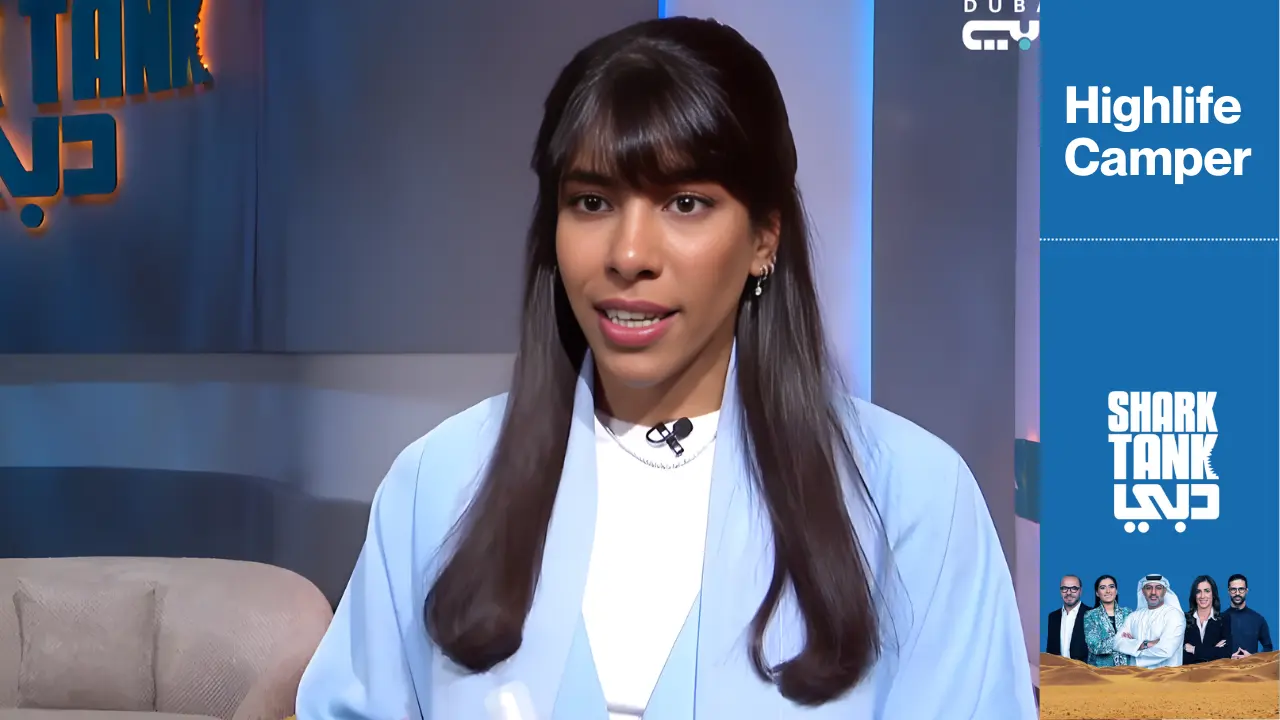
This is the tension Fatima Al Muhairi, founder of Highife Camper, brought into the Shark Tank Dubai arena. Her startup sits at the intersection of nomadic living and eco-tourism, offering a smooth transition from fast-paced urban routines to the quiet solitude of “Al Bar.” Although the pitch did not secure an investment, it delivered a surprisingly instructive look at how passion, regional insight, and hard business realities collide inside the Tank.
Turning “Bad” Experiences into Business Gold
Some of the UAE’s most resilient ventures emerge from founders trying to solve their own problems. For Al Mehairi, the spark came not from a glamorous lifestyle vision but from a night shaped by mud, wind, and a complete camping failure.
She spent 18 months developing her idea, yet the origin moment was simple and relatable. In the UAE, where a sunny morning can turn into rain or a sandstorm by evening, even seasoned campers face unpredictable challenges.
“Every time I go camping, I have an experience that isn’t exactly bad, but it’s funny. The first time I went, it rained. The second time, there was a terrible sandstorm. My friend and I ended up sleeping in the car. I realized then that all I was missing was a shower and a kitchen, and I could sleep in the car anywhere.”
By treating an uncomfortable night in a friend’s car as a data point instead of a disaster, she uncovered a gap in the UAE market. People don’t just want a tent. They want a mobile sanctuary that feels safe, climate-resilient, and comfortable enough to survive the region’s unpredictable elements.
The “All-In-One” Adventure Hub: Solving for the “Al Bar”
The Highlife Camper prototype is designed as a compact studio apartment on wheels, built for the UAE’s specific geography and cultural traditions. While the prototype used a standard van, Al Mehairi explained that true product-market fit requires a 4×4 platform essential for moving across deep sand and rocky paths.
Inside the unit, every feature is built for utility and comfort:
- A convertible core that shifts from a bed for two into a dining table.
- A full kitchen module with gas cooker, sink, and fridge.
- A shower and toilet with a built-in water heater.
In the UAE, where desert temperatures can drop dramatically at night, a water heater is not a luxury. It is a necessity. Together, these features turn the prototype into something powerful. It becomes freedom from logistics. Users can escape the city without worrying about gear, setup, or safety.
This is where the pitch first impressed the Sharks. It solved a real regional problem with a tangible, ready-to-use product.
Shark Tank Dubai Pitch Summary
| Founder | Fatima Al Muhairi |
| Ask | 1.5 million AED for 10% equity |
| Implied Valuation | 15 million AED (pre-revenue) |
| Business Stage | Prototype only; no sales, no operating fleet |
| Unit Build Cost | 120,000 AED per camper conversion |
| Outcome | No deal |
Solving the “Dubai Storage” Problem
While many pitches focus on product design, Al Mehairi stood out by addressing an often-ignored pain point. The issue is urban reality. Dubai residents live in high-rise apartments, often with limited parking and zero space for maintaining a camper van. Buying a camper sounds romantic until you need a mechanic, secure storage, or regular cleaning in the middle of the city.
Her business model tackled this with two revenue streams.
1. Direct Sales
Customers could either convert their own vehicles or purchase a fully built unit for around 120,000 AED.
2. A Rental Fleet for Tourists and Residents
Highlife Camper would manage a fleet for short-term rentals, tapping into Dubai’s booming tourism and rising eco-tourism sector.
The real innovation, however, was the support package. Hi-Life offered:
- Parking
- Cleaning
- Insurance
- Maintenance
In a market where people crave the “van life” aesthetic but lack the physical infrastructure for ownership, this service layer becomes the secret engine of the business. It shifts Highlife Camper from a hardware company to a mobility-as-a-service platform, positioning it closer to subscription-based outdoor recreation living than one-off vehicle sales.
The Shark Tank Reality Check: Passion vs. Unit Economics
Despite the compelling storytelling and well-engineered prototype, the pitch collided with the hard math of venture investing. The ask 1.5 million AED for 10% valued a pre-revenue startup at 15 million AED, a number the Sharks felt was too ambitious without market data.
Two critical concerns emerged.
1. Lack of Market Clarity
The UAE lacks established data on camper adoption rates, rental demand, or long-term engagement with mobile living. Without this information, investors struggle to forecast ROI. This challenge mirrors wider gaps in traditional camping market data across the region.
2. A Sharp Seasonality Curve
Leisure camping is popular only during the cooler months. When temperatures climb toward 50°C, the desert becomes inaccessible to casual tourists. For a business with high upfront CAPEX, a seasonal revenue window raises sustainability questions.
This moment delivered one of the pitch’s most important lessons. Passion fuels the journey, but unit economics decides the outcome.
The Value of the Journey
Although Highlife Camper walked away without a deal, the pitch delivered something equally valuable. It provided visibility, clarity, and a founder’s public declaration of grit. Al Mehairi described the experience as a personal milestone, saying she felt “very proud” to present her idea on a national stage.
That sense of courage matters in the UAE’s fast-moving startup landscape. The government continues to invest in eco-tourism, outdoor recreation, and mobility innovation, all of which could support concepts like Hi-Life in the years ahead.
The big question remains. Can a seasonal passion become a year-round business? The hardware is thoughtfully designed, the problem is real, and the founder is driven. But long-term success will depend on whether Highlife Camper can withstand both the region’s climate and the financial heat of scaling a high-CAPEX venture.
In a country known for dreaming big, the future of mobile desert living may depend on one thing. Whether the UAE is ready for a mobile revolution that starts where the sand begins to sizzle.