Harry Houdini Turned Escape Into the Most Famous Act in Magic
Harry Houdini turned escape magic into a public career built on preparation, technique, and unforgettable spectacle.
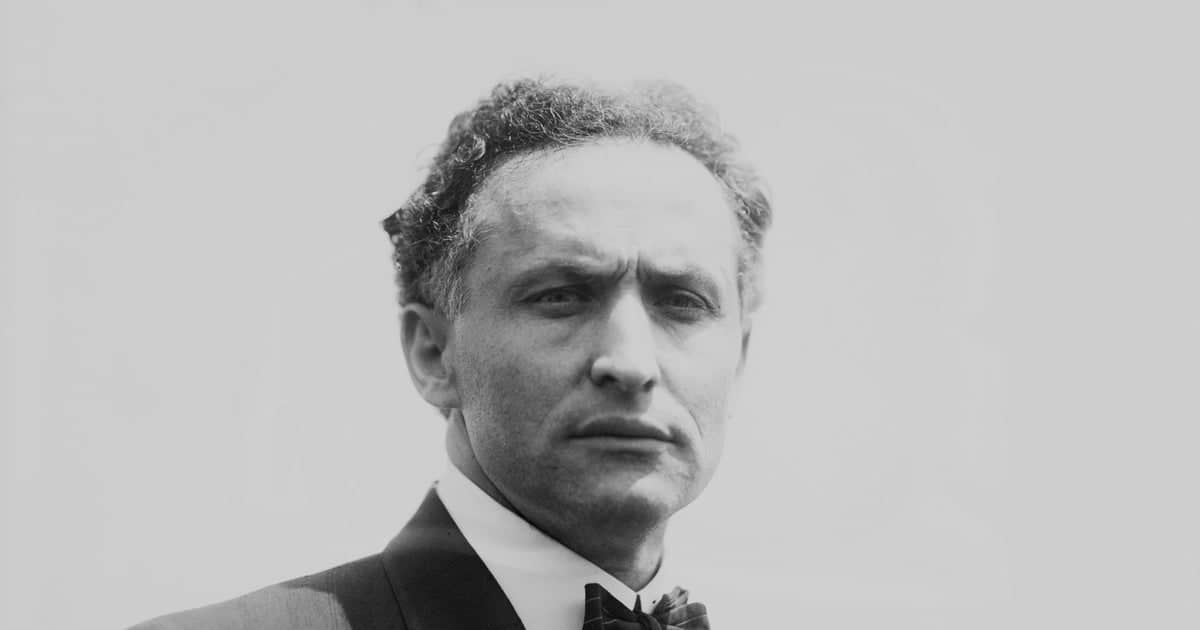
Harry Houdini built a career around escaping handcuffs, cells, chains, and water-filled enclosures. The spectacle was immediate, but the work behind it depended on rehearsal, design, timing, and control under pressure.
The feat that defined the career
Houdini built his reputation by inviting police and audiences to restrain him, then transforming escape into a timed public drama.
The public saw a decisive moment. Behind it sat a much longer process of developing technique, testing equipment, studying failure, and learning how to perform while attention was intense.
1874
Year of birth
1900s
Decade of international breakthrough
1926
Year of death
Source: Published biographies and event records
Turning obsession into a method
The central obsession was escape magic. Progress came through repeated practice and through collaborators who could challenge assumptions before a performance reached the public.
The best-known result may look spontaneous, but consistency depends on routines: inspect, rehearse, measure, adjust, and decide whether conditions justify proceeding.
The path to public recognition
1890s
Adopted the stage name Houdini
1900
Began a successful European tour
1910s
Introduced major underwater escapes
1920s
Publicly challenged fraudulent spiritualists
Each stage expanded the scale of the work, either through technical difficulty, a larger audience, or a new visual language.
Why Harry Houdini still matters
He established the escape artist as a distinct kind of celebrity and shaped how magicians use publicity, skepticism, and personal myth.
The enduring achievement is not simply surviving or creating astonishment. It is building a repeatable craft around moments designed to look impossible.
The weekly question
From obsession to clarity — one original question every week.
We answer one noisy topic at a time, in full. No daily roundup, no thread bait — just the question, the principles, and the system.