Grigori Perelman Solved the Poincaré Conjecture—Then Rejected $1 Million
Grigori Perelman solved the century-old Poincaré conjecture through Ricci flow, then declined both the Fields Medal and a $1 million prize.
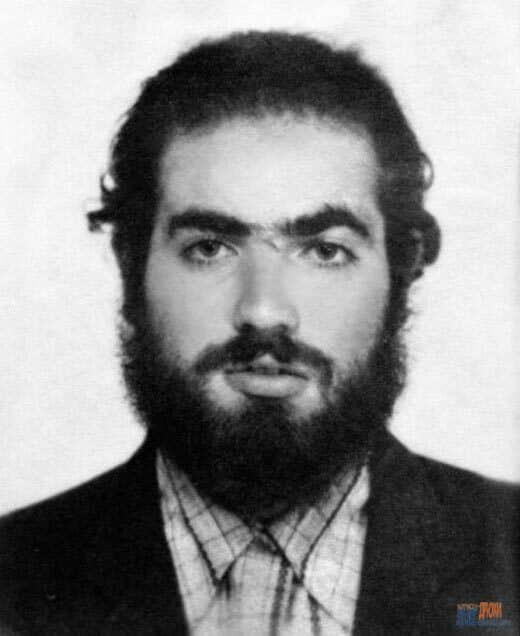
Grigori Perelman did something almost no mathematician had managed for a century: he solved one of topology’s most famous problems. Then he stepped away from the prizes, money, and celebrity that followed.
What was the Poincaré conjecture?
In 1904, French mathematician Henri Poincaré asked a question about three-dimensional spaces. In simplified terms, the conjecture says that every closed three-dimensional space with no holes—and in which every loop can shrink to a point—is topologically the same as a three-dimensional sphere.
The statement sounds compact. Proving it required understanding how an entire space can be recognized from its global structure. For decades, mathematicians solved related versions in other dimensions, but the three-dimensional case resisted every attempt.
1904
Poincaré posed the conjecture
2002–03
Perelman posted his proof
$1 million
Clay Millennium Prize declined
2010
Prize decision announced
Ricci flow changed the attack
American mathematician Richard Hamilton had developed Ricci flow, a process that smooths the geometry of a space in a way often compared with heat spreading through a material. Hamilton believed it could lead to a proof, but singularities—places where the geometry pinches or blows up—created a formidable obstacle.
Perelman found the missing ideas. He introduced new tools for controlling those singularities and showed how Ricci flow could be continued through them. His work did more than settle the Poincaré conjecture: it completed Hamilton’s broader program for understanding three-dimensional manifolds through Thurston’s geometrization conjecture.

A mug-to-torus transformation illustrates topological equivalence. Wikimedia Commons.
He released the proof online
Between November 2002 and July 2003, Perelman posted three papers to the arXiv preprint server. He did not submit them through the usual journal process. The papers were dense and concise, leaving the mathematical community to verify and expand the argument.
Teams of experts spent years checking the details and writing fuller accounts. By 2006, the consensus was clear: Perelman’s ideas had solved the Poincaré conjecture and established the geometrization result.
1904
The conjecture
Henri Poincaré formulates the question that will define a century of topology.
1980s
Hamilton’s program
Richard Hamilton develops Ricci flow as a possible route to the solution.
2002–03
Perelman’s papers
Three arXiv preprints introduce the decisive ideas.
2006
Fields Medal
Perelman is awarded the medal but declines it.
2010
Millennium Prize
The Clay Mathematics Institute awards him $1 million; he declines that too.
Why did Perelman reject the honors?
At the 2006 International Congress of Mathematicians, Perelman declined the Fields Medal, mathematics’ most celebrated award. Four years later, the Clay Mathematics Institute awarded him the $1 million Millennium Prize for resolving the conjecture. He declined that as well.
It is tempting to reduce those decisions to mystery or eccentricity. A more careful view is that Perelman had withdrawn from professional mathematical life and objected to the way recognition and credit were distributed. He did not want public status to become the meaning of the work.
His refusal should not obscure the collaboration across generations. Poincaré posed the problem, Hamilton created the central method, and many mathematicians verified and explained the proof. Perelman supplied the breakthroughs that made the program succeed.
The obsession was the truth of the problem
Perelman’s story is unusual because the standard rewards of achievement—medals, money, and fame—were not what held him. The mathematical truth itself appears to have been the goal.
That focus produced an extraordinary result. The Poincaré conjecture became the first of the Clay Mathematics Institute’s seven Millennium Prize Problems to be solved. More broadly, the proof transformed geometric analysis and deepened mathematicians’ understanding of three-dimensional spaces.
The geek lesson
Perelman’s life is often narrated through what he refused. His greater legacy is what he gave: a new way to control geometric evolution at its most difficult points.
Deep work does not always arrive in a conventional package. His papers were brief, posted online, and initially hard to verify. Yet the ideas survived years of scrutiny. The lesson is not that recognition is worthless; it is that the strongest work must ultimately stand on its reasoning, not on the ceremony around it.
The weekly question
From obsession to clarity — one original question every week.
We answer one noisy topic at a time, in full. No daily roundup, no thread bait — just the question, the principles, and the system.